How Does Lead Climbing Work?
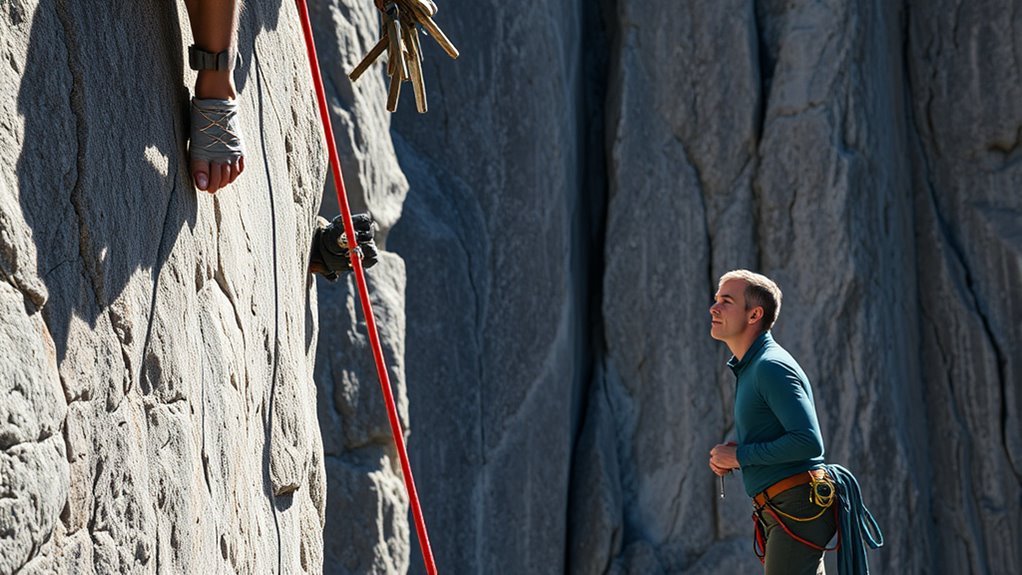
In lead climbing, you ascend a route while clipping your rope into protection points like bolts or gear to create a safety line that catches you if you fall. This technique is essential for climbers who want to tackle more challenging routes safely.
You’ll manage slack carefully and avoid common clipping errors to make sure each clip reduces your fall potential.
Proper gear placement and rope control are absolutely key for both safety and efficiency.
As you get the hang of these fundamentals, you’ll build confidence and learn how to handle the risks and mechanics involved in your climb.
It might seem tricky at first, but with practice, lead climbing becomes a rewarding experience that sharpens your skills and keeps you secure on the wall.
Understanding Lead Climbing Mechanics
You lead climb, you ascend while clipping your rope into protection points along the route, creating a safety line that can catch you if you fall. In lead climbing, you clip the rope into quickdraws attached to bolts or gear placed on the rock, establishing a system of secure anchors.
Each clip reduces potential fall distance, but falls can still be twice the height from your last protection, so you must manage risks carefully. Proper clipping is essential to avoid mistakes like back clipping or Z-clipping, which compromise safety.
As you move, you constantly assess your position, gear placement, and the route’s demands to maintain safety and efficiency. Understanding these mechanics helps you climb confidently, controlling the rope and gear system that protects you throughout your ascent.
Essential Techniques and Safety Practices
Although lead climbing offers an exhilarating challenge, mastering essential techniques and safety practices is crucial to minimize risks. You need to perfect your clipping technique by carefully pulling slack in the rope and clipping into protection points with correct clip orientation.
Avoid back clipping and Z-clipping, as these errors can cause dangerous falls or rope drag. Efficient rope management prevents entanglements or rope catching behind your foot.
Regular gear inspection guarantees your equipment functions properly. Understanding fall safety means practicing controlled falls and knowing the fall factor to anticipate forces during a fall.
Conclusion
Now that you know how lead climbing works, remember that mastering the belay and clipping techniques keeps you safe on the wall. For example, imagine Sarah, a beginner who hesitated to clip quickly; she learned that smooth, timely clips prevent dangerous falls.
By practicing these skills, you’ll build confidence and climb more efficiently. Lead climbing challenges you, but with the right techniques, you can enjoy the thrill while staying secure every step of the way.
Lead climbing is all about timing, focus, and trust in your gear and partner. Keep practicing your belay skills and clipping methods to reduce risks and improve your climbing flow. With patience and persistence, lead climbing becomes not just a challenge but a rewarding adventure you can safely enjoy.