What Is Alpine Climbing?
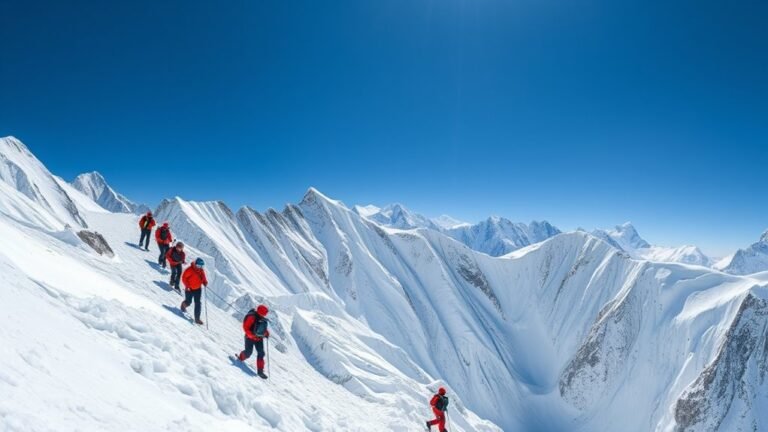
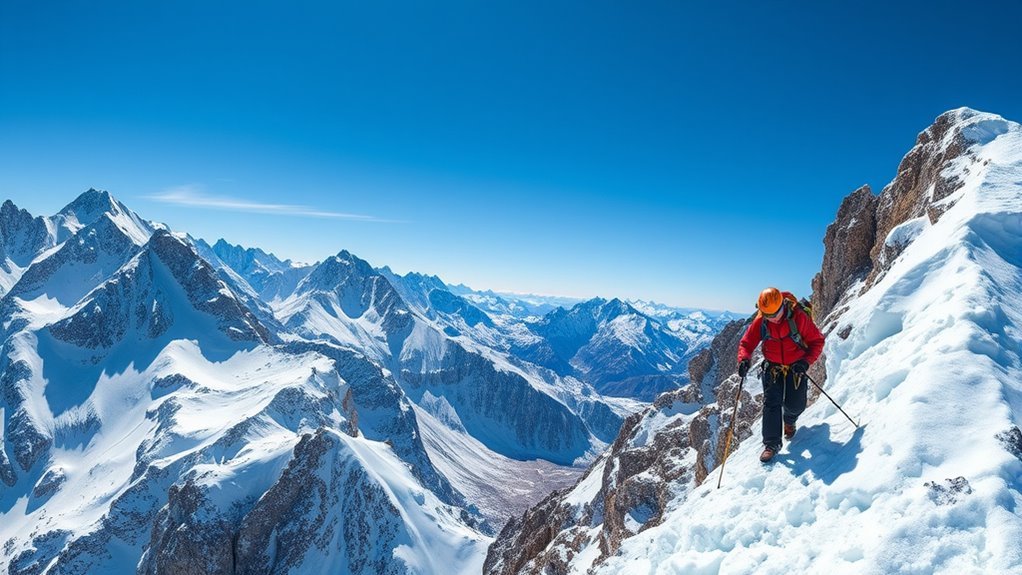
Alpine climbing challenges you to navigate high, unpredictable mountains using advanced snow, ice, and rock skills. It’s all about tackling rugged terrain where weather and conditions can change in a flash.
You rely on minimal gear to stay light and move fast, focusing on self-reliance and quick decisions rather than large teams or fixed ropes.
You’ll master mixed climbing techniques, efficient gear placement, and multi-pitch belaying to handle extreme terrain. These skills help you stay safe and agile in some of the world’s most demanding environments.
If you want to understand the essential techniques and gear that keep you prepared, keep exploring what alpine climbing demands. It’s tough but incredibly rewarding!
Key Takeaways
- Alpine climbing involves advanced snow, ice, and rock skills to summit high mountains with minimal gear. It’s all about tackling challenging terrain with just what you need.
- It emphasizes self-reliance, speed, and efficiency over large teams and fixed ropes. So, climbers often move fast and light instead of relying on big groups.
- Originating in the European Alps, it now includes remote regions like the Himalayas and Patagonia. The sport has really spread to some wild and beautiful places.
- Climbers use mixed climbing and multi-pitch techniques to navigate unpredictable, high-altitude terrain. These skills help them handle whatever the mountain throws at them.
- Essential gear includes ice axes, crampons, protection devices, and lightweight clothing for extreme conditions. Having the right stuff makes all the difference when you’re up there.
What Is Alpine Climbing?
Although alpine climbing demands advanced skills on snow, ice, and rock, it challenges you to reach high mountain summits using minimal gear and no external support. You’ll tackle long routes in high-altitude settings that require mixed climbing and multi-pitch techniques.
Unlike traditional climbing with fixed ropes and large teams, alpine climbing relies on your self-rescue skills and speed. You’ll carry only what’s essential, emphasizing efficiency and self-sufficiency.
Originating in the European Alps, this style now extends to remote regions like the Himalayas and Patagonia. Mountain climbing here isn’t just about strength but adaptability—navigating unpredictable terrain on snow and ice with a light pack.
When you climb this way, you embrace the raw challenge of nature, relying solely on your skills and minimal gear to summit safely. It’s all about being smart, quick, and ready for anything.
Alpine Climbing Techniques and Essential Gear
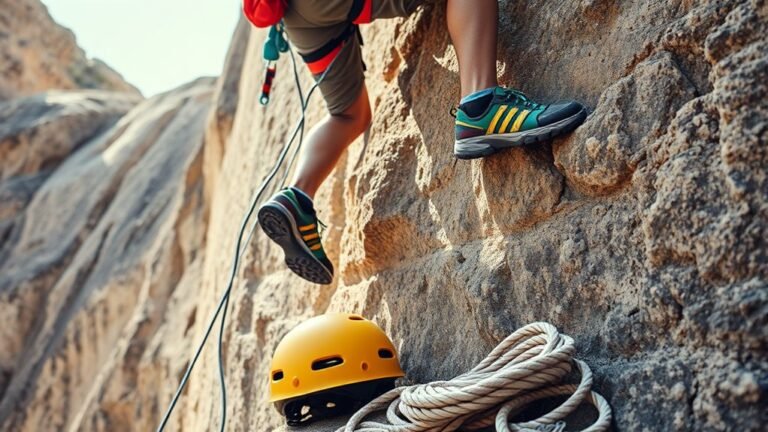
When you tackle alpine climbing, you’ll need to master a blend of rock, ice, and mixed climbing techniques to navigate the mountain’s varied terrain. Your success depends on using specialized equipment like ice axes and crampons, paired with protection gear such as snow anchors and ice screws.
Lightweight clothing helps you stay agile in extreme conditions. Efficient multi-pitch belaying and precise gear placement keep you safe and moving swiftly.
Key gear and techniques include:
- Ice axes and crampons for secure movement on ice and snow
- Protection gear like nuts, cams, snow anchors, and ice screws for anchoring
- Multi-pitch belaying combined with smooth progressions between rock and ice
Mastering these essentials guarantees you climb confidently and safely in alpine environments.
Frequently Asked Questions
What Is the Difference Between Rock Climbing and Alpine Climbing?
You’ll notice rock climbing focuses on short, technical routes on rock, while alpine climbing challenges you with long, mixed terrain climbs in remote, unpredictable mountain environments, requiring endurance, survival skills, and carrying diverse gear like ice axes.
Can Climbing Cause Plantar Fasciitis?
Yes, climbing can cause plantar fasciitis if you overuse your feet, wear tight shoes, or skip stretching. To avoid pain, make sure you rest, stretch regularly, and choose proper, supportive footwear during your climbs.
Is Climbing Good for Osteoarthritis?
Yes, climbing can be good for osteoarthritis if you keep it low-impact and avoid overexertion. It strengthens muscles and improves joint mobility, but you should consult a healthcare professional before starting to guarantee safety and proper technique.
Is Alpine Climbing Hard?
You don’t find alpine climbing hard—unless juggling ice axes, battling unpredictable weather, and climbing sheer rock faces while gasping for air sounds tough. But hey, who needs comfort when you can have thrilling exhaustion and epic views?
Conclusion
You might think alpine climbing is just hiking up snowy mountains, but it’s way more intense and technical. It demands sharp skills, the right gear, and mental toughness to navigate unpredictable weather and challenging terrain.
If you’ve heard it’s only for extreme athletes, that’s not entirely true—anyone with dedication and proper training can take it on. So, why not test yourself and discover the thrill alpine climbing has in store?
Alpine climbing is an incredible adventure that pushes your physical and mental limits. With the right preparation, you can master the skills needed to tackle high mountain environments safely. Whether you’re drawn to the stunning views or the personal challenge, alpine climbing offers an unforgettable experience. So, lace up your boots, gear up smartly, and embrace the excitement that comes with every alpine climb!