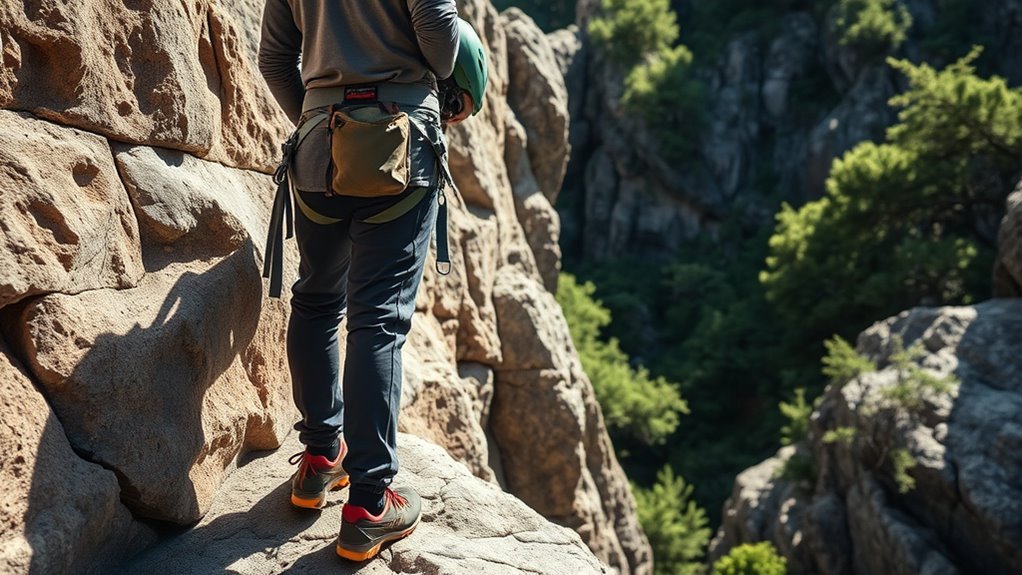
10 Essential Tips on What You Should Wear for Your First Time Climbing
For your first climb, it’s super important to pick comfortable, stretchy clothing made from breathable, moisture-wicking fabrics like polyester or spandex. These materials help keep you cool and dry as you move.
Choose pants or shorts that offer protection and flexibility, but avoid loose clothes that could get caught on rocks or gear.
Tie back long hair and remove any jewelry to stay safe while climbing.
Always wear properly fitted climbing shoes with socks for grip and hygiene.
Layering your clothes is a smart move too, so you can easily adjust to temperature changes during your climb.
These simple steps will set you up for a safe, smooth experience. And don’t worry—there’s plenty more advice to help you climb confidently and enjoy every moment!
Key Takeaways
- Wear moisture-wicking, flexible fabrics like spandex or polyester blends. These help you move freely and keep sweat under control.
- Choose form-fitting tops and stretchy pants or shorts with reinforced knees. This combo keeps you comfortable, protected, and safe while climbing.
- Always wear snug climbing shoes with socks. This maximizes your grip, precision, and keeps your feet hygienic.
- Tie back long hair securely and take off all your jewelry. It’s important to avoid snagging or injuries while you’re climbing.
- Layer lightweight clothing so you can adjust to temperature changes easily. And try to avoid cotton since it traps moisture and can get uncomfortable.
Pick Comfortable, Stretchy Clothing for Climbing
When you’re climbing for the first time, picking comfortable, stretchy clothing is essential to move freely and safely. Choose fabrics like spandex or polyester blends that flex with your body, giving you a full range of motion without restriction.
Opt for form-fitting shirts or tank tops that stay put and won’t interfere with your reach or grip. Avoid rigid materials like jeans or khakis since they limit your ability to stretch and maneuver effectively.
Look for moisture-wicking clothing to keep sweat at bay, ensuring you stay dry and comfortable during your climb. Stretchy, breathable, and snug clothing helps you focus on your technique rather than your outfit, so you can climb confidently and safely every time.
Choose Pants or Shorts for Protection and Comfort
Although shorts provide better airflow and cooling for warm gym sessions, choosing pants or leggings offers essential knee protection against scrapes and bumps during climbing.
At the climbing gym, you want protective pants made from moisture-wicking fabrics that let you move freely and stay dry. Avoid loose clothing that could get caught on holds. Opt for snug, flexible options with reinforced knees for extra safety.
| Option | Benefits |
|---|---|
| Shorts | Better airflow, cooler |
| Pants | Knee protection, durable |
| Moisture-wicking | Keeps you dry and comfortable |
| Stretchy fabric | Allows full range of motion |
| Reinforced knees | Prevents scrapes and injuries |
Choose wisely to stay comfortable and protected during your climb.
Select Breathable Fabrics That Keep You Dry
Choosing the right pants or shorts is just part of staying comfortable while climbing—selecting breathable fabrics plays a big role too. Opt for moisture-wicking materials like polyester or nylon that pull sweat away from your skin, keeping you dry and comfortable throughout your climb.
Avoid cotton since it traps moisture, making your clothes heavy and uncomfortable. Look for breathable fabrics with mesh panels or ventilation zones to boost airflow and help regulate your body temperature.
Synthetic fibers dry quickly, reducing discomfort and preventing chafing or skin irritation caused by sweat. By choosing comfortable clothing made from these breathable, moisture-wicking fabrics, you’ll stay fresh and focused on your climb instead of being distracted by damp, clingy clothes.
Layer Clothing to Adjust for Gym Temperature
You’ll want to layer your clothing so you can easily manage temperature changes in the gym. Choose lightweight pieces that you can quickly add or remove without disrupting your climb.
This way, you stay comfortable whether the gym feels warm or cool. It makes adjusting super simple, so you can focus on your workout without any hassle.
Manage Temperature Fluctuations
When indoor temperatures shift during your climbing session, layering your clothing lets you quickly adjust to stay comfortable. Start with moisture-wicking base layers to keep sweat off your skin and maintain dryness during intense climbs.
These breathable fabrics help regulate your body temperature by moving moisture away efficiently. Next, add or remove lightweight outer layers like a jacket or long-sleeve shirt depending on the gym’s climate.
Layering this way lets you respond to cooler or warmer conditions without interrupting your flow. By choosing adaptable clothing, you prevent overheating and chilling, keeping your focus on climbing.
Managing temperature fluctuations with smart layering ensures you stay comfortable and perform your best throughout your entire session.
Easy Layer Removal
Managing your layers effectively means you can quickly shed or add clothing without breaking your rhythm. Layering lets you adapt to the gym temperature easily, so you stay comfortable throughout your climb.
Start with a moisture-wicking base layer to keep sweat away and make removing layers effortless. Choose pieces that unzip or pull off quickly to avoid interruptions.
Here are three tips for easy layer removal:
- Wear a lightweight, breathable base layer to quickly peel off if you overheat.
- Opt for mid-layers with zippers or loose fits so you can unzip or slide them off fast.
- Use moisture-wicking fabrics to stay dry, making layering changes comfortable and hassle-free.
This approach keeps your focus on climbing, not your clothes. Easy, right?
Avoid Loose or Baggy Clothes That Restrict Movement
Although comfort is important, wearing loose or baggy clothes can create serious hazards while climbing by snagging on holds or ropes. Loose clothing not only risks getting caught, but it can also restrict your movement, making it harder to maintain proper body positioning on the wall.
This movement restriction compromises both your performance and safety. Plus, baggy garments may interfere with harness fitting and safety checks, which can increase the chance of accidents.
To climb safely and effectively, avoid loose clothing that can block your vision or snag unexpectedly. Instead, opt for attire that fits well and allows you to move freely without any fabric getting in the way.
Prioritizing safety means choosing clothes that support your mobility and reduce risk throughout your climb. It’s all about staying comfortable while keeping yourself safe and agile.
Wear Slim-Fitting Tops to Maximize Arm Mobility
Because climbing demands precise arm movements, wearing slim-fitting tops lets you reach and grip holds without any fabric getting in the way. Choosing the right climbing attire is key to maximizing your arm mobility and overall performance.
Here’s why slim-fitting tops work best:
- They prevent fabric from bunching or catching on holds, so you stay focused on the climb.
- Slim-fit tops improve visibility of your arm and shoulder position, helping belayers assist you better.
- Many are moisture-wicking, keeping sweat off your skin, which enhances comfort and movement.
Avoid loose or flowy shirts that can block vision or snag easily. By sticking to slim-fitting tops, you guarantee unrestricted arm mobility and a safer, more efficient climbing experience.
Remove Jewelry and Dangly Accessories for Safety
Two simple steps can greatly improve your safety when climbing: remove all jewelry and avoid dangly accessories. Jewelry like rings, necklaces, and earrings can snag on holds or ropes. This risks injury and can damage your climbing gear.
Dangly items distract you and hinder movement. They affect your control and balance while climbing. Many gyms even require you to remove jewelry to meet their safety protocols.
| Why Remove Jewelry? | Why Avoid Dangly Accessories? |
|---|---|
| Prevents snagging | Avoids distractions |
| Protects climbing gear | Enhances mobility |
| Reduces injury risk | Improves balance |
You might want to swap metal rings for silicone ones—they’re safer and less likely to harm you or your gear. Just keep these simple steps in mind and make them a priority for your climbing safety.
Tie Back Long Hair to Keep It Out of Your Way
When you tie back long hair, you keep it from falling into your face and blocking your view while climbing. This simple step boosts climbing safety by preventing hair from getting caught on holds or equipment.
It also helps you stay focused and clean, avoiding distractions and dirt transfer. To keep your long hair secure, try these tips:
- Use a strong hair tie or elastic band to hold your hair firmly.
- Consider braiding your hair or wearing a headband for extra control.
- Always wear socks with your climbing shoes to protect your feet and maintain hygiene.
Use Climbing Shoes or Rent Proper Footwear for Grip
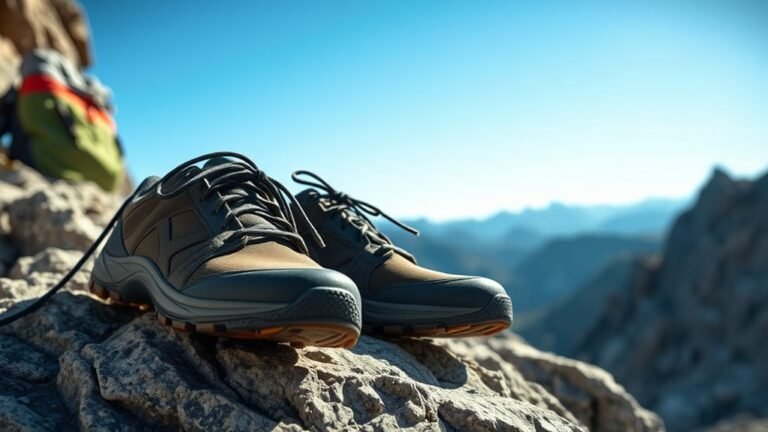
Tying back your hair keeps distractions at bay, but your footwear plays an even bigger role in your climbing performance. Wearing climbing shoes designed to fit snugly, often without socks, maximizes your grip and precision on holds.
If you’re new to climbing, it’s smart to rent proper footwear at the gym. This lets you try different styles and sizes to find the best fit for your feet and climbing style, whether bouldering or sport climbing.
Properly fitted climbing shoes should feel tight but not painful, helping improve your stability and control on the wall. Using the right footwear reduces slips and falls, making your first climb safer and more confident.
Don’t underestimate the power of good climbing shoes. They really make a difference!
Prepare Your Outfit for a Safe, Comfortable Climbing Experience
Although climbing challenges your strength and skill, your outfit plays an essential role in keeping you safe and comfortable throughout your climb. Preparing your outfit thoughtfully guarantees you move freely and stay protected.
Wear flexible, moisture-wicking clothing like athletic T-shirts and stretchy pants or leggings. This lets you move easily and keeps sweat away, which really helps with comfort.
Choose pants that protect your knees, such as yoga or climbing pants, to avoid scrapes on rough walls or holds.
Opt for comfortable, close-fitting climbing shoes—ideally without socks—to maximize grip. Just remember to avoid loose clothes that can get caught or restrict your movement.
With the right outfit, you’ll climb safer and feel better from start to finish.
Frequently Asked Questions
Is Rock Climbing Good for Dyspraxia?
Yes, rock climbing’s great for dyspraxia. You’ll improve coordination, motor planning, and spatial awareness while building confidence. Plus, climbing gyms offer supportive environments with customizable routes that match your skill level, helping you develop muscle memory effectively.
What Not to Wear When Climbing?
Did you know 30% of climbing accidents involve snagged gear? Don’t wear loose clothes, jewelry, or tight jeans. Avoid synthetic fabrics that trap heat. Instead, choose flexible, breathable gear to keep you safe and comfortable on the wall.
Is Rock Climbing Good for Osteoporosis?
Yes, rock climbing can be great for osteoporosis. It puts weight and impact on your bones, helping stimulate growth and strengthen them. Just make sure you check with your doctor first to climb safely and avoid injury.
Is It Okay to Rock Climb in Jeans?
You can rock climb in jeans, but it’s not ideal. They restrict your movement and can cause discomfort. If you must, choose stretchy, relaxed-fit jeans to improve flexibility and avoid chafing during your climb.
Conclusion
When you dress right for your first climb, you’ll move easier and feel more confident—just like when you find that perfect playlist by coincidence right before a workout.
Wearing stretchy, breathable clothes and securing your hair and accessories might seem small, but they make a big difference.
So, pick your gear wisely, and you’ll not only climb safer but enjoy every moment. Who knew comfort and safety could team up so perfectly?
Choosing the right climbing clothes is essential for your first time climbing. Breathable fabrics help keep you cool, while stretchy materials allow freedom of movement. Plus, securing your hair and avoiding loose accessories reduces distractions and hazards. When you dress appropriately, you enhance both your safety and comfort, making the entire climbing experience more enjoyable. So next time you gear up for your first climb, remember that what you wear plays a huge role in how well you perform and how much fun you have. Embrace the right outfit, and you’ll be ready to conquer the wall with confidence and ease!