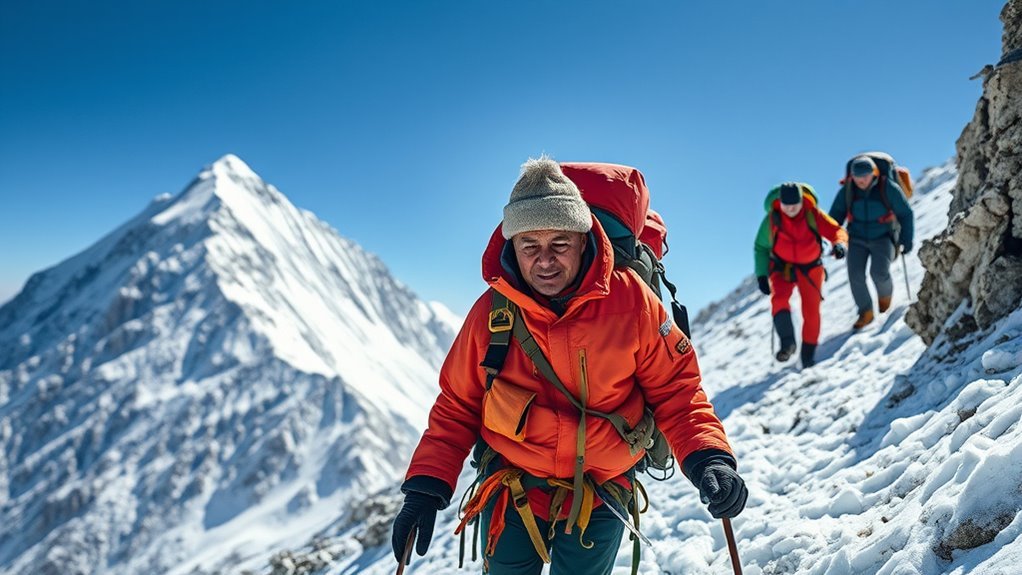
Why Are Sherpas Helpful in Climbing Expeditions?
You rely on Sherpas because they bring unmatched mountaineering skills and expert knowledge of high-altitude navigation that keeps you safe on tough climbs. Their experience on the world’s highest peaks means they know the terrain like the back of their hand, making your journey smoother and less risky.
Plus, Sherpas have unique biological traits, like enhanced oxygen use, that help them thrive where others struggle. This natural advantage is a game-changer when you’re pushing your limits in thin air.
On top of that, their deep cultural traditions build mental strength, which is just as important as physical endurance.
All these factors combined make Sherpas invaluable for any climbing expedition. If you want to understand the full extent of their essential role, there’s a lot more to uncover about their incredible abilities. Trust me, their contribution goes way beyond just carrying loads!
Key Takeaways
- Sherpas possess expert mountaineering skills essential for safe navigation and route setting in challenging high-altitude terrains. They know the mountains like the back of their hand, which makes a huge difference when conditions get tough.
- Their biological adaptations enable efficient oxygen use, allowing sustained physical exertion in low-oxygen environments. This means they can keep going strong where others might struggle to catch their breath.
- Sherpas manage equipment logistics and establish safe camps, ensuring climbers conserve energy and maintain safety. They take care of a lot behind the scenes, so climbers can focus on the climb itself.
- Their deep knowledge of weather patterns helps anticipate dangerous conditions, enhancing expedition preparedness. Knowing when a storm might hit can be a lifesaver up there.
- Cultural and spiritual practices build mental resilience, supporting climbers through extreme mountain challenges. This mental strength helps everyone push through the toughest moments.
Sherpas’ Mountaineering Skills and Roles in Climbing Safety
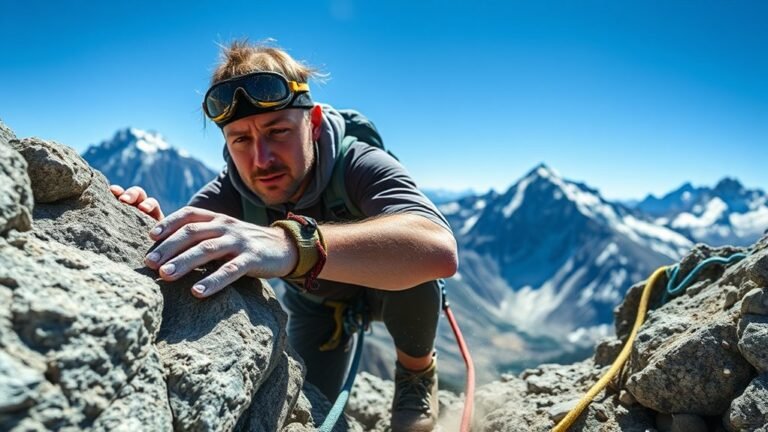
Although you might be tempted to tackle a high-altitude climb on your own, Sherpas’ expert mountaineering skills prove essential for your safety and success. Sherpas bring unmatched high-altitude expertise, guiding you through dangerous icefall navigation and complex route setting that reduce risks considerably.
Their deep knowledge of weather assessment helps anticipate mountain conditions, enhancing climbing safety. Beyond guiding, Sherpas handle load carrying, often transporting heavy equipment multiple times per season, so you conserve energy for the climb.
Their expedition support doesn’t stop there—they establish safe camps and provide crucial mentorship, ensuring you adapt to harsh environments. Relying on Sherpas means you benefit from their mountain safety experience, turning a risky ascent into a manageable, safer journey.
Biological Adaptations and Cultural Traditions Behind Sherpa High-Altitude Success
Because Sherpas thrive where oxygen is scarce, their bodies have evolved unique biological adaptations that give them a remarkable edge at high altitudes. Sherpa adaptations include a genetic mutation in the EPAS1 gene, enhancing oxygen utilization by regulating hemoglobin production.
You’ll also find their nitric oxide production is higher, which dilates blood vessels and improves oxygen delivery. Their mitochondria operate with exceptional efficiency, converting oxygen into energy to support sustained exertion.
Beyond biology, Sherpas’ high-altitude physiology is complemented by deep mountain reverence and spiritual rituals that build resilience and mental strength. These cultural traditions, combined with generations of Himalayan endurance and specialized farming practices, have forged a community uniquely equipped to excel in the extreme conditions of high-altitude climbing expeditions.
Frequently Asked Questions
How Do Sherpas Help Climbers?
Sherpas help you by carrying heavy gear, setting up camps, fixing ropes, and guiding you through dangerous terrain. They share essential expertise, support your health, and guarantee safety so you can focus on reaching the summit.
Why Are Nepalese so Good at Climbing?
You’re good at climbing in Nepal because your body adapts to high altitudes, your training sharpens skills, and your culture values mountain survival. These factors combine to give you strength and resilience on tough climbs.
What Makes Sherpas so Special?
You’ll find Sherpas special because their genetic makeup lets them use oxygen efficiently at high altitudes, their expert climbing skills navigate dangerous terrain, and their cultural wisdom guarantees safe, respectful mountain expeditions every time.
Are Sherpas the Best Climbers in the World?
Yes, you can consider Sherpas the best climbers in the world. Their unmatched experience, physiological adaptations, and deep mountain knowledge help you navigate extreme altitudes safely and efficiently, often outperforming climbers from anywhere else.
Conclusion
When you climb with Sherpas, you quickly see why they’re invaluable. Their mountaineering skills keep you safe, and their biological adaptations help them thrive where others struggle.
Coupled with deep-rooted cultural traditions, they guide you through the toughest conditions. Remember, “many hands make light work.”
Lean on Sherpas’ expertise—they’re not just helpers; they’re your lifeline on the mountain. Without them, your expedition would be far more difficult and dangerous.
In short, Sherpas are crucial to climbing expeditions because of their unmatched skills, natural adaptations, and cultural knowledge. They make navigating harsh environments safer and more efficient. Relying on Sherpas means having experienced guides who know the mountain inside and out, helping you overcome challenges that would otherwise be overwhelming. Their role goes beyond assistance—they’re key to your survival and success on the climb. Without Sherpas, many expeditions would face serious risks and hardships. So, when it comes to mountaineering, Sherpas truly are the heart of the journey.