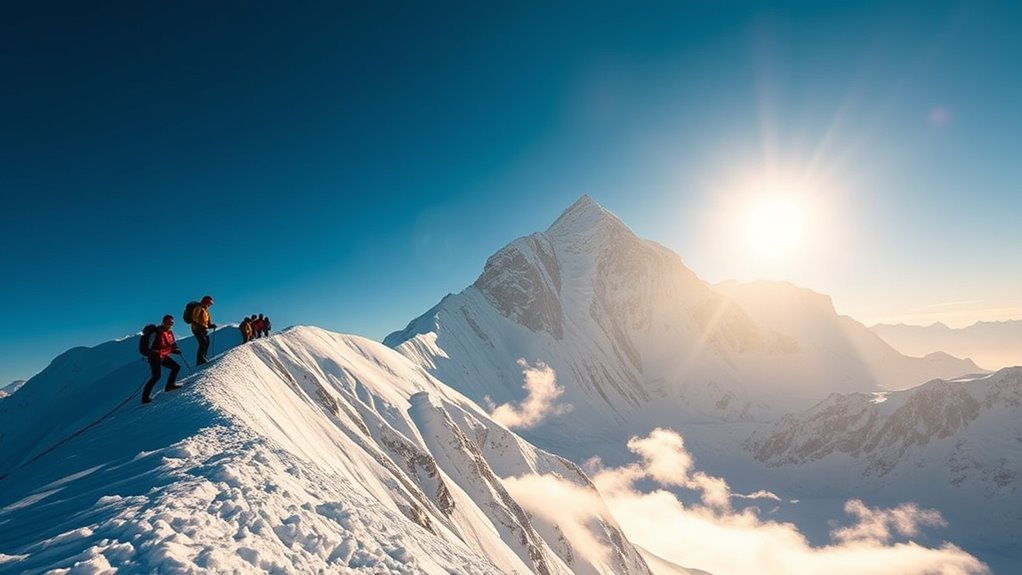
When Is the Best Everest Climbing Season?
You’ll find the best time to climb Everest is between late April and May when the weather clears, winds calm, and snowfall is minimal. This spring window offers stable conditions and better visibility, boosting your chances for a successful summit.
The clear skies and mild temperatures make it an ideal season for climbers aiming to tackle Everest.
Autumn, from late September to October, is another option with fewer crowds and dry weather. Although the temperatures begin to drop, the stable weather patterns still provide a good opportunity for ascent.
Understanding these seasonal shifts can help you plan a safer and more rewarding climb.
Keep exploring to learn what else affects your climb. Factors like altitude, physical preparation, and the right gear are just as important as timing.
So, when planning your Everest adventure, consider all these elements to maximize your success and safety.
Optimal Months for Climbing Mount Everest
Although Mount Everest challenges climbers year-round, the best time to attempt the summit is during late April and May, with May being the most popular due to stable weather and clear skies.
The best time to climb Everest is late April to May, with May favored for stable weather.
In spring, you’ll find the ideal weather windows, offering low wind speeds and minimal snowfall for safer climbs. April and May mark the prime climbing season, providing favorable conditions that increase your chances of success.
Autumn, particularly late September and October, also presents excellent opportunities with dry weather and fewer crowds, making it a quieter, more peaceful choice.
These climbing months balance stable weather and clear skies, helping you avoid the extreme cold and unpredictable storms typical outside these periods.
Factors Influencing the Everest Climbing Season
Because weather conditions on Everest can change rapidly, understanding the factors that influence the climbing season is essential for planning a successful expedition. You need to track weather patterns closely, as they directly affect summit success.
The peak climbing months, typically April to May, offer stable weather and critical weather windows lasting only a few days. Seasonal variability, including the monsoon season, impacts climatic conditions and can delay or prevent safe summit attempts.
Post-monsoon autumn, from September to early October, provides another viable climbing season with clearer skies and fewer crowds. Effective expedition planning hinges on recognizing these shifts in weather windows and climatic conditions to maximize your chances of a safe and successful ascent during the limited stable weather periods available each year.
Conclusion
When you decide to take on Everest, choosing the right season becomes your silent ally. The months of May and late September offer the gentlest embrace, where nature’s challenges are at their mildest.
While the mountain always demands respect, these windows give you the kindest chance to chase your dream safely. Remember, Everest doesn’t rush, and neither should you—trust in the timing, and your journey will be as rewarding as the summit itself.
In short, the best Everest climbing season is all about patience and timing. May and late September provide favorable weather conditions, making your climb safer and more enjoyable. So, plan your expedition around these months, respect the mountain’s rhythm, and your Everest adventure will be unforgettable. After all, conquering Everest is not just about reaching the peak—it’s about embracing the journey during the best seasons.