Is Rock Climbing in the Olympics?
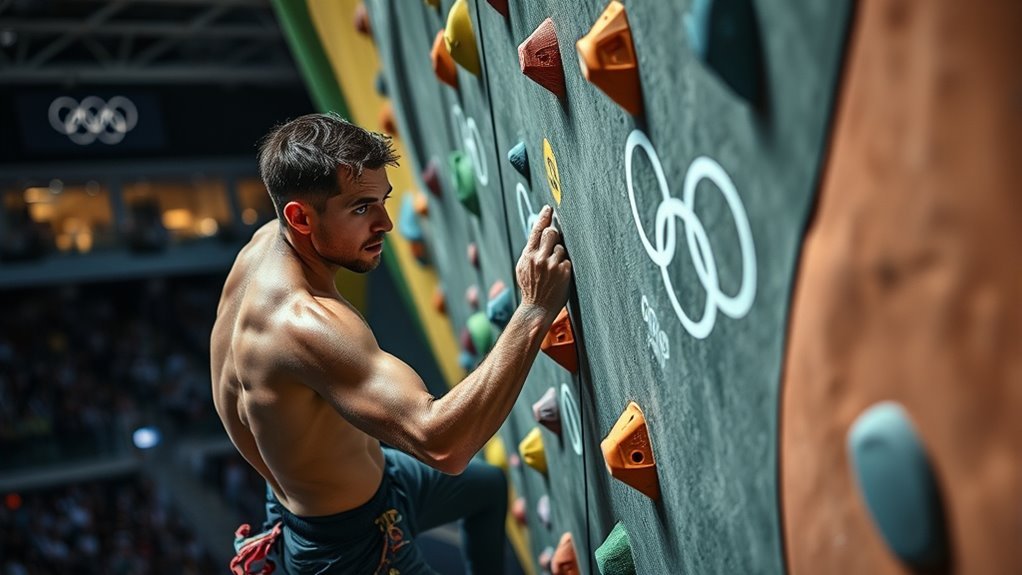
Yes, rock climbing is in the Olympics. It made its debut as a combined event at Tokyo 2020, featuring speed, bouldering, and lead disciplines. This format highlighted climbing’s diverse skills and growing popularity worldwide.
For the 2024 Olympics, speed climbing will have its own separate medal event, while bouldering and lead remain combined.
If you want to understand how these events work and the sport’s Olympic journey, there’s plenty more to explore.
Key Takeaways
- Rock climbing made its Olympic debut at the Tokyo 2020 Games. It was featured as a combined event format.
- This combined event included speed climbing, bouldering, and lead climbing disciplines. So, athletes had to be good at all three to compete.
- The International Olympic Committee approved climbing’s inclusion back in 2016. This decision showed how popular the sport was becoming.
- For Paris 2024, there’s a change: speed climbing will have its own separate medals. Meanwhile, bouldering and lead climbing will stay combined.
- Climbing really tests a wide range of athletic skills. It fits perfectly with the Olympic values of diversity and challenge.
When and How Did Rock Climbing Become an Olympic Sport?
Although rock climbing had long been popular worldwide, it only became an Olympic sport when the International Federation of Sport Climbing (IFSC) proposed its inclusion in 2015. The International Olympic Committee (IOC) approved it in 2016, which led to its debut as a combined event at the Tokyo 2020 Olympics.
You’ll find that climbing’s Olympic debut combined speed, bouldering, and lead disciplines to showcase its diverse athleticism in a single competition. This inclusion reflected climbing’s rising popularity and its alignment with Olympic values.
Before the Olympics, the IFSC World Cup helped build a competitive foundation for the sport. Looking ahead, the discipline inclusion evolves with separate medals planned for each climbing event at Paris 2024. This marks a significant shift from the initial combined event format you saw in Tokyo.
What Are the Olympic Climbing Disciplines and Format?
When you watch Olympic climbing, you’ll see three distinct disciplines: bouldering, lead climbing, and speed climbing. Each one tests different skills and strategies.
The Olympic climbing disciplines have evolved over time. For the 2024 Olympics, they split the medaling events into speed climbing and a combined boulder/lead format. This is a change from earlier games, where all three were combined into one event.
In bouldering, you solve problems on 4.5-meter climbing walls without ropes. You have a limited time to figure them out.
Lead climbing is all about ascending a 15-meter wall as high as possible within six minutes. The routes are revealed just before the event, so climbers have to think on their feet.
Speed climbing is a thrilling race up a standardized 15-meter wall. Athletes try to beat world records that are impressively under six seconds.
Qualifiers determine who gets to compete for the medals in these fast-paced, dynamic events.
Frequently Asked Questions
Is Rock Climbing in the 2028 Olympics?
Yes, rock climbing is in the 2028 Olympics. You’ll see separate medal events for speed, bouldering, and lead climbing, letting athletes focus on their specialty and showcasing the sport’s growth and excitement on a global stage.
Does the Olympics Have Rock Climbing?
You’re standing at the edge, ready to climb—yes, the Olympics do have rock climbing. Since Tokyo 2020, it’s been a thrilling part of the Games, challenging speed, strength, and skill on the world’s biggest stage.
What Sport Is No Longer in the Olympics?
You won’t find baseball and softball in the Paris 2024 Olympics since they were removed after Tokyo 2020. These sports have been dropped before due to limited global appeal and inconsistent international competition.
Does Rock Climbing Help With Osteoporosis?
Think of rock climbing as a forge for your bones; it helps strengthen them by stimulating growth and remodeling. If you climb regularly, you’ll build stronger bones and reduce your risk of osteoporosis and fractures over time.
Conclusion
If you’re excited about rock climbing in the Olympics, you’re not alone—over 2,000 athletes from 68 countries competed in the Tokyo 2020 debut. Since then, climbing’s popularity has soared, thanks to its thrilling mix of speed, bouldering, and lead events.
So, whether you’re a beginner or a fan, you can look forward to seeing even more climbers pushing their limits on the world’s biggest stage in future Games. The inclusion of rock climbing in the Olympics has really put a spotlight on the sport, attracting new athletes and fans alike.
With each Olympic cycle, the competition gets tougher and the excitement builds. Rock climbing’s dynamic and challenging nature makes it a perfect fit for the Games, promising even more unforgettable moments ahead. If you love adventure and athleticism, keep an eye on this evolving Olympic sport—it’s only going to get bigger!