10 Facts About How Many People Die Climbing Everest Each Year
You face about a 1% chance of dying on Everest, with 5 to 7 climbers typically dying each year. Though some years, like 2023, saw far higher tolls. Climbing Everest is notoriously dangerous, and understanding the risks is key if you’re thinking about taking on the challenge.
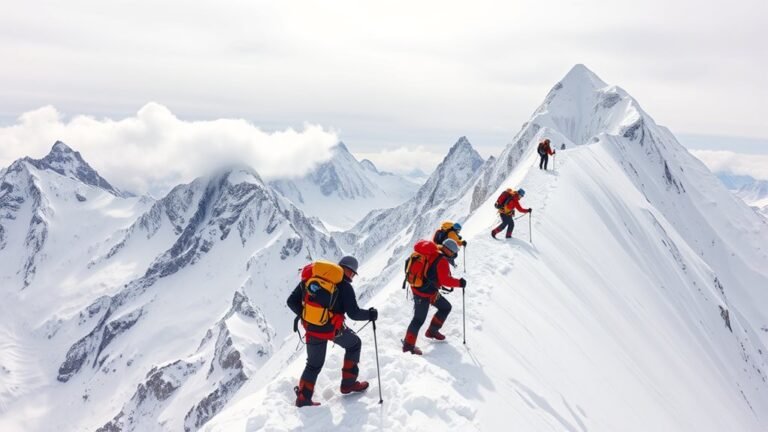
Most deaths happen above 8,000 meters in the death zone, caused by altitude sickness, falls, and avalanches.
Descents are especially risky due to exhaustion and low oxygen.
Overcrowding and oxygen shortages raise dangers too.
Want to explore what makes Everest so deadly and how climbers can prepare? Let’s dive in and uncover the facts about climbing Everest and the risks involved.
Key Takeaways
- About 5 to 7 climbers die annually on Everest. But in 2023, there were 18 deaths, which is a pretty big jump.
- Over the past century, more than 340 climbers have lost their lives on Everest. The overall death rate sits around 1%, which might seem low but is still serious.
- Most of these fatalities happen in the death zone above 8,000 meters. Up there, hypoxia and altitude sickness are major dangers climbers face.
- Falls and avalanches account for about 21% of deaths. Some common spots for falls include the Lhotse Face and the Hillary Step.
- Overcrowding and bottlenecks at key points make things worse. They increase how long climbers are exposed, lead to oxygen shortages, and raise the risk of deadly accidents.
How Many People Die Climbing Everest Each Year?
How many people die climbing Everest each year? On average, about 5 to 7 climbers lose their lives annually on Everest. Though, recent years have seen the death toll rise, with 18 deaths recorded in 2023.
The deaths per year often result from falls, altitude sickness, or sudden weather changes in the high-altitude environment. Many fatalities happen during the descent when climbers face exhaustion and crowded routes.
Falls, altitude sickness, and sudden weather changes cause many Everest deaths, especially during the exhausting descent through crowded routes.
The death zone, where oxygen levels are dangerously low, adds to these risks. It also makes body recovery extremely difficult.
Over the past century, more than 340 climbers have died on Everest, maintaining a roughly 1% death rate per climber. Understanding these facts helps you grasp the serious risks involved in climbing this formidable mountain.
How Does Everest’s Death Zone Increase Climber Risks?
Because the death zone lies above 8,000 meters with dangerously low oxygen levels, it greatly increases the risks climbers face on Everest. In this zone, oxygen deprivation causes hypoxia, impairing your decision-making and physical coordination.
You’re more vulnerable to altitude sickness and frostbite as your body struggles to function. Prolonged exposure leads to organ failure, making every step harder.
The descent dangers multiply since you’re already exhausted and weakened, increasing the chance of falls or accidents. You can only survive about 16-20 hours here without supplemental oxygen, so time is critical.
The death zone’s extreme conditions push your body beyond limits, substantially raising climber risks and making Everest one of the deadliest mountains to conquer.
What Are the Leading Causes of Death on Everest?
You face serious risks like altitude sickness and hypoxia when climbing Everest, especially without supplemental oxygen. Falls and avalanches are deadly hazards that can strike at any moment.
On top of that, exhaustion and harsh weather greatly increase your chances of fatal accidents during the descent. It’s a tough climb, and these dangers just add up quickly.
Altitude Sickness And Hypoxia
Although many factors contribute to the dangers of climbing Everest, altitude sickness and hypoxia stand out as the leading causes of death. At high altitude, low oxygen levels cause oxygen deprivation, leading to hypoxia and mountain sickness.
You might experience symptoms like headache, dizziness, or nausea, but severe cases develop into cerebral edema or hypoxic injury. Without supplemental oxygen, your body struggles to function, impairing judgment and coordination.
This increases your risk during the climb, especially on descent when exhaustion sets in. On Everest, many fatalities occur because climbers push past their limits, ignoring warning signs of altitude sickness.
If untreated, the lack of oxygen can cause cardiac arrest or stroke. So, understanding and respecting these dangers is really vital to surviving Everest’s extreme environment.
Falls And Avalanches
While altitude sickness claims many lives on Everest, falls and avalanches take an even larger toll each year. On Mount Everest, these two death causes account for about 21% of fatalities. So, they’re actually the most common risks you face.
Falls often happen in technical sections like the Lhotse Face and Hillary Step. These spots have icy, unstable terrain that really challenges your footing. Plus, fatigue and disorientation during the descent make slipping more likely.
Avalanches are another big danger. Remember the infamous 2014 serac collapse? Avalanches like that can sweep climbers and Sherpas away without warning, causing dozens of deaths.
These hazards are a tough reminder that no matter how experienced you are, the mountain demands constant vigilance. Understanding how falls and avalanches claim lives helps you prepare better and respect Everest’s unforgiving nature.
Exhaustion And Weather Risks
Falls and avalanches pose serious dangers on Everest, but exhaustion and harsh weather conditions claim even more lives each year. When you’re climbing at high altitude, especially in the death zone, your body’s limits are pushed to the extreme.
Exhaustion can impair your judgment and physical strength, making descents particularly dangerous. Sudden storms and blizzards bring freezing temperatures that increase frostbite and hypothermia risks. You’ll face these dangers most during summit attempts or long waits caused by overcrowding.
Key risks include:
- Exhaustion leading to poor decisions
- Sudden storms and blizzards
- Hypothermia from extreme cold
- Frostbite in freezing weather conditions
- Delays in the death zone worsening physical strain
Understanding these risks helps you prepare better and stay safer on Everest.
Why Do More Deaths Happen During Everest Descents?
Because climbers are exhausted and disoriented after reaching Everest’s summit, most deaths happen during the descent. Your oxygen levels drop, and fatigue sets in, which impairs your decision-making and coordination.
Most Everest deaths occur during descent due to exhaustion, low oxygen, and impaired decision-making.
This makes you more prone to accidents like falls or slips on the treacherous terrain. Weather conditions often worsen in the afternoon, with storms and high winds reducing visibility and increasing danger.
At such high altitude, altitude sickness and hypothermia become serious threats, sometimes causing loss of consciousness. You might rush your descent to avoid nightfall or get delayed by bottlenecks, both of which add risk.
All these factors combine to make the descent far deadlier than the climb up, demanding extra caution and awareness to survive.
How Does Supplemental Oxygen Improve Survival on Everest?
Supplemental oxygen dramatically boosts your chances of reaching Everest’s summit and making it back alive by preventing hypoxia, a life-threatening oxygen deficiency at high altitudes. Without it, your risk of organ failure and death in the death zone skyrockets.
Using supplemental oxygen improves your climbing safety and increases your success rate by about 20 times. It really makes a huge difference when you’re up there.
Here’s how supplemental oxygen helps you survive on Everest:
- Prevents hypoxia, keeping your brain and organs functioning.
- Enhances physical performance in the death zone’s extreme conditions.
- Reduces exhaustion during the critical descent phase.
- Lowers the risk of altitude sickness and organ failure.
- Contributes to the overall decline in fatality rates despite more climbers.
Choosing supplemental oxygen is essential for your survival and success on Everest. You definitely don’t want to climb without it.
Where Do Most Fatalities Occur on Everest and Why?
While supplemental oxygen greatly improves your chances of surviving the climb, most fatalities on Everest actually happen during the descent. The majority of deaths occur in the death zone above 8,000 meters, especially along the standard Southeast Ridge climbing route near the Hillary Step. At this high altitude, your body weakens, making you vulnerable to exhaustion and altitude sickness.
Dangerous sections like the Khumbu Icefall and Lhotse Face also see many accidents due to avalanches and unstable ice. Weather changes can worsen conditions quickly, adding to the risk. On crowded summit days, bottlenecks increase delays during descent, raising the chances of fatal incidents.
Understanding where most deaths happen helps you prepare for the most dangerous parts of the climb and respect the mountain’s challenges. It’s all about knowing what you’re up against before you take that next step.
Why Are Many Bodies Left on Everest’s Slopes?
You might wonder why so many bodies remain on Everest’s slopes despite the tragedy. The harsh conditions and extreme risks make recovery nearly impossible.
Plus, the frozen remains often stand as silent reminders of the mountain’s dangers. It’s kind of like a warning to those who dare to climb.
Understanding this helps you see how respect and safety shape these difficult decisions. It’s not just about retrieval, but honoring those who faced the mountain’s might.
Recovery Challenges And Risks
Because Everest’s extreme weather and high altitude make recovery operations perilous, many bodies remain on its slopes. You’ll find that body recovery here faces unique challenges due to rescue risks and extreme conditions.
High-altitude rescue is rarely attempted because it puts rescuers’ lives in jeopardy. Frozen bodies become too heavy and inaccessible for safe body retrieval. Here’s why many body remains are left behind:
- Harsh weather limits rescue operations windows
- Low oxygen levels increase rescue risks
- Frozen bodies are difficult to move
- Terrain makes carrying bodies dangerous
- High costs deter extensive recovery efforts
When you understand these factors, it becomes clear why Everest’s slopes hold so many unrecovered climbers.
Symbolism Of Mountain Bodies
Many climbers who lose their lives on Everest remain on the mountain, their frozen bodies becoming somber markers along the routes. These dead bodies, like the famous Green Boots, serve as grim landmarks that highlight the mountain’s dangers.
Because of the high-altitude environment, recovering bodies involves extreme risks, high costs, and logistical challenges. So, most are left where they fell. You’ll see these bodies as silent reminders of Everest’s peril and the price of mountaineering ambition.
While it’s a practical decision to leave them, their presence constantly symbolizes the mountain’s deadly nature. When you climb Everest, you confront not just the physical challenge but also these stark reminders of what can happen if the risks aren’t respected.
How Does Overcrowding Increase Fatalities on Everest?
When climbers face overcrowding on Everest, long queues form in critical areas like the Hillary Step. This forces them to spend dangerous extra time in the death zone.
This congestion worsens risks during summit attempts and increases fatalities. You’ll find overcrowding impacts safety in several ways.
Extended exposure to high-altitude conditions causes exhaustion and altitude sickness. Delays in descent heighten the chances of accidents in treacherous terrain.
Prolonged altitude exposure drains strength and delays increase accident risks on Everest’s perilous slopes.
Running out of supplemental oxygen during bottlenecks raises fatality risks. Inexperienced climbers may panic or make poor decisions amid congestion.
Fatigue from waiting and climbing increases descent risks, leading to more deaths.
Overcrowding turns Everest’s already deadly environment into a perilous struggle against both nature and human traffic.
How Does Everest’s Death Rate Compare to Other Mountains?
When you compare Everest’s death rate to other mountains, you’ll see it’s much higher than peaks like Kilimanjaro, which has a far lower fatality rate. Factors like extreme altitude, overcrowding, and harsh weather put climbers at greater risk on Everest.
It’s these tough conditions that really set Everest apart. Understanding these differences helps explain why Everest remains one of the deadliest mountains to climb.
Death Rate Comparison
Although Everest records the highest number of climbing deaths, its average annual death rate of about 1% is lower than some more technically demanding peaks like K2, which sees around 25%.
When you examine death statistics, you’ll find Everest fatalities stem largely from high-altitude risk and overcrowding hazards rather than technical difficulty.
Here’s how Everest compares to other mountains:
- K2’s death rate: ~25% due to extreme technical challenges
- Everest’s death rate: ~1% despite high-altitude risk and overcrowding
- Kilimanjaro’s death rate: 0.03%, much lower due to easier terrain
- Denali benefits from better safety infrastructure, lowering mountaineering accidents
- Everest’s death rate remains 4-5 times higher than many trekking peaks
Understanding these factors helps you grasp the true risks behind climbing deaths on Everest.
Kilimanjaro Versus Everest
Comparing Everest’s death rate to other mountains highlights just how demanding it is. Everest’s death rate is about 1%, roughly 30 times higher than Kilimanjaro’s 0.03%.
You’ll find Kilimanjaro’s fatalities mostly stem from altitude sickness and falls, while Everest’s involve hypoxia, avalanches, and exposure to extreme environmental hazards. Kilimanjaro’s easier climbing routes and better safety measures help keep its death rate low.
Everest’s challenging terrain and deadly “death zone” push risks much higher.
| Mountain | Death Rate | Common Causes |
|---|---|---|
| Everest | ~1% | Hypoxia, avalanches, exposure |
| Kilimanjaro | 0.03% | Altitude sickness, falls |
| Climbing Routes | Complex (Everest) | Easier (Kilimanjaro) |
Understanding these differences helps you appreciate Everest’s extreme dangers.
Factors Affecting Mortality
Because Everest’s extreme altitude and harsh conditions push climbers to their limits, its mortality rate stands out compared to other mountains. While Everest averages a 1% death rate, far higher than Kilimanjaro’s 0.03%, it’s still lower than Annapurna’s deadly 32%.
You’ll find Everest’s climbing fatalities influenced by unique factors, including:
- The deadly death zone above 8,000 meters causing severe high-altitude sickness
- Unpredictable weather hazards that can turn deadly fast
- Frequent avalanches posing constant risks
Overcrowding leads to dangerous delays and increased accidents. Plus, the technical difficulty combined with rescue challenges in harsh conditions doesn’t help.
These elements collectively raise Everest’s risk, making it one of the most perilous peaks you can attempt.
What Safety Measures Have Reduced Deaths on Everest?
When you prepare to climb Everest today, advanced gear, improved clothing, and reliable oxygen systems play a crucial role in keeping you safe. Key safety measures like fixed ropes, ladders, and marked routes really help reduce accidents.
Weather monitoring and medical support allow better risk management and emergency response. Plus, stricter regulations and experienced guides further lower fatalities.
| Safety Measure | Impact on Climbing Safety |
|---|---|
| Oxygen Systems | Maintain climber oxygen levels |
| Fixed Ropes | Secure ascent and descent |
| Weather Monitoring | Avoid dangerous conditions |
| Medical Support | Immediate treatment on-site |
| Regulations & Risk Management | Enforce safety standards |
All these improvements have worked together to reduce deaths and make Everest climbs safer over recent years.
Frequently Asked Questions
How Many Died on Everest Last Year?
Last year, 18 climbers died on Everest, marking one of the deadliest seasons in recent times. You should know that despite advances, climbing Everest remains incredibly risky, and fatalities can spike during tough conditions or overcrowding.
Who Is the Youngest Person to Die on Everest?
The youngest person to die on Everest was Chhiring Dorje Sherpa, who was only 15 years old. He fell ill during his descent near Camp 4 in 2014, highlighting the mountain’s extreme risks for young climbers.
What Is the Deadliest Year on Everest?
You’ll find 2015 stands as Everest’s darkest shadow, where earth’s trembling set free a deadly avalanche. That year, nature’s fury carved sorrow into the mountain’s heart, marking it as the deadliest season ever recorded.
How Do Most Climbers Die on Everest?
Most climbers die on Everest from falls, avalanches, or severe exposure, especially during the descent. You’ll face exhaustion, altitude sickness, and hypoxia, which can impair your judgment and make survival incredibly challenging in the “death zone.”
Conclusion
Climbing Everest is no small feat, and the risks are very real. You might think you know what causes most deaths, but the truth is more complex—and chilling—than you expect.
From deadly descents to oxygen shortages and overcrowding, every factor plays a role you can’t ignore. These dangers add up, making the mountain one of the deadliest climbs on Earth.
So before you dream of standing on the summit, ask yourself: Are you ready to face the mountain’s ultimate challenge—and survive it? Understanding how many people die climbing Everest each year is crucial. It’s not just about reaching the top; it’s about making it back down safely. If you’re thinking about taking on Everest, remember that preparation and respect for the risks can make all the difference between life and death.