7 Steps to Start Indoor Rock Climbing Today
To start indoor rock climbing today, first find a nearby gym that offers beginner-friendly routes and rental gear. Indoor climbing gyms are perfect for newbies because they provide a safe environment and all the equipment you need.
Dress in comfortable, flexible clothes and wear snug climbing shoes. These help you move easily and grip better on the walls.
Next, learn how ropes and belay systems keep you safe. It’s important to understand how the equipment works before you start climbing. Practice safe falling techniques too, so you can build trust in the gear.
Master basic climbing moves and safety commands. Once you feel confident, begin your first climb with control and focus.
Keep progressing by building your strength and skills. Indoor rock climbing is a fun and challenging activity with plenty more to discover along the way!
Key Takeaways
- Find a nearby climbing gym with beginner routes, rental gear, and good reviews. This helps make sure the place is safe and welcoming for you.
- Wear flexible athletic clothing and snug climbing shoes. Don’t forget to bring chalk to improve your grip and comfort while climbing.
- Learn how to use ropes, belay devices, and the communication commands climbers use. This is super important for safety and working well with your climbing partner.
- Practice proper body positioning, controlled movements, and foot placement. These skills help you build technique and confidence on the wall.
- Gradually increase the difficulty of routes you try. Work on strengthening your grip and core, and practice safe falling. This will boost your endurance and help you trust the equipment more.
Find the Right Indoor Rock Climbing Gym Near You
Before you hit the walls, you’ll want to find the right indoor rock climbing gym near you. Use online directories, search engines, or climbing app platforms to locate climbing gyms with indoor climbing facilities close by.
Focus on a nearby gym that offers beginner-friendly routes, introductory courses, and rental gear options if you’re new. Check reviews and ratings to guarantee the gym upholds safety standards, has clean equipment, and employs helpful staff.
Also, consider the variety of routes and wall types, like bouldering, top-rope, or lead climbing, plus amenities such as training zones or kids’ areas. Don’t forget to verify the gym’s hours and how easily you can get there—this will help you find an option that fits your schedule and accessibility needs perfectly.
Dress Comfortably and Gear Up for Indoor Rock Climbing
Once you’ve chosen the right gym, it’s time to focus on what you wear and the gear you’ll need. Start by dressing in comfortable clothing—opt for athletic wear or breathable fabrics that let you move freely. Avoid jeans or anything restrictive.
Choose comfortable, breathable athletic wear that allows free movement; avoid restrictive clothing like jeans.
Next, gear up with climbing shoes; these should fit snugly and feel slightly tight to grip small holds effectively. Don’t forget a chalk bag to keep your fingers dry, especially on tougher routes.
Trim your nails beforehand to prevent tears and improve grip. Finally, bring an extra layer or towel to stay warm and dry between climbs. That way, you’ll stay comfortable throughout your session.
With the right attire and gear, you’ll be ready to climb confidently and safely indoors. Sounds good, right? Let’s get climbing!
How the Ropes and Belay Systems Keep You Safe
Understanding how ropes work and how belaying keeps you secure is key to climbing safely. You’ll learn how ropes absorb falls and how a belayer manages tension to catch you if you slip.
Mastering these basics gives you confidence and control on the wall. It’s all about staying safe while having fun!
Rope Mechanics Explained
Although climbing might seem risky at first, the ropes and belay systems are engineered to keep you safe by controlling falls and managing tension. The ropes are made from high-strength materials, designed to absorb the impact of falls without breaking.
Your belayer uses a belay device, which applies friction to the rope, allowing them to control slack and stop you quickly if you fall. This friction is essential—it slows the rope’s movement, preventing sudden drops.
Some gyms use auto-belay systems that automatically catch you without a partner, relying on mechanical friction mechanisms. To stay safe, always confirm your ropes and belay devices are regularly inspected and maintained. Their integrity is critical in managing the forces involved during your climb.
Belaying Basics and Safety
Belaying is the essential skill that keeps you safe when climbing indoors. It involves managing the rope through a belay device to control your partner’s ascent and descent, guaranteeing safety at all times.
To master belaying basics and maintain safety, remember these three key steps:
- Check your harness and knots thoroughly before climbing to ensure everything is secure.
- Keep the rope taut using a belay device, like an ATC or assisted-braking system. This helps control slack and provides friction for safe braking.
- Communicate clearly with your climbing partner. Pay close attention to commands and stay focused throughout the climb.
Practice Safe Falling to Build Trust in the Equipment
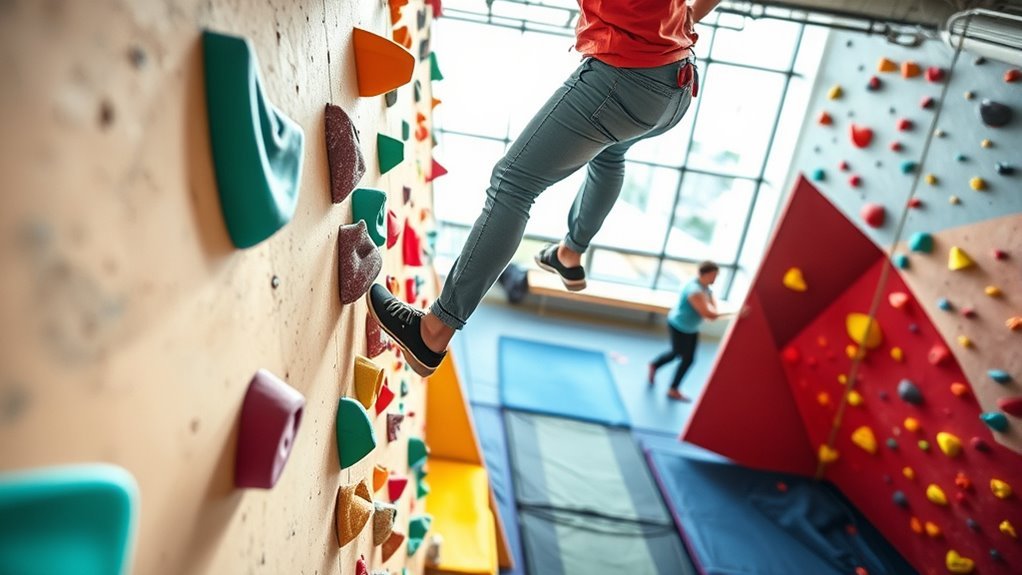
Before you start climbing higher, you need to practice safe falling to build trust in the equipment and your own ability to land correctly. Falling onto crash pads creates a controlled environment where you can learn how to tuck your arms and roll upon impact, distributing force evenly across your body.
This technique not only helps you achieve a safe landing but also reduces the risk of injuries like sprains or fractures. Make sure the fall zones are clear of obstacles before you practice falling intentionally.
Repeating these falls gradually desensitizes your fear of falling, making real climbs feel less intimidating. By mastering safe falling, you’ll gain confidence in both the crash pads and your skills, setting a solid foundation for your climbing journey.
Learn Basic Climbing Techniques and Safety Commands
You’ll want to learn essential climbing commands like “On belay” and “Climb on” to communicate clearly with your belayer and stay safe. Focus on proper body positioning by using your legs to push up and keeping your arms straight when resting.
Mastering these basics will help you climb more efficiently and build trust with your climbing partner. It really makes a difference when you both know what to expect and work together smoothly.
Essential Climbing Commands
Although climbing can be thrilling, clear communication between you and your belayer is vital for safety. Using standard climbing commands helps prevent accidents and keeps your climb smooth.
Here are three essential commands you need to master:
- “On belay?” and “Belay on” – Always ask if the belayer is ready before you start. Wait for their “Belay on” confirmation to ensure they’re prepared to support you.
- “Climbing” and “Climb on” – Signal when you’re beginning your ascent and when the belayer can start managing the rope accordingly.
- “Slack!” and “Take!” – Use these to communicate rope tension needs, helping your belayer keep the rope safe and taut.
Consistently using these climbing commands builds a solid safety routine. It also guarantees clear, effective communication during your climb.
Proper Body Positioning
When climbing indoors, keeping your hips close to the wall and facing the hold you want helps you stay balanced and use your energy efficiently. Proper body positioning is key to maintaining balance and reducing fatigue.
Use your legs to push yourself upward instead of relying solely on your arms, which tires you out faster. Keep your arms straight when resting on holds to minimize muscle strain and recover more quickly.
Pay close attention to your footholds—place your feet precisely and use the edges of your shoes for better grip and control. This focus on body positioning not only improves your climbing efficiency but also keeps you safer on the wall.
Mastering these basics sets a strong foundation for your indoor climbing journey. It really makes a difference as you get better and tackle more challenging routes.
Communicating With Belayer
How do you guarantee safety and smooth coordination while climbing? It all starts with clear communication between you and your belayer. Using standard commands ensures both of you stay on the same page.
Here’s what you need to remember:
- Before climbing, ask “On belay?” and wait for your belayer to confirm with “Belay on.” This command exchange confirms readiness.
- Signal your start by saying “Climbing” or “Climb on” so your belayer knows you’re moving.
- Use “Slack!” to request more rope and “Take!” to ask for the rope to be tightened when you need a rest or extra security.
Make sure you maintain eye contact to reinforce these commands. Good communication with your belayer is really key to a safe, efficient climb.
Start Your First Climb With Confidence and Control
Before you start your first climb, make sure you’ve warmed up properly and slipped on snug-fitting climbing shoes without socks to enhance your grip. These shoes help you feel the holds better and give you more control.
As you begin, focus on your body positioning: keep your hips close to the wall and use your legs to push upward instead of relying only on your arms. This approach saves energy and improves balance.
Move deliberately, placing your feet carefully on each hold. Controlled movements not only boost your confidence but also keep you steady and safe.
Build Strength and Confidence for Indoor Rock Climbing
Mastering your first climb with proper technique sets the foundation. But building strength and confidence will help you tackle tougher routes with ease.
Starting with solid technique lays the groundwork; strength and confidence open the path to harder climbs.
To boost your climbing strength and confidence, focus on these key steps:
- Incorporate finger and grip exercises like hangboarding and grip trainers. These will strengthen your hold and improve body positioning.
- Practice proper footwork and core exercises such as planks and leg raises. This helps enhance stability and reduces effort on the wall.
- Gradually increase your climbing difficulty and simulate safe falls. Doing this builds endurance and trust in your safety system.
Frequently Asked Questions
How to Get Started With Indoor Rock Climbing?
You should find a local gym, join an orientation class, rent beginner gear, and focus on learning safety and technique. Practice regularly, communicate with your belayer, and gradually challenge yourself while seeking advice from experienced climbers.
Is Rock Climbing Good for Osteoporosis?
Think of rock climbing as a shield for your bones—it’s great for osteoporosis. You’ll boost bone density, strengthen your core, and improve grip, but don’t forget to check with your doctor before you start climbing.
What Is the 3 Second Rule in Bouldering?
The 3 Second Rule in bouldering means you pause for at least three seconds to shake out your arms between moves. You’ll prevent fatigue, improve grip endurance, and plan your next move more effectively during climbs.
Can Climbing Cause Plantar Fasciitis?
Yes, climbing can cause plantar fasciitis if you don’t wear proper shoes or warm up correctly. You might strain your foot’s tissue from repetitive stress or poor foot positioning, so always stretch and choose supportive footwear.
Conclusion
Now that you’ve got the basics, imagine the thrill of reaching the top on your very first climb. You’re not just stepping into a gym—you’re stepping into a world where every hold challenges you and every climb builds your strength and confidence.
Ready to push your limits and discover what you’re truly capable of? Your adventure in indoor rock climbing starts now—grab the harness and see how high you can go.
Indoor rock climbing is more than just a workout; it’s a journey of personal growth, fun, and fitness. Whether you’re looking to improve your strength, challenge your mind, or meet new friends, climbing gyms offer a welcoming space for all levels.
So, lace up your climbing shoes, chalk your hands, and take that first step onto the wall. The world of indoor rock climbing is waiting for you—are you ready to climb higher and reach new heights today?