
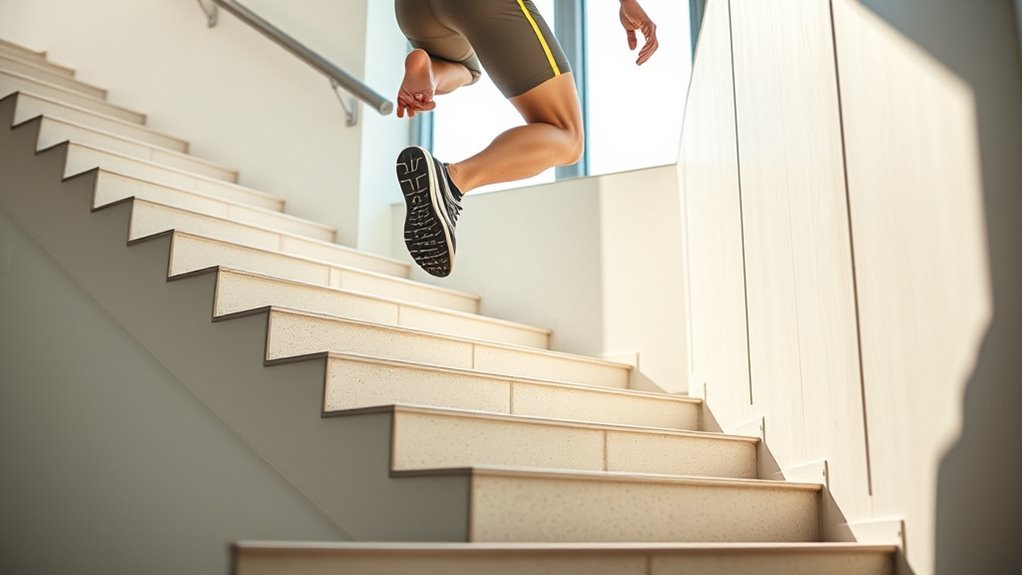
10 Steps to Do Stair Climbing Correctly
To do stair climbing correctly and get the most out of your workout, it’s important to focus on form and technique. Keep your back straight and engage your core for stability as you move. This will help prevent injury and make your climb more effective.
Place your entire foot firmly on each step, landing heel first. Avoid stepping on the edges of the stairs to stay safe and maintain balance. Move deliberately, pushing through your heels to activate key muscles in your legs and glutes.
As you get comfortable, gradually increase the intensity by adding interval training. You can also try two-step climbs to challenge yourself and boost your endurance.
Skip the handrails whenever it feels safe to do so—this helps build better balance.
Don’t forget to combine stair climbing with other exercises for a well-rounded fitness routine. And always listen to your body to avoid overdoing it or risking injury.
You’ll find plenty more tips to boost your workout efficiency as you go!
Key Takeaways
- Keep your back straight, shoulders back, and engage your core to maintain proper posture and spinal alignment during stair climbing.
- Step firmly with your entire foot, landing heel first to engage glutes and hamstrings effectively.
- Maintain a steady, controlled pace and avoid rushing to maximize muscle engagement and minimize injury risk.
- Avoid holding handrails to improve balance and strengthen stabilizer muscles around ankles, knees, and hips.
- Gradually increase intensity and duration, incorporating intervals and varied exercises to boost fitness and prevent overexertion.
Maintain Proper Stair Climbing Posture and Core Engagement
When you climb stairs, keeping your back straight and shoulders back helps align your spine and prevent strain. You should engage your core by pulling your belly button inward, which supports proper posture and adds stability.
Maintaining an upright stance with your head facing forward is essential—avoid leaning forward or backward, as this can throw off your balance. Pay attention to keeping your hips level and balanced to assure even weight distribution on each step.
Move deliberately and with control, focusing on maintaining good form throughout the climb. This approach not only protects your body from unnecessary strain but also maximizes the effectiveness of your stair climbing workout by promoting core engagement and overall body stability.
Use the Right Foot Placement in Stair Climbing
Maintaining proper posture and core engagement sets a solid foundation for safe and effective stair climbing, but your foot placement plays an equally important role in optimizing performance and preventing injury.
Proper posture and core engagement are essential foundations, but precise foot placement is key to safe and efficient stair climbing.
Always land heel first when stepping onto a stair to effectively activate your glutes and hamstrings. Make sure to place your entire foot firmly on the stair, which helps maintain balance and reduces strain on your ankle joint.
Keep your toes slightly pointed forward or naturally aligned with your heel to support proper foot mechanics. Avoid stepping on the edge of the stair, as this increases the risk of slipping or losing balance.
Focus on distributing your weight evenly across the foot to improve stability and prevent overloading any single area during each step. It’s a simple thing that can make a big difference in how you climb.
Step Deliberately to Maximize Muscle Activation
To maximize muscle activation during stair climbing, take deliberate, controlled steps that focus on how your foot contacts each stair. When you step deliberately, push through your heel to engage your glutes and hamstrings effectively.
Concentrate on heel contact rather than landing on your toes, as this targets key muscles and helps reduce calf soreness. Maintain a steady pace and avoid rushing—this guarantees your muscles work purposefully with every movement.
By using mindful, intentional stepping, you turn each step into a powerful workout moment, increasing overall efficiency. Remember, it’s not about speed but the quality of each step.
When you step deliberately, you maximize muscle activation and get the most out of your stair climbing routine. So, take your time and really feel each movement.
Incorporate Interval Training Into Your Stair Workouts
To get the most from your stair workouts, try adding interval training by mixing moderate climbs with short, high-intensity bursts like sprints. This approach boosts your heart rate and burns more calories than steady climbing alone.
You’ll also break through plateaus and build endurance faster by varying your effort levels. It’s a simple way to keep things interesting and challenge yourself. Give it a shot and see the difference!
Interval Training Benefits
Although stair climbing itself is a great workout, incorporating interval training by alternating between moderate-paced climbs and high-intensity bursts can substantially boost your heart rate and calorie burn. Interval training on stairs improves cardiovascular fitness more effectively than steady-state exercise alone.
Aim for short, intense intervals lasting 30 seconds to 1 minute, followed by equal or slightly longer recovery periods. This approach not only elevates your heart rate during exercise but also revs up your metabolism for hours afterward, enhancing fat loss and endurance.
To keep progressing, gradually increase the intensity and duration of your high-effort bursts over time. By consistently applying interval training, you’ll maximize the benefits of your stair workouts and see faster improvements in your overall fitness.
High-Intensity Stair Bursts
When you add 20-30 second high-intensity bursts like sprinting up the stairs into your routine, you’ll markedly boost your cardiovascular fitness and calorie burn. Incorporate these bursts by sprinting up stairs, then recover at a moderate pace for 1-2 minutes.
This interval training approach elevates your heart rate, amplifying workout intensity just like HIIT. By alternating maximal effort with recovery, you improve muscular endurance and explosiveness, pushing your limits during short, intense stair climbing sprints.
Research shows this method can increase calorie burn by up to 50% compared to steady-paced climbing. To maximize fitness gains and avoid overtraining, gradually increase the duration and frequency of your high-intensity stair bursts.
This strategy transforms your stair climbing workout into a powerful, efficient fitness routine. Give it a try and feel the difference!
Challenge Yourself With Two-Step Climbing Techniques
If you want to boost the intensity of your stair workout, try taking two steps at a time. This technique engages more muscle groups in your glutes, hamstrings, and calves, giving you a more effective lower-body workout.
When climbing, push through both heels simultaneously to maximize muscle activation and build strength. Just be mindful to use larger strides carefully—maintain proper form to avoid overexertion or losing balance.
Start by mastering single-step climbing, then gradually progress to two-step climbing to safely challenge your cardiovascular and muscular endurance. It’s a smart way to build up without rushing.
Incorporating two-step movements into your routine not only ramps up intensity but also enhances your lower body power and stability. So, challenge yourself with two steps and feel your strength and stamina improve with every flight.
Use Stair Landings to Add Strength Exercises
Why limit yourself to just climbing stairs when you can use the landings to boost your workout? Stair landings provide a stable platform where you can perform lunges, squats, or step-ups to strengthen your lower body.
These exercises improve stability, coordination, and engage your core for a full-body workout. Alternating between climbing and strength exercises on stair landings increases muscle engagement and calorie burn.
| Exercise | Muscle Focus | Benefits |
|---|---|---|
| Lunges | Quads, Glutes | Enhances balance and stability |
| Squats | Hamstrings, Core | Builds lower body strength |
| Step-ups | Glutes, Calves | Improves functional strength |
| Balance holds | Core, Legs | Reduces fall risk, boosts control |
Use stair landings smartly to maximize your workout efficiency. It’s a simple way to get more out of your routine!
Stay Hydrated and Listen to Your Body During Stair Climbing
Although stair climbing is a powerful workout, staying hydrated and listening to your body are essential to maintaining energy and preventing injury. Sip water regularly between sets to keep hydration levels up and support muscle function.
Aim to drink at least 8 ounces before and after your session to prevent dehydration. Dehydration can impair your performance and recovery, so it’s important to stay on top of it.
Pay close attention to signs of fatigue, dizziness, or lightheadedness, and don’t hesitate to take breaks as needed. If you experience chest pain or shortness of breath, reduce intensity or pause immediately.
Prioritizing hydration and tuning into your body helps you avoid overexertion, muscle cramps, and other health issues. This way, you ensure a safer, more effective stair climbing workout.
Build Balance by Avoiding Handrail Support
To build balance effectively during stair climbing, you should avoid holding onto the handrails. When you rely less on handrails, you engage your core muscles and improve your natural balance.
Avoid holding handrails while climbing stairs to engage your core and boost natural balance.
This also strengthens the stabilizer muscles around your ankles, knees, and hips, which are key for stability. Gripping handrails too much can lead to poor posture and lessen the workout’s benefits for balance.
Start by practicing with minimal or no handrail support, gradually building your confidence and stability. Keep your posture centered and avoid leaning on the rails to prevent dependency.
This approach enhances your proprioception and body awareness, making your stair climbing more effective and safe. Remember, challenging yourself by avoiding handrails helps you develop better balance over time.
Build Stair Climbing Intensity Over Time Safely
Once you’ve built your balance by reducing handrail support, you can safely start increasing your stair climbing intensity. Gradually increase your climbing duration over several weeks, starting with 8 flights and progressing to 12 to avoid overexertion.
Try mixing things up with interval training—combine moderate climbs with high-intensity bursts like jogging or skipping steps. Always keep an upright posture and engage your core muscles to prevent strain.
Once you’re comfortable with bodyweight climbing, you can cautiously add resistance like ankle weights or a weighted vest to build strength. Just remember to listen to your body, take regular breaks, and reduce intensity if you feel discomfort or fatigue.
These steps will help you build stair climbing intensity safely and sustainably.
- Gradually increase climbing duration and intensity
- Use interval training with varied intensity
- Maintain proper posture and core engagement
- Add resistance only after mastering bodyweight climbing
Combine Stair Climbing With Other Exercises for Faster Results
If you want to see faster results from stair climbing, combining it with other exercises can give your workouts a powerful boost. Mix climbing stairs with lunges, squats, or leg lifts on one leg to strengthen your lower body and leg muscles.
Try alternating stair steps with push-ups or planks to enhance calorie burn. You can also use gym equipment like ankle weights for added resistance.
Incorporate three to four sets of stair intervals with cardio moves like jumping jacks. This combo maximizes your stamina and muscle tone using stairs for fitness.
| Exercise Combo | Benefit |
|---|---|
| Lunges + stairs | Builds lower body strength |
| Push-ups + stair steps | Increases calorie burn |
| One leg lifts + climbing | Enhances balance and muscle |
| Ankle weights + stairs | Boosts resistance |
| Cardio + stairs | Improves endurance |
Frequently Asked Questions
What Is the Correct Way to Climb Stairs?
You climb stairs correctly by keeping your shoulders back, chest lifted, and core engaged. Push through your heels with each step, take deliberate movements, and maintain a steady pace to protect your joints and maximize muscle activation.
Do Stairs Help Calf Muscles?
Ready to step up your fitness? Stairs definitely help your calf muscles by pushing you to lift and balance with every step. You’ll feel stronger, more toned, and energized as your calves get worked with every climb.
Is Stair Climbing Good for Bone Density?
Yes, stair climbing is great for your bone density. It’s a weight-bearing exercise that stimulates bone growth and strengthens your hips and spine, helping reduce osteoporosis risk. Just climb regularly to keep your bones strong.
Are Stairs Good for Bad Knees?
Sure, stairs are just *terrible* for bad knees—if you’re trying to ignore proper form and move like a reckless superhero. But if you take it slow and steady, they actually help strengthen and support your joints.
Conclusion
By following these 10 steps, you’ll climb stairs more efficiently and safely while boosting your fitness. Did you know stair climbing burns about 8 calories per minute—more than jogging?
That means every deliberate step you take not only strengthens your legs and core but also torches calories fast. Keep challenging yourself, stay hydrated, and mix up your routine to enjoy steady progress.
Stick with it, and you’ll see powerful results in no time! Remember, consistent stair climbing improves endurance, muscle tone, and overall health. So, make stair climbing a regular part of your fitness routine and enjoy the benefits of a stronger, leaner body while burning calories effectively.