How to Clean and Care for Climbing Shoes in 7 Steps
To clean and care for your climbing shoes in seven easy steps, start by gently wiping the interior with mild soap. Then, disinfect them using hydrogen peroxide or a vinegar solution to keep them fresh and odor-free.
Next, remove dirt from the soles using a soft brush. For stubborn spots, lightly sand them to maintain good grip and performance.
Always air dry your shoes away from heat sources. Stuff them with paper to absorb moisture and help them keep their shape.
When storing, use breathable bags and keep the shoes loosened to avoid any damage. Avoid harsh chemicals and machine washing, as these can wear out your shoes faster.
Stick around to explore tips on repairing your climbing shoes and preventing odors, so they last longer and stay comfortable on every climb.
Key Takeaways
- Gently clean the interior and soles with a damp cloth or a soft brush using mild soap. Just be careful not to soak them, as that can damage the materials.
- To keep odors and bacteria at bay, disinfect the interiors with hydrogen peroxide or wipe them down with diluted white vinegar.
- Make sure to air dry your shoes completely in a well-ventilated, shaded area. Stuff them with absorbent material to help remove moisture faster.
- When storing your shoes, put them in a breathable mesh bag and loosen the laces. Keep them in a cool, dry place to help maintain the rubber’s integrity.
- It’s a good idea to regularly use deodorizing powders and alternate between pairs if you have more than one. This helps prevent odors and prolongs the lifespan of your climbing shoes.
How to Clean the Inside of Your Climbing Shoes
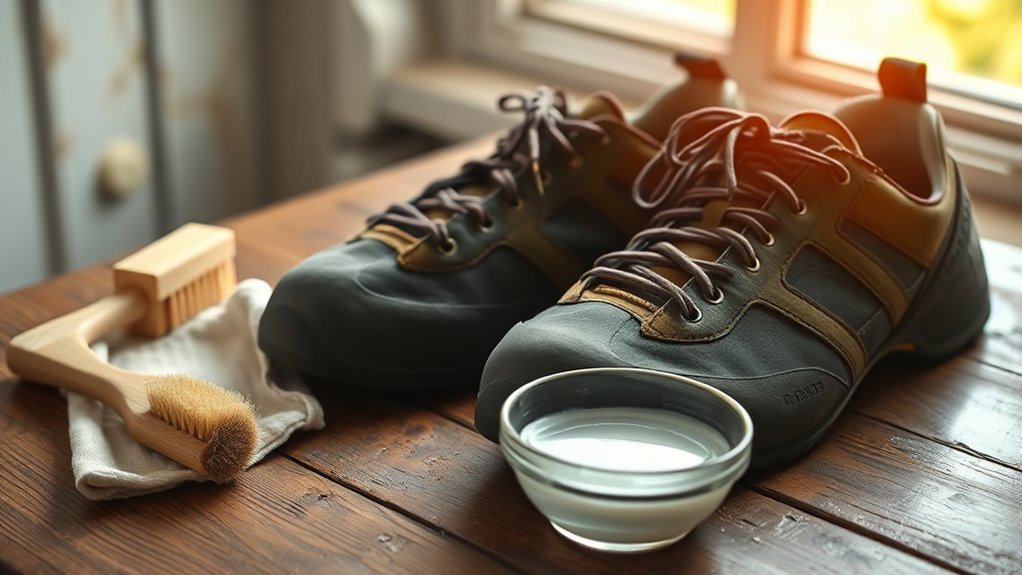
When you want to keep your climbing shoes fresh, start by gently cleaning the inside with a damp cloth or soft brush and mild soap. Focus on the interior lining and insole, removing sweat and dirt without soaking the shoes. Too much water can damage the materials.
To disinfect, apply a small amount of hydrogen peroxide inside, swish it around, and let it fizz. Then, rinse carefully.
Disinfect your climbing shoes by applying hydrogen peroxide inside, letting it fizz, then rinsing thoroughly.
For odor control, use a mixture of white vinegar and water in a 1:10 ratio. Wipe the interior lining thoroughly with this solution.
After cleaning, stuff your shoes with newspaper or another absorbent material to draw out moisture and speed up drying. This simple routine keeps the inside of your climbing shoes clean and comfortable. It also helps extend their life and performance.
How to Clean Soles and Remove Dirt for Better Grip
Although you might not always notice it, dirt and debris on your climbing shoe soles can seriously reduce your grip. To keep your shoes performing well, clean the sole and rand regularly, focusing on the sole-rand junction, toe, and ball of the foot—areas that contact rock most.
Use a wet rag or soft brush to remove dirt and mud after every climb. Then, dry the shoes completely to prevent buildup and slipping.
For worn or stubborn spots, gently use coarse sandpaper or a wire brush to restore traction and clear embedded grime. Just be careful not to overdo it.
Remember to avoid placing your shoes near direct heat sources, as heat can damage the rubber and reduce grip.
Mistakes to Avoid When Cleaning Climbing Shoes
Don’t toss your climbing shoes in the washing machine—it can ruin their shape and materials.
Also, avoid drying them with direct heat like radiators or sunlight, since that causes warping and damage.
Instead, let them air dry naturally to keep them in good condition.
Avoid Machine Washing
Since climbing shoes rely on a precise fit and durable materials, you should never put them in a washing machine. Machine washing exposes your shoes to harsh agitation that can damage the rubber soles and glued components.
Over time, this can cause delamination, ruining the shoe’s structure and weakening its performance. The high heat and strong detergents used in machines also speed up material degradation, leading to a loss of shape and a compromised fit.
For proper shoe care, always go for hand cleaning with mild soap and water. This gentle method helps preserve the integrity of your climbing shoes, keeping them durable and comfortable.
Avoiding machine washing is key to extending the life and performance of your shoes. That way, they stay reliable every time you hit the climb.
Skip Heat Drying
When you clean your climbing shoes, resist the urge to speed up drying with heat sources like hairdryers or radiators. Using heat can cause the sole to delaminate and materials to degrade.
Instead, use a soft brush to remove dirt before letting your shoes air dry naturally at room temperature. Avoid tumble drying as the heat and motion can deform the rubber and weaken adhesives, leading to premature wear.
| Heat Drying Mistakes | Effects on Climbing Shoes |
|---|---|
| Hairdryer or Radiator Use | Delaminates sole, damages material |
| Direct Sunlight Exposure | Accelerates rubber wear |
| Tumble Drying | Deforms rubber, weakens bonds |
| Ignoring Air Drying | Loss of shape and flexibility |
Always prioritize air drying to keep your shoes durable and performing well. Trust me, it’s worth the wait!
How to Disinfect and Deodorize Climbing Shoes Safely
Although climbing shoes can quickly develop unpleasant odors and bacteria, you can disinfect and deodorize them safely using simple household solutions. Mix white vinegar with water at a 1:10 ratio and swish it inside your shoes to effectively control odor and disinfect.
Alternatively, saturate your shoes with hydrogen peroxide and let it fizz until the reaction stops—this also kills bacteria. Avoid harsh chemicals or bleach, as they damage your shoes and impair performance.
After disinfecting, stuff your shoes with newspaper or other absorbent materials to help remove moisture and odor. Finally, let your shoes dry completely for 12-24 hours to prevent mold and lingering smells.
Following these steps keeps your climbing shoes fresh and safe without risking damage.
How to Dry and Store Climbing Shoes to Prevent Damage
You should always air dry your climbing shoes in a well-ventilated area, away from direct sunlight and heat sources to protect the rubber and materials. Stuff them with newspaper to absorb moisture and speed up drying.
When storing, keep your shoes in a breathable mesh bag in a cool, dry place. Make sure the laces or straps are loosened to maintain their shape. This way, your shoes stay in good condition longer!
Proper Drying Techniques
To keep your climbing shoes in top condition, always air dry them at room temperature, away from direct heat sources like radiators or sunlight. Heat can cause the rubber to delaminate and deform, so avoid tumble dryers or hairdryers.
To speed up drying and maintain shape, stuff your shoes with newspaper or absorbent tissue. Before drying, make sure to remove insoles and clear any debris.
Once completely dry, place your shoes in a breathable shoe bag to protect them while allowing airflow. Proper drying prevents mold, mildew, and unpleasant odors, extending your shoes’ lifespan.
Ideal Storage Conditions
When storing your climbing shoes, keeping them in a cool, dry place inside a breathable mesh bag prevents mold and odors from developing. Always loosen the laces or velcro straps on your pair of climbing shoes before putting them away to avoid compressing their shape.
Avoid sealed plastic bags or direct sunlight, as these can cause the rubber to deteriorate or delaminate. After each climb, air your shoes thoroughly in a well-ventilated area, steering clear of heat sources like radiators or car trunks.
Excessive heat can deform the rubber and compromise your shoes’ integrity. By storing your pair of climbing shoes properly in a dry place, you’ll extend their lifespan and keep them performing at their best every time you hit the wall.
When and How to Repair or Resole Climbing Shoes
Although climbing shoes can endure a lot, you’ll need to resole them once the rubber sole thins, rounds, or shows heavy wear—especially before the rand starts to delaminate. Regularly check high-wear zones like the toe, heel, and edges for signs of damage.
If you spot small delaminations or dings on the rand, you can repair them with Shoe Goo after cleaning and trimming the area. When the front half of the climbing shoe rubber is worn out, it’s best to get your shoes resoled by a professional using medium-grade rubber.
Resolving your shoes proactively extends their lifespan and maintains performance. Don’t wait until the sole exposes the rand or causes slipping—timely repairs keep your shoes climbing-ready.
Tips to Prevent Odor and Extend the Lifespan of Climbing Shoes
Since climbing shoes trap sweat and moisture, airing them out thoroughly after each session helps prevent odor and extends their lifespan. Avoid leaving your shoes in enclosed or hot spaces like backpacks or car trunks, which encourage mold and bad smells.
Store them in a dry, well-ventilated area using a breathable bag instead of plastic to keep airflow moving. Regularly clean the insoles and linings with a damp cloth to remove sweat and bacteria that cause odors.
You can also use natural, washable scents or deodorizing powders designed for footwear to keep your shoes fresh. By following these tips and keeping your shoes clean and dry, you’ll prevent persistent odors and considerably extend the life of your climbing gear.
Frequently Asked Questions
How to Clean and Maintain Climbing Shoes?
You should brush off dirt regularly, wipe your shoes with mild soap and cold water, avoid soaking, air dry them away from heat, store them loosely in a breathable bag, and inspect for wear to prolong their life.
Can I Use Dawn Dish Soap for Cleaning Rock Climbing Shoes?
Using Dawn dish soap on your climbing shoes is like using a blowtorch to roast marshmallows—it’s too harsh. You’ll want to stick with gentle, unscented soap to keep your shoes flexible and long-lasting.
How to Take Care of New Climbing Shoes?
You should break in new climbing shoes gradually, avoid heat and sunlight, clean them gently with a damp cloth, wear thin socks initially, and store them in a cool, dry place to keep their shape and material intact.
How Often Should You Clean Climbing Shoes?
You should clean your climbing shoes deeply every 10 to 15 climbs or weekly if you climb often. After muddy or sweaty sessions, clean them more frequently to prevent odor and material damage, but avoid over-cleaning.
Conclusion
By treating your climbing shoes like trusted partners, you’ll keep them sharp and ready for every ascent. Clean them gently, dry them patiently, and store them wisely—like nurturing a delicate bloom.
Avoid shortcuts that could dull their grip or spirit. With a little love and care, your shoes will climb beside you, fresh and strong.
They’ll turn every rocky challenge into a smooth, confident stride. Keep them happy, and they’ll carry you higher.
Regular cleaning and proper care are essential to maintain the performance of your climbing shoes. By following these simple steps, you ensure your shoes stay comfortable, durable, and grippy for every climb. Taking the time to care for your climbing shoes not only extends their life but also enhances your climbing experience. So, treat your climbing shoes with respect, and they’ll reward you with every step on the wall.