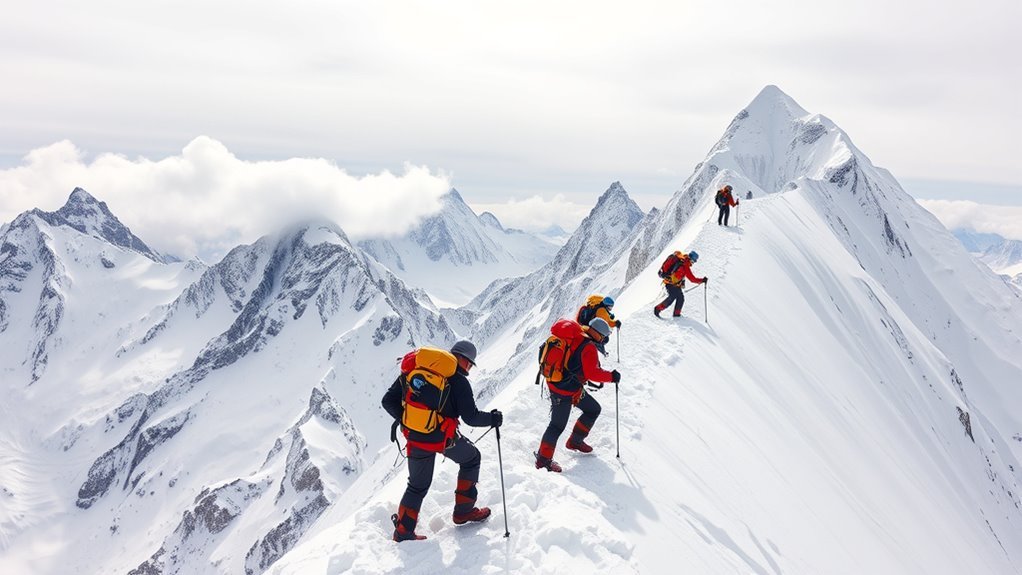
Why Is Climbing Mount Everest Dangerous?
Climbing Mount Everest is dangerous because you face extreme altitude and low oxygen levels that can cause deadly conditions like hypoxia and altitude sickness. These challenges make every breath a struggle, and your body has to work overtime just to survive.
On top of that, you’ll battle shifting icefalls, avalanches, and unstable terrain that demand quick decisions. One wrong move could have serious consequences, so staying alert is key.
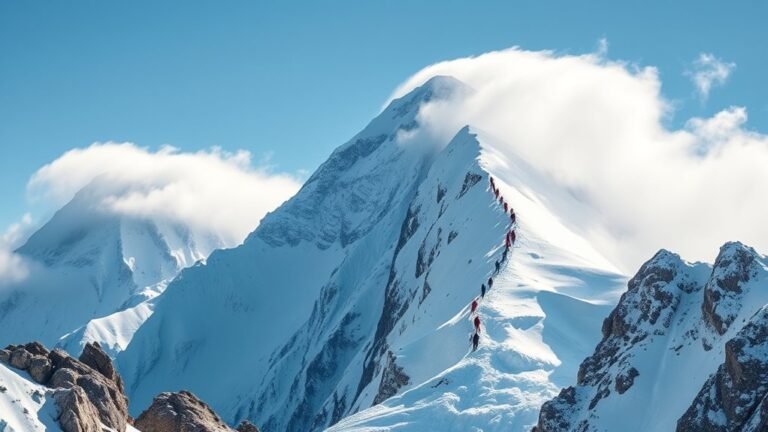
Overcrowding often causes dangerous delays, which means you’re exposed longer to harsh weather. Sudden storms, freezing winds, and the risk of frostbite add to the danger.
Physical exhaustion can cloud your judgment, making every step risky. If you keep going, you’ll discover even more challenges that test every climber’s endurance and safety on this incredible but unforgiving mountain.
Key Takeaways
- Extreme altitude above 8,000 meters causes oxygen deficiency, leading to hypoxia and life-threatening altitude sickness. It’s tough on the body and can be deadly if not managed properly.
- The Khumbu Icefall is unstable, with frequent avalanches and crevasses posing constant danger to climbers. You always have to be on your toes because things can shift without warning.
- Overcrowding creates bottlenecks, increasing exposure time and risk of accidents in hazardous zones. Waiting in line on a narrow path isn’t just frustrating—it can be really risky.
- Sudden severe weather, including high winds and snowstorms, drastically raises avalanche and frostbite risks. The mountain’s conditions can change in a heartbeat, making it hard to stay safe.
- Physical exhaustion from harsh conditions impairs judgment, increasing the likelihood of fatal mistakes. When you’re worn out, even small errors can have serious consequences.
Why Is Climbing Mount Everest So Dangerous? An Overview Of Key Risks
Although reaching the summit of Mount Everest is a thrilling goal, you face extreme dangers that make the climb incredibly risky. You’ll enter the death zone above 8,000 meters, where oxygen levels drop so low that your body struggles to survive.
Altitude sickness, including deadly conditions like HACE and HAPE, can strike quickly. The Khumbu Icefall presents a constant threat with its unstable ice, risking avalanches and falls.
Climbing accidents happen often, especially in overcrowded sections where delays increase exposure. Harsh weather conditions can worsen suddenly, forcing you to change plans or retreat.
Despite your experience and gear, the combination of extreme altitude, unpredictable weather, and the physical toll of Everest makes every step a serious challenge. You must stay vigilant to survive this unforgiving mountain.
How Altitude And Weather Impact Climbing Mount Everest And Threaten Survival
The dangers of climbing Mount Everest only intensify as you ascend into the death zone above 8,000 meters. Up there, the air is so thin that every breath feels like a struggle. Hypoxia and high altitude pulmonary edema can seriously threaten your survival.
Altitude sickness gets worse if you don’t acclimatize properly. On top of that, the weather can be wildly unpredictable. High winds and sudden snowstorms make avalanches and frostbite even bigger risks.
Crossing the Khumbu Icefall is especially dangerous. The ice and crevasses shift constantly, becoming unstable during melting or avalanches. These harsh conditions limit your safe climbing windows.
Because of this, you often have to make quick decisions under extreme pressure. Every step tests your endurance and judgment. Ignoring the dangers of altitude and weather can have fatal consequences.
Frequently Asked Questions
Why Does It Cost $40,000 to Climb Mount Everest?
It costs $40,000 because you’re paying for permits, guides, oxygen, gear, and safety measures. You’ll also cover travel, insurance, Sherpa support, and emergency services, all essential to guarantee your climb is as safe and successful as possible.
What Is the 2pm Rule on Mount Everest?
The 2pm rule on Everest says you must start descending by 2pm. You plan your climb early, you push for the summit early, and you avoid storms, darkness, and deadly risks by following this vital guideline.
Why Is It Bad to Climb Mount Everest?
It’s bad to climb Mount Everest because you’ll face extreme altitude, unpredictable weather, and physical dangers like hypoxia and frostbite. You’ll also risk exhaustion, accidents, and overcrowding, all of which can be deadly.
How Many Climbers Died on Everest per Year?
Every year, about 4.4 climbers meet their fate on Everest, like brave sailors lost to a storm. You face roughly a 1% chance of joining this toll, reminding you the mountain’s risks never fade.
Conclusion
Climbing Mount Everest isn’t just a physical challenge—it’s a battle against nature’s fiercest forces. You’ll face brutal weather, thin air, and unpredictable dangers that test every ounce of your strength and will.
It’s a mountain that demands respect, where one wrong step can mean the difference between triumph and tragedy. So, when you stand at its base, remember: Everest doesn’t just test climbers—it transforms them.
The dangers of climbing Mount Everest are very real. From extreme cold to the risk of avalanches, altitude sickness, and severe weather, every moment on the mountain is unpredictable. That’s why preparation, respect, and awareness are crucial. Are you ready to take on the challenge and face the risks of this incredible journey?