What Does Lead Mean in Climbing?
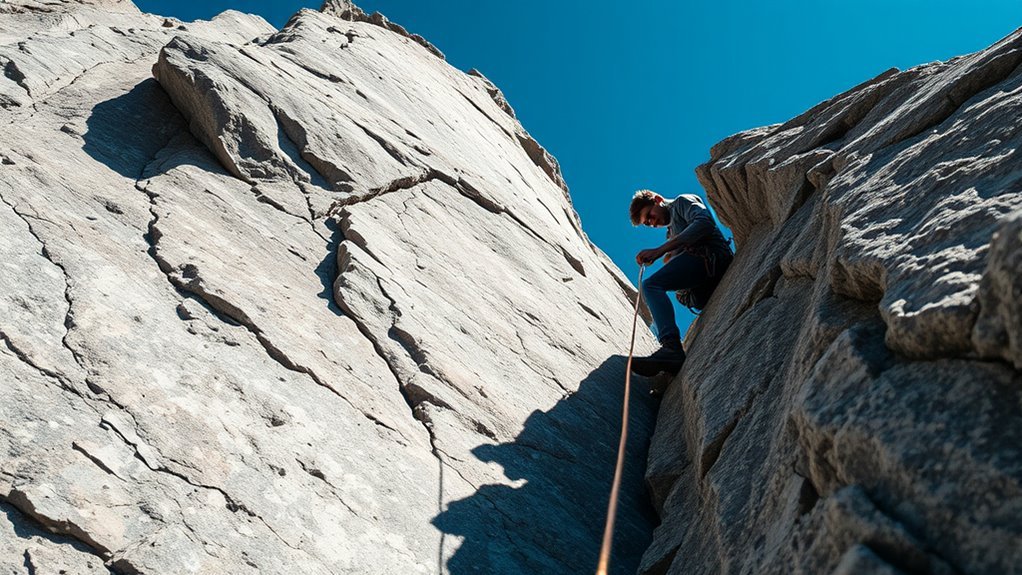
In climbing, lead means you climb while clipping your rope into protection points as you ascend, creating your own safety system instead of relying on a pre-anchored rope.
This lead climbing technique involves managing your rope slack carefully and clipping quickdraws into bolts or gear to protect yourself.
It’s a dynamic way to climb because you’re actively placing protection as you go, which adds an exciting challenge. But it also carries more risks, like longer falls and potential gear failure.
So, using proper technique and clear communication with your belayer is key. Keep going, and you’ll discover how to manage these risks effectively while enjoying the thrill of lead climbing!
Key Takeaways
- Lead climbing involves ascending while clipping the rope into protection points along the route for safety. The climber places or clips into quickdraws attached to bolts or trad gear as they progress upward.
- Unlike top rope climbing, the rope is not anchored above but secured progressively by the lead climber. This means the rope is always below you as you climb.
- Falls in lead climbing can be longer, so it’s important to manage the rope carefully and place protection thoughtfully. You want to minimize the distance you might fall.
- The lead climber relies on a belayer to manage slack and catch falls during the ascent. It’s a team effort to keep things safe and smooth up there.
What Is Lead Climbing and How Do You Do It?
What exactly is lead climbing, and how do you get started? Lead climbing involves you, the climber, ascending a route while clipping your rope into protection points along the way.
Lead climbing means ascending while clipping your rope into protection points for safety along the route.
Unlike top rope climbing, where the rope is anchored above, you clip quickdraws into bolts or trad gear as you move upward, creating your own safety system. Your belay partner feeds rope to you, managing slack and catching you if you fall.
Falls in lead climbing can be longer, often twice the distance from your last protection, so proper clipping technique is essential to guarantee the rope runs smoothly and securely through quickdraws.
Mastering lead climbing means understanding how to clip efficiently and safely while focusing on your route and belay communication.
Common Lead Climbing Risks and How to Avoid Them
Because lead climbing involves clipping your rope into protection as you ascend, it carries unique risks you need to manage carefully. Improper protection placement can cause gear failure and increase injury risk if you fall.
Avoid back clipping and over clipping when clipping the rope; both can create slack in the rope and lead to longer, more dangerous falls. Rope drag can also add tension, so position your protection thoughtfully.
Communication with your belayer is vital to guarantee slack is managed correctly throughout the climb. Regularly inspect your equipment for wear to maintain equipment safety and prevent gear failure.
Frequently Asked Questions
Is Lead Climbing Harder?
Yes, lead climbing is harder because you’re climbing above protection points, managing rope clips, and facing longer fall risks. It demands more focus, skill, and mental strength, making it tougher than top-roping for most climbers.
How Risky Is Lead Climbing?
Lead climbing is insanely risky—you’re twice as likely to take a dangerous fall compared to top-rope climbing. You’ve got to nail your technique, gear, and belaying, or those falls can seriously hurt you.
Can You Lead Climb Indoors?
Yes, you can lead climb indoors on routes set specifically for it. You’ll clip quickdraws while ascending, use proper gear, and practice safety techniques, making indoor lead climbing both challenging and rewarding just like outdoor climbing.
Is Lead Climbing Like Bouldering?
No, lead climbing isn’t like bouldering. You’ll clip your rope into protection as you ascend, managing longer routes and potential falls, while bouldering is shorter, done without ropes, focusing on power and technique over gear.
Conclusion
Just like a trailblazer forging a new path, lead climbing challenges you to trust your skills and embrace the unknown. Every clip and move tests your courage and focus, reminding you that growth often lies just beyond comfort.
So, when you step up to lead, remember—it’s not just about reaching the top, but about mastering fear and finding strength in vulnerability.
Keep climbing, and let each lead be your story of resilience. Lead climbing is all about pushing your limits while staying safe and in control. It’s a thrilling mix of skill, trust, and mental strength that makes every ascent memorable. Embrace the challenge, and you’ll discover that lead climbing is more than just a physical activity—it’s a powerful journey of personal growth.