
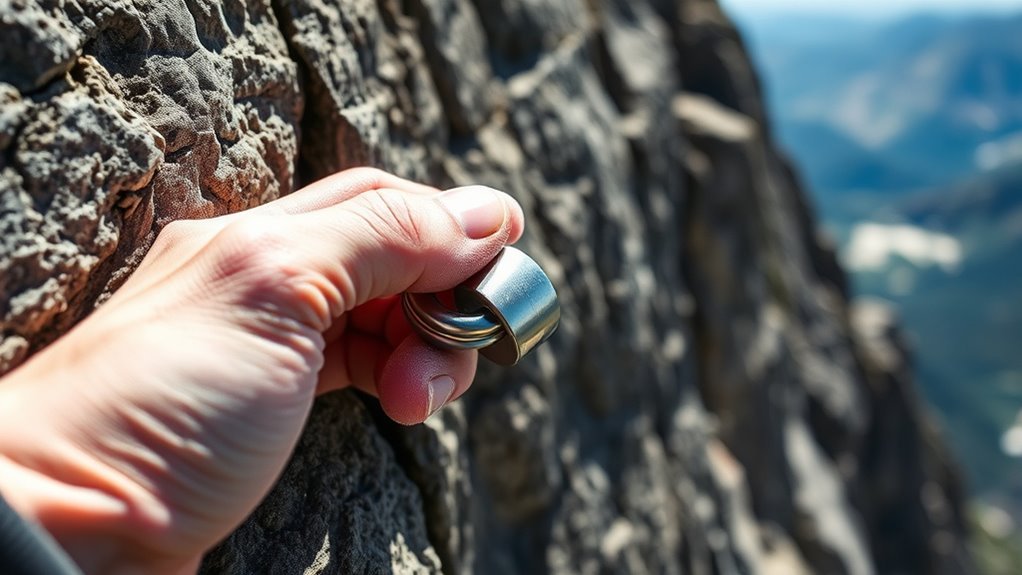
What Is a TCU in Climbing?
A TCU, or Tri-Camming Unit, is a small, lightweight climbing device used to protect yourself in narrow cracks and pin scars where other gear just won’t fit. These clever little pieces are essential for trad climbers who need reliable protection in tight spots.
The three cam lobes of a TCU expand to grip securely, giving you a solid hold in shallow, narrow, or even horizontal placements.
You’ll often find yourself reaching for a TCU in delicate areas that require precise placement during trad or aid climbing. They’re perfect when you need gear that can slip into tricky spaces other cams can’t handle.
If you want to get the hang of how and when to place a TCU for the best security, keep reading. It’s all about understanding the right spots and angles to trust this handy piece of gear.
Key Takeaways
- A TCU, or Tri-Camming Unit, is a small camming device used for crack protection in trad climbing. It’s pretty handy when you need reliable gear for tricky spots.
- It features three cam lobes that expand to securely grip narrow cracks and pin scars. This design helps it hold tight where other gear might slip.
- The device has a narrow head and U-shaped body, allowing placements in tight, shallow, or horizontal cracks. So, it’s great for those hard-to-reach spots.
- TCUs generate friction inside cracks to prevent slipping, ensuring reliable protection during climbs. That means you can trust them when you’re on the wall.
- They are ideal for delicate placements where other gear may not fit or hold securely. Basically, TCUs fill in the gaps when nothing else works.
What’s a TCU and How Does It Work in Climbing?
How does a TCU work to keep you safe while climbing? A TCU, or Tri-Camming Unit, is a small camming device designed to offer reliable crack protection in trad climbing.
As part of your climbing gear, it features three cam lobes that expand when placed inside a crack, generating friction to hold securely. Its narrow head and U-shaped body give you versatile placement options, especially in tight or horizontal cracks where a small cam can fit better than larger devices.
Lightweight and compact, the TCU excels at protecting small, shallow cracks and pin scars that other cams might miss. With its unique design, this camming device ensures you have dependable protection when tackling thin cracks, making it a crucial tool in your climbing rack.
When and Where Should You Use a TCU for Reliable Protection?
Now that you understand how a TCU functions, knowing when and where to use it can make all the difference in your protection strategy. Use a TCU in narrow cracks, horizontal placements, or shallow cracks where a small cam or other gear won’t provide a secure hold.
It’s ideal for delicate placements, pin scars, and pocketed cracks that demand a precise fit. Aid climbing often requires these placement options because they offer reliable, minimal expansion protection.
| Placement Type | Rock Feature | Why Use a TCU? |
|---|---|---|
| Narrow Cracks | Pin Scars | Precise fit, secure hold |
| Horizontal Placements | Shallow Cracks | Small cam alternative |
| Aid Climbing | Delicate Placements | Reliable, minimal expansion |
These placements maximize your safety when other gear falls short. So, when you’re facing tricky spots, a TCU might just be your best bet.
Frequently Asked Questions
What Is the Difference Between Metolius TCU and Master Cam?
The Metolius TCU suits narrow, technical cracks with a rigid, lightweight design, while the Master Cam covers a wider range, offers more flexibility, and handles bigger cracks, making it more versatile for various placements.
What Is the Best Camming Device for Climbing?
You don’t need a magic wand—just the right cam. For narrow cracks, grab ultralight TCUs; for wider ones, Camalots or Black Diamond C4s. Balance weight, strength, and size, and you’ll climb like a pro.
What Is the Difference Between a Cam and a Nut?
You’ll find cams have moving lobes that actively grip cracks by expanding, while nuts rely on wedging tightly into constrictions without moving parts. Cams adjust to various crack sizes; nuts fit only specific ones.
What Is a Tcu in Engineering?
A TCU in engineering is your Transmission Control Unit. It manages your vehicle’s transmission by processing signals and driver inputs, ensuring smooth gear shifts, optimizing performance, and improving fuel efficiency through smart, real-time control.
Conclusion
Now that you know what a TCU is, imagine gripping a narrow crack, your fingers searching for that perfect placement. Your TCU slides in snugly, ready to catch you if you fall.
But will you trust it when the ground rushes up? Using a TCU at just the right moment could mean the difference between a safe climb and a dangerous drop.
So, next time you face a thin, tricky crack, ask yourself—are you ready to rely on your TCU? Remember, mastering the use of a TCU is essential for protecting yourself on those challenging routes. It’s not just about having the gear; it’s about knowing when and how to use it to keep your climb safe and secure. Trust your TCU, and trust your skills.