10 Tips on How Tight Rock Climbing Shoes Should Be
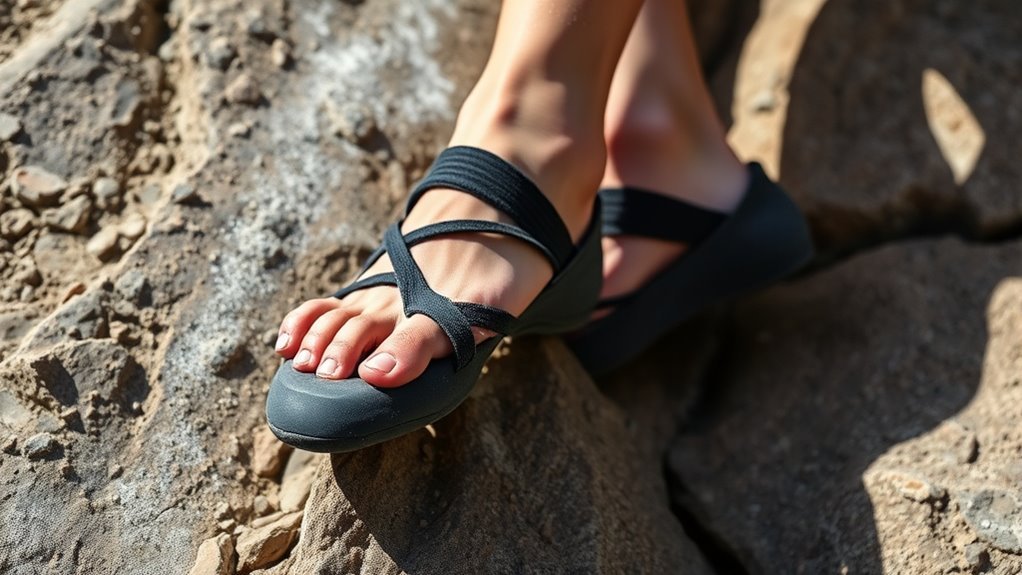
You want your climbing shoes snug enough to feel like a second skin—secure on your heel with toes just touching the front without cramping or causing pain. Getting the right tightness is key for performance and comfort, especially when you’re tackling tough routes.
Leather shoes may stretch, so factor that in when sizing.
Avoid numbness or sharp pain, which are signs they’re too tight. On the flip side, watch for slipping or loosening, as that reduces control and precision.
Your foot shape and climbing style also play a big role in how your shoes should fit.
If you keep going, you’ll uncover tips to nail that perfect fit and climb better every time.
Understanding the Ideal Climbing Shoe Fit
While climbing shoes should fit snugly to give you maximum sensitivity and control, they shouldn’t cause pain or numbness. Your climbing shoe fit should feel secure, with toes slightly compressed and resting near the shoe’s end without being crammed.
Make sure the heel fits snugly too, preventing any slipping that could hurt your performance or safety. Remember, climbing shoes, especially leather ones, tend to stretch over time, so expect some loosening after a few uses.
A snug heel fit prevents slipping and ensures safety, with leather shoes naturally stretching over time.
To get the best fit, try shoes in the late afternoon when your feet are naturally swollen. Walk around or simulate climbing to check for any dead space or heel lift.
A proper snug fit really enhances your climbing experience without sacrificing comfort. So, take your time finding the right pair!
Signs Your Climbing Shoes Are Too Tight
If your climbing shoes cause pain or numbness in your toes, they’re probably too tight. You might even notice your toes getting squished or bent unnaturally, which can lead to long-term problems.
It’s important to recognize these signs early to protect your feet and climb comfortably. Don’t just tough it out—your feet will thank you for the break!
Pain and Numbness
When you feel pain putting on your climbing shoes or notice numbness during your climb, it’s a clear sign they’re too tight. Excessive squeezing restricts blood flow, causing numb toes or pins and needles sensations.
If your shoes cause sharp pain or persistent discomfort shortly after wearing them, they’re likely too small or poorly fitted. Pay close attention to blistering or bruising, which also points to excessive tightness.
Experiencing sharp pressure in your toes or heel means you should loosen your shoes for better comfort and safety. Don’t ignore these signals; persistent pain and numbness not only reduce your climbing performance but can also lead to longer-term foot issues.
Proper fit balances snugness with comfort, avoiding unnecessary pain and numbness during your climbs. So, make sure your climbing shoes fit just right!
Toe Deformation Risks
Although tight climbing shoes might seem like a sign of a secure fit, they can cause serious toe deformation over time. If your toes feel painfully crammed or look bent and misshapen when you take your shoes off, you’re facing a clear risk of injury.
Persistent numbness, tingling, or burning after climbs signals that your shoes are too tight. Over-compression doesn’t just hurt; it can lead to permanent deformities like bunions or hammertoes.
You might also develop calluses, corns, or toenail damage from constant pressure. Your climbing shoes should let your toes curl naturally without pain or lasting changes in shape.
Ignoring these signs increases the risk of injury and long-term damage, so make sure your shoes fit snugly but comfortably to avoid toe deformation.
Recognizing When Climbing Shoes Are Too Loose
If your heel slips out during heel hooks or you notice gaps between your toes and the shoe, it’s a clear sign the fit is too loose. You’ll also feel excessive movement inside the shoe when standing or climbing.
Loose shoes can hurt your grip and technique, making slips and injuries more likely. So, it’s really important to get a snug fit to keep you safe and climbing strong.
Signs of Slippage
You’ll notice slippage when your heel lifts inside the shoe during heel hooks or even while walking. This clearly shows the shoes are too loose. A poor fit causes your foot to move excessively, which reduces control and comfort.
Watch for these signs:
- Your foot slides forward, creating gaps between your toes and the shoe’s front.
- The shoe shifts or wobbles during foot placements, signaling a loose fit.
- The heel slips off when climbing, forcing you to tighten laces repeatedly.
- You feel the shoe shift noticeably inside, especially on precise footholds.
If you spot any of these, it’s time to reconsider your shoe size or lacing technique. Doing so will help prevent slippage and improve your climbing experience.
Impact on Performance
When climbing shoes are too loose, they compromise your grip and foot sensitivity. This makes precise movements much harder.
Loose shoes cause your heel or toes to slip, which reduces control and increases the risk of falling. You want tight shoes that fit snugly without pain. That way, you maintain maximum grip and confidence.
| Problem | Cause | Effect |
|---|---|---|
| Slipping heels/toes | Excess space inside | Reduced foot control |
| Lack of tightness | Loose shoes | Poor grip on holds |
| Unnecessary movement | Shoes not snug enough | Increased slipping risk |
Recognizing these signs helps you avoid performance issues. Plus, it extends your shoes’ lifespan.
How Foot Shape Influences Shoe Tightness
Because your foot shape directly affects how climbing shoes should fit, understanding whether you have narrow or wide feet is essential for comfort and performance. Your shoe fit needs to mirror your foot shape to avoid discomfort or injury.
Your climbing shoe fit must align with your foot shape to ensure comfort and prevent injury.
Consider these points:
- Narrow feet benefit from lower volume shoes that fit snugly without excess space.
- Wide feet require shoes with a roomy toe box to prevent pinching and pressure.
- The toe box shape—pointed, rounded, or square—affects how tight the shoe should feel around your toes.
- Matching the shoe fit to your foot’s natural contours prevents pressure points and enhances grip.
The Role of Material Stretch in Shoe Fit
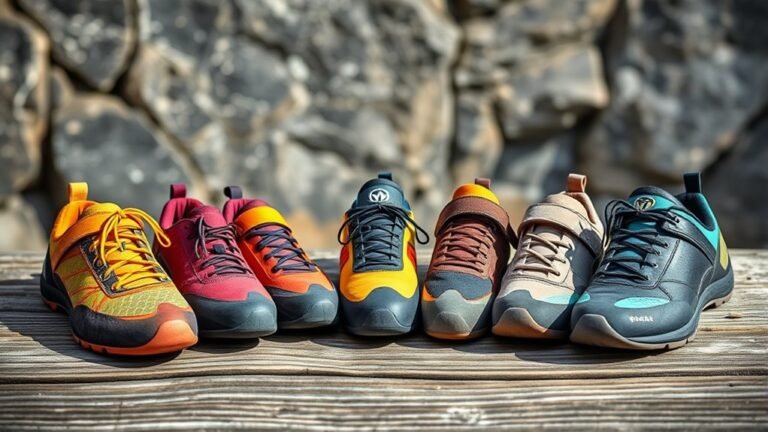
When choosing climbing shoes, you need to regard how the material stretches over time. Leather shoes will usually stretch more, often half a size or more, while synthetic and lined shoes hold their shape better.
Knowing this helps you pick a fit that’s snug now but comfortable after breaking in. So, it’s a good idea to think about what feels tight now, but won’t be too loose later. This way, your shoes will fit just right as you use them.
Leather Vs Synthetic Stretch
Although leather climbing shoes tend to stretch considerably over time, synthetic shoes hold their shape much better, giving you a more predictable fit.
When deciding between leather and synthetic, keep these points in mind:
- Leather shoes often stretch in length and width after use, which can lead to a looser fit.
- Synthetic shoes stretch minimally, maintaining their original snugness longer.
- Quality and lining affect leather’s stretch—unlined leather usually stretches more than lined.
- Shoes made from lined leather or synthetic materials resist stretching, so your initial sizing choice matters more.
Understanding these differences helps you choose a shoe that fits well now and adapts—or doesn’t—as you break it in.
Choose leather if you want some natural give; go synthetic for consistent, reliable sizing.
Stretch Impact on Fit
Since climbing shoes are designed to fit snugly, understanding how their materials stretch over time is essential for choosing the right size. Leather shoes typically stretch more—often about half a size—so you should expect the fit to loosen with use.
Synthetic shoes, on the other hand, stretch very little, so their initial fit remains much more consistent. If your shoes have lined leather or synthetic liners, they’ll resist stretch and hold their shape longer, affecting how they fit over time.
Considering this stretch impact lets you pick a size that’s tight enough now but won’t become too loose later. By accounting for material stretch, you ensure your climbing shoes maintain the proper fit throughout their lifespan, keeping you comfortable and secure on the rock.
Lined Shoes Shape Retention
Understanding how different materials stretch helps you choose the right climbing shoe size, but the role of linings in shape retention adds another layer to contemplate. Lined shoes feature interior linings that limit excessive stretching, helping maintain a snug fit longer.
Here’s what you need to know:
- Linings reduce stretch in leather shoes, preserving their original fit.
- Shoes with linings stretch less in length than unlined models, ensuring consistent sizing.
- Higher-quality linings offer superior shape retention, keeping shoes close to their initial contour.
- In synthetic shoes, linings further stabilize fit since these materials stretch less overall.
Balancing Performance and Comfort in Tightness
When you choose climbing shoes, you want them snug enough to support your foot on tricky footholds without causing pain or numbness. Finding the right balance between tightness and comfort is key.
Your shoes should feel like a second skin—tight enough to prevent heel slippage and toe pinching, yet comfortable enough to allow natural foot movement. This balance maximizes your sensitivity on the rock and improves overall performance.
Keep in mind that the ideal tightness may vary depending on your climbing style. You might prefer a tighter fit for bouldering and a more comfortable one for longer multi-pitch routes.
Risks Associated With Overly Tight Climbing Shoes
Finding the right fit means avoiding shoes that are too tight, as they can cause serious issues over time. Wearing overly tight shoes increases your risk of foot injury and discomfort.
Here are four key risks to contemplate:
- Nerve compression and circulation problems can lead to numbness and long-term damage.
- Toe deformities, bunions, and corns often develop from constant pressure.
- Blisters, bruising, and fungal infections become more likely with tight shoes.
- Restricted foot movement causes fatigue and increases injury risk during climbs.
Ignoring these risks might distract you with pain and reduce your climbing performance. So, prioritize a fit that supports your foot’s natural shape to climb comfortably and safely without sacrificing technique or health.
How to Assess Heel and Toe Fit Properly
Although it might feel tempting to choose shoes that seem tight at first, you should guarantee your heel fits snugly without any slipping during heel hooks. To assess heel fit, make sure the shoe’s heel cup grips your heel firmly, preventing any movement that could cause blisters or instability.
For toe fit, your toes should be near the shoe’s end but not crammed; they can be slightly curled and compressed without pain or numbness. This balance ensures comfort while maintaining control.
Adjusting Shoe Fit Based on Climbing Style
Since different climbing styles demand unique footwork and endurance levels, you’ll need to adjust your shoe fit to match. Finding shoes tight enough for your climbing style helps balance control and comfort.
Here’s how to adjust:
- For bouldering and sport climbing, choose snug shoes that support precise foot placements without pain.
- On longer, multi-pitch routes, opt for a slightly looser fit to reduce foot fatigue over time.
- Use aggressive, downturned shoes tight enough for steep climbs, but avoid pinching or numbness.
- For trad or crack climbing, flatter shoes with a comfortable fit prioritize foot stability over extreme tightness.
Adjust your shoe tightness based on your climbing style to maximize performance without sacrificing foot health.
Practical Tips for Trying on and Selecting Shoes
When you try on climbing shoes, do it in the late afternoon when your feet are naturally swollen to get the most accurate fit. Wear the socks you plan to climb in to guarantee your pair of climbing shoes will feel comfortable during use.
Your toes should be slightly curled and near the shoe’s end without being crammed, providing a snug fit without pain. Walk around and stand in the shoes to check for heel slip or any dead space.
Conclusion
Finding the perfect fit for your climbing shoes is like balancing on a razor’s edge—too tight, and pain grips your feet like a vice; too loose, and control slips away like water through your fingers.
You want that snug embrace that supports without suffocating, letting you move with precision and confidence. Remember, your shoes should feel like a second skin, firm yet forgiving.
They need to be ready to carry you up every challenging route without holding you back. So, when thinking about how tight rock climbing shoes should be, aim for a fit that’s snug but not painful. This balance helps maximize your performance and keeps you comfortable, making every climb smoother and more enjoyable.