3 Essential Climbing Gear Items You Need
You need climbing shoes, a harness, and a helmet that balance safety, comfort, and performance to climb confidently. These essential climbing gear items are the foundation for any successful ascent.
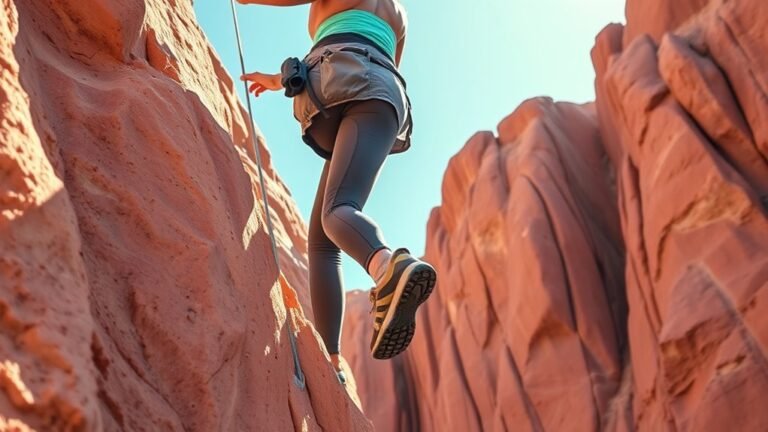
Choose snug shoes that grip well without hurting your feet. Pick leather or synthetic based on stretch and fit — whatever feels right for you.
Opt for a harness that fits securely with adjustable loops tailored to your climbing style. And don’t forget a helmet that protects against impact while offering good ventilation.
Keep these essentials in mind, and you’ll be ready for your next climb with gear that works as hard as you do. Simple, reliable, and comfortable gear makes all the difference on the rock!
Key Takeaways
- Climbing shoes with a snug fit and appropriate sole material provide essential grip and comfort for precise footholds. They really make a difference when you’re trying to stay steady on tricky spots.
- A climbing harness with adjustable waist and leg loops ensures a secure, tailored fit for safety and mobility. It’s all about feeling safe and moving freely at the same time.
- A climbing helmet with impact absorption and proper ventilation protects your head while maintaining comfort during climbs. Staying protected without overheating? Definitely a must.
- Choose gear that balances safety, support, and comfort, tailored to your climbing discipline and duration. Picking the right stuff really depends on how and where you climb.
- Regularly test and verify gear fit and safety features to maintain reliable protection and performance. It’s worth taking the time to keep everything in top shape before you head out.
How to Choose Climbing Shoes for Grip and Comfort
When choosing climbing shoes, you want a snug fit that keeps your heel and toes from slipping without causing pain. Focus on shoe sizing carefully; leather shoes stretch, so pick a slightly tighter size, while synthetic shoes hold their shape.
Consider the shoe type: neutral shoes offer all-day comfort, moderate ones balance support and sensitivity, and aggressive styles provide precise footholds. Pay close attention to the sole material—softer rubber gives better rubber grip but wears faster, while harder soles last longer.
Comfort and support are key, so try various brands to find the best match for your foot. Your climbing shoes should deliver enough sensitivity to feel the rock while providing solid support without sacrificing comfort during climbs.
How to Pick a Climbing Harness That Fits Your Style
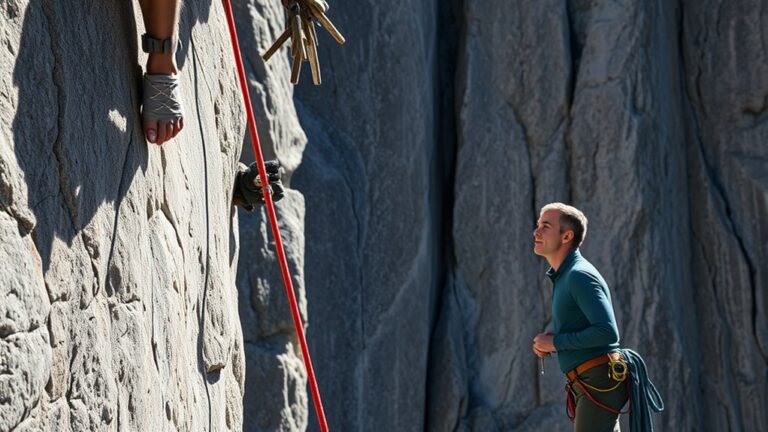
Selecting the right climbing harness is essential for both safety and comfort on the wall. Start by choosing a climbing harness with an adjustable waist and leg loops to get a secure fit tailored to your body and climbing style.
If you focus on sport climbing, pick a lightweight harness that maximizes mobility and offers quick gear access, like the Petzl Sitta. For trad climbing, opt for a harness with ample gear loops and padding to carry more gear comfortably during extended climbs.
Always test the fit by hanging in the harness to ensure it doesn’t pinch or slip. Finally, match the harness style to your discipline—aggressive for precision or neutral for all-day comfort—to get the best performance every time you climb.
Why Climbing Helmet Safety and Ventilation Matter
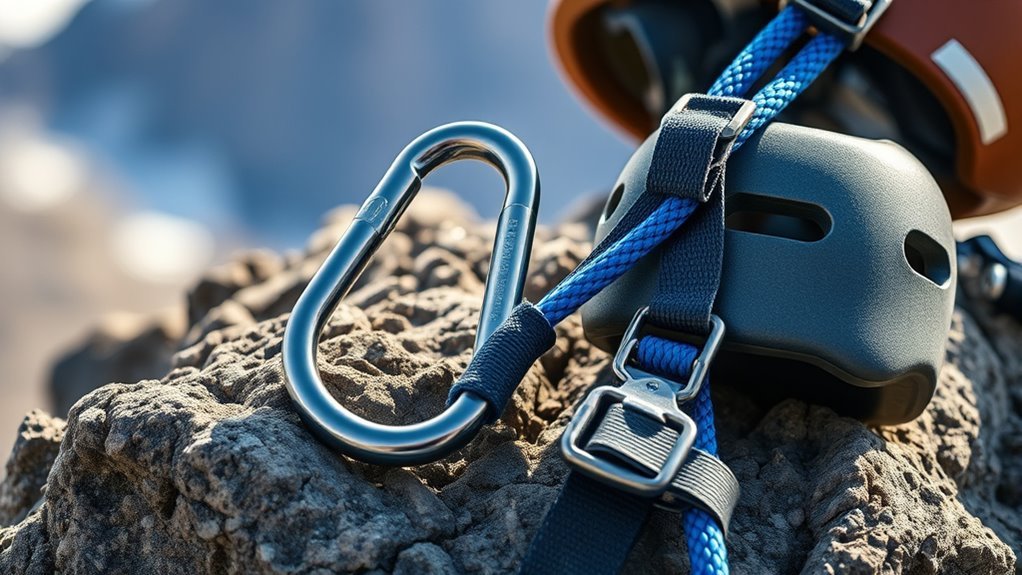
Because your helmet is your primary defense against head injuries, it’s essential to choose one that combines excellent safety features with effective ventilation. A good climbing helmet offers impact absorption and a secure helmet fit to guarantee ideal head protection during falls or from falling debris.
Ventilation is equally important, as it promotes airflow to reduce sweat buildup and prevent overheating. This keeps you comfortable on long outdoor climbing sessions.
When selecting your helmet, prioritize models with recognized safety ratings and multiple vents that don’t compromise structural integrity. Here’s what to focus on:
- Safety: Impact absorption and a snug helmet fit.
- Ventilation: Adequate airflow to minimize sweat buildup.
- Ratings: Certified safety standards for reliable head protection.
This balance maximizes your comfort and safety on every climb.
Frequently Asked Questions
What Essential Equipment Is Needed for Rock Climbing?
You’ll need climbing shoes for grip, a harness for safety, a helmet for protection, chalk to keep hands dry, and a climbing rope. Don’t forget quickdraws, carabiners, and a belay device to manage your climb securely.
What Are the 5 Essential Equipment for Mountaineering?
Picture yourself gripping a sturdy ice axe, wearing boots that bite into icy slopes, a helmet shielding your head, a harness securing your safety, and weather-ready clothing. These five essentials keep you safe and steady on tough mountaineering climbs.
Is 27 Too Old to Start Rock Climbing?
You’re never too old to start rock climbing at 27. With dedication and proper training, you can improve strength and skills. Age won’t hold you back—your motivation and safety awareness matter most for success.
Is Climbing Good for Osteoarthritis?
Yes, climbing can help you manage osteoarthritis by improving joint mobility and strengthening muscles. Studies show weight-bearing activities like climbing may slow bone loss by 1-2% annually, reducing pain when done with proper technique and care.
Conclusion
As you lace up your climbing shoes, feel the secure grip hugging your feet, ready to conquer every hold. Slip into a harness that fits like a second skin, moving with you on every climb.
Finally, don your helmet, where safety meets breathability, protecting you while cool air flows.
With these essential gears, you’re not just climbing—you’re embracing the rock with confidence, comfort, and care. Having the right climbing shoes, harness, and helmet ensures you stay safe and comfortable on every adventure. Whether you’re scaling indoor walls or tackling outdoor routes, this essential climbing gear is your foundation for success. Gear up smart, climb strong, and enjoy every moment on the rock!