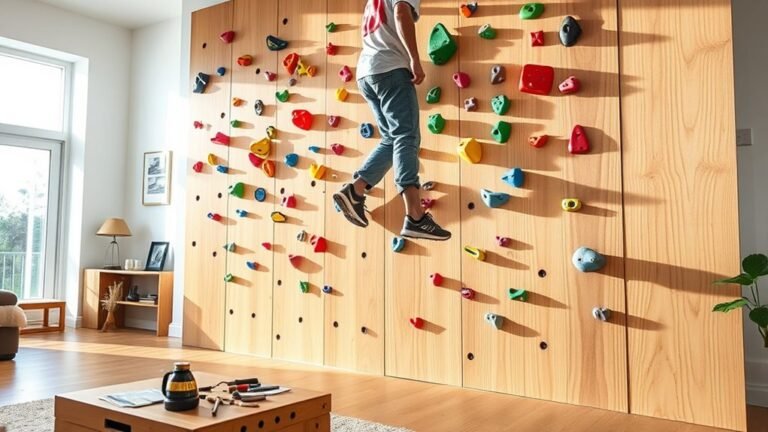
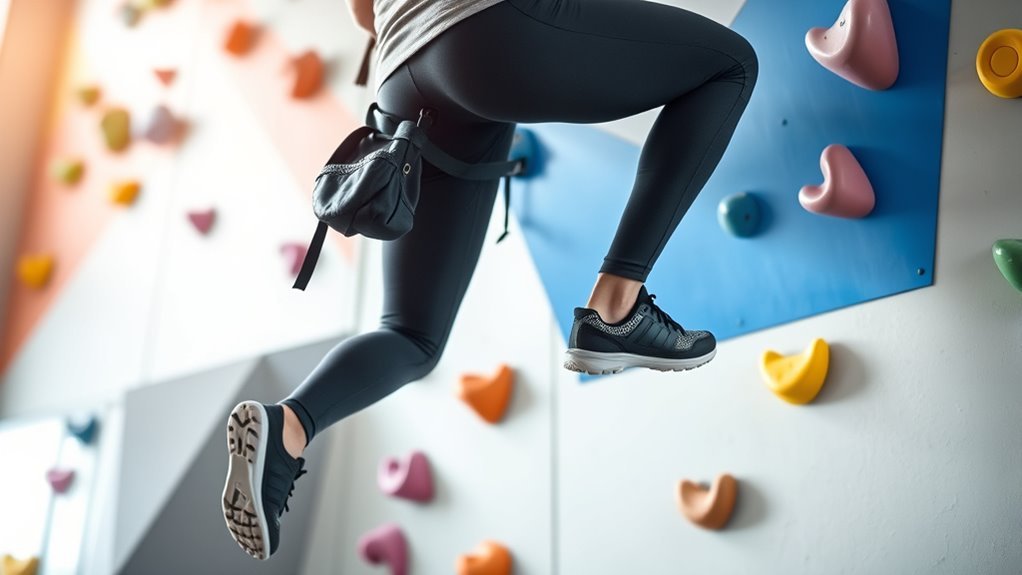
5 Essential Clothing Items to Wear for Indoor Climbing
You’ll want a lightweight, moisture-wicking climbing shirt that moves like a second skin to keep you dry and flexible.
Pair it with stretchy, durable pants or shorts that offer freedom of movement and comfort.
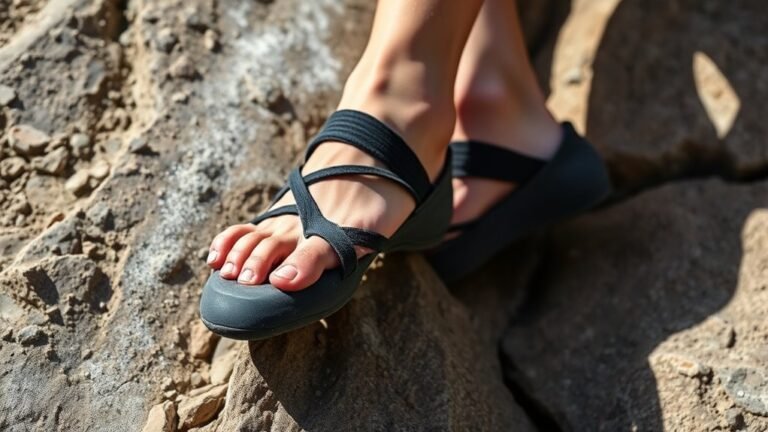
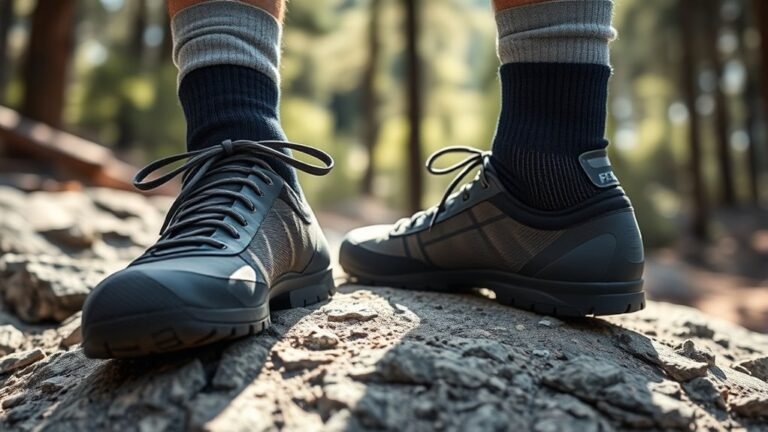
Choose snug, grippy climbing shoes for secure footing and control.
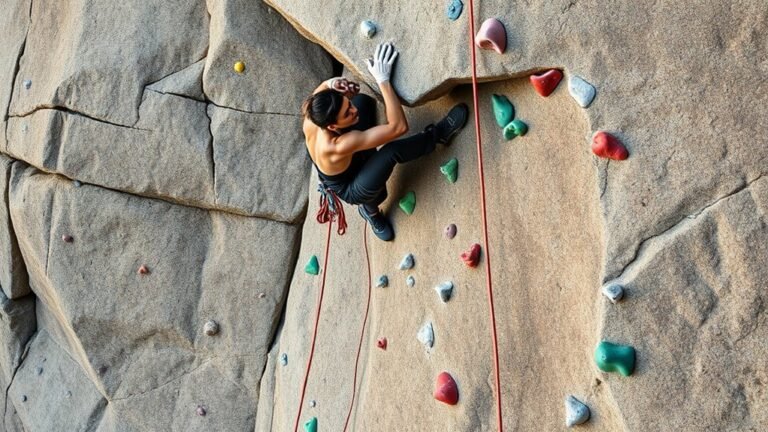
Don’t forget essential accessories like a chalk bag and harness for safety and grip.
Avoid baggy or restrictive clothes that can snag or limit you.
Keep going to uncover tips that sharpen your climbing gear choices.
Key Takeaways
- Wear lightweight, breathable climbing shirts that wick moisture and allow full arm movement without restriction. You want to stay cool and comfortable while you climb.
- Choose stretchy, durable climbing pants or shorts with gussets and elastic waistbands. This way, you get the flexibility and comfort you need to move freely.
- Use snug-fitting indoor climbing shoes with rubber soles to maximize grip and enhance control. A good fit makes all the difference on the wall.
- Bring essential accessories like a personal chalk bag, climbing harness, and belay device. These help with safety and improve your grip while climbing.
- Avoid baggy, non-stretchy clothing and remove jewelry to prevent snagging. Staying safe and snag-free is key when you’re focused on your climb.
What to Look for in a Comfortable Climbing Shirt
When choosing a climbing shirt, you want one made from lightweight, breathable fabrics like moisture-wicking polyester or spandex blends that offer stretch. These moisture-wicking fabrics keep sweat away from your skin, ensuring you stay dry and comfortable during intense climbs.
Look for an ergonomic fit that allows full arm movement without restricting circulation or causing chafing. The shirt should feel like a second skin, providing flexibility without tightness.
Breathable fabrics also help your body regulate temperature, preventing overheating. Avoid shirts with bulky seams or decorations that might snag on holds or irritate your skin.
While bright colors can boost visibility, prioritize comfort and functionality above all. Picking the right shirt means you’ll focus on your climb, not your clothing.
Choosing Indoor Climbing Pants or Shorts for Flexibility
Since your legs need full freedom to move during climbs, choosing the right indoor climbing pants or shorts is essential. You want climbing pants or shorts that offer maximum flexibility without sacrificing comfort.
Look for snug-fitting gear made from stretchy, durable fabrics like elastane or polyester blends to avoid restricting your movements.
Choose snug, stretchy, and durable fabrics like elastane or polyester blends to keep your movements unrestricted.
Consider these key features:
- Gussets and elastic waistbands to boost flexibility and prevent chafing
- Moisture-wicking materials to keep you dry and comfortable
- Snug-fitting designs that stay close to your body but don’t limit mobility
Long climbing pants protect your knees and skin, while shorts provide better airflow and ease of movement—choose based on your gym’s temperature and your preference.
Prioritize comfort and flexibility to climb your best.
Selecting Indoor Climbing Shoes for Grip and Comfort
Although indoor climbing shoes might seem like a small detail, they play a crucial role in your grip and comfort on the wall. Choosing snug-fitting climbing shoes ensures you get the best connection with holds, enhancing your control and precision.
Your shoes should fit tight enough to prevent slipping but still let you wiggle your toes slightly for comfort. Wearing them without socks maximizes grip, though thin socks can help with hygiene if you rent shoes.
The rubber sole on climbing shoes is designed to provide the friction you need for secure footing on indoor walls. While renting shoes is a good start, investing in a well-fitted pair tailored to your feet will markedly boost your climbing performance and confidence.
Essential Accessories for Indoor Climbing
To improve your grip and safety during indoor climbing, you’ll want to equip yourself with a few essential accessories. Having the right climbing gear really boosts your performance and comfort.
Enhance your indoor climbing experience with essential gear for better grip, safety, and overall performance.
A lightweight chalk bag filled with magnesium carbonate helps reduce moisture, giving you a reliable grip. Personal chalk bags are ideal for hygiene and consistency.
Also, a snug climbing harness is vital for rope climbing, guaranteeing safety and comfort. Don’t forget the importance of a belay device; it lets you control rope tension smoothly during ascent and descent.
Here are three must-have climbing accessories:
- Chalk bag for moisture control
- Properly fitting climbing harness
- Belay device for rope management
These essentials guarantee you climb safely and confidently indoors. Easy, right?
Common Clothing Mistakes to Avoid When Climbing
When you’re gearing up for indoor climbing, choosing the wrong clothes can hold you back or even create safety hazards. One of the biggest clothing mistakes is wearing baggy or oversized garments that snag on holds or ropes, disrupting your climb.
Avoid tight jeans or non-stretchy fabrics that restrict movement and limit your flexibility. It makes it harder to reach holds and move freely.
Flowing or loose T-shirts can obstruct your vision and get caught. Also, jewelry like rings or dangly earrings pose serious safety risks by catching on equipment.
Instead, pick well-fitting, breathable, and stretchy clothing to guarantee freedom of movement and reduce safety risks. Steering clear of these common clothing mistakes helps you climb more comfortably and confidently every time.
Frequently Asked Questions
What Clothing Is Needed for Climbing?
You’ll need flexible, moisture-wicking clothes that let you move freely, like athletic shirts and slim-fitting pants or shorts. Avoid baggy clothes, wear layers if needed, and remove jewelry to keep safe and snag-free while climbing.
Is Rock Climbing Good for Dyspraxia?
Oh sure, if you enjoy turning your coordination into a wild circus act, rock climbing’s perfect for dyspraxia! You’ll boost motor skills, spatial awareness, and confidence while having fun—just don’t forget your helmet!
Can Climbing Cause Plantar Fasciitis?
Yes, climbing can cause plantar fasciitis if you overstrain your heel or wear unsupportive shoes. Make sure you choose proper footwear, avoid sudden intensity increases, and stretch regularly to protect your plantar fascia from injury.
Does Rock Climbing Help With Osteoporosis?
Climbing’s grip etches strength into your bones like an artist’s chisel. Yes, it helps fight osteoporosis by boosting bone density through weight-bearing moves. Just pace yourself, so your skeleton grows stronger, not fractured.
Conclusion
You want to wear a shirt that breathes, pants or shorts that stretch, and shoes that grip. You need accessories that enhance your climb, and you want to avoid clothing that restricts or distracts.
By choosing comfort, flexibility, and support, you’ll climb better, feel stronger, and enjoy every session more. So gear up smart, move freely, and climb confidently—because the right clothes make all the difference indoors.
When it comes to indoor climbing, the right clothing is essential. Breathable shirts keep you cool, while stretchy pants or shorts let you move without limits. Shoes with a good grip are a must for safety and performance.
Adding climbing-specific accessories can boost your experience, but steer clear of anything bulky or distracting. Ultimately, wearing the best indoor climbing clothes helps you feel comfortable, flexible, and supported, so you can focus on your climb and reach new heights every time you hit the wall.