
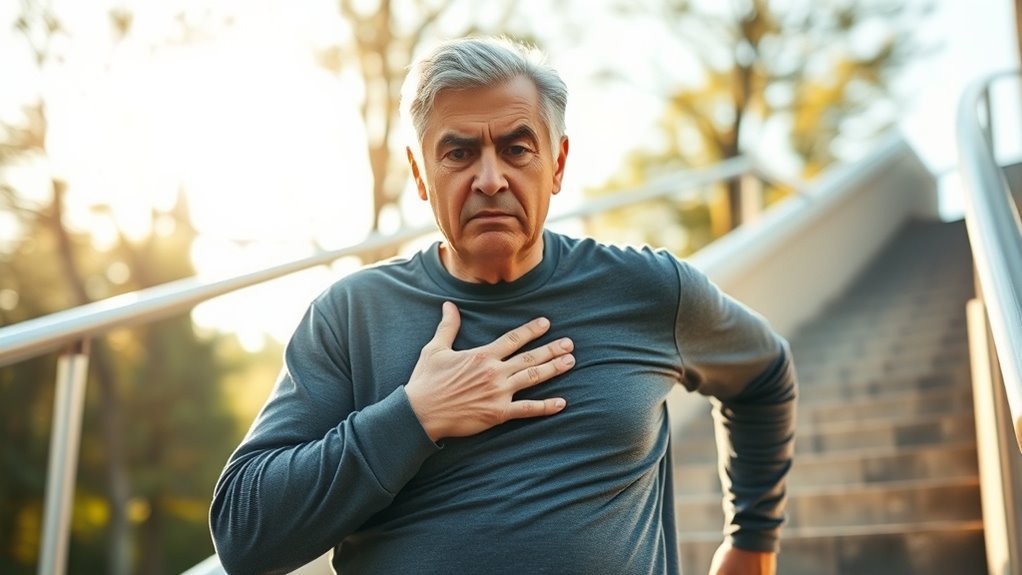
What Causes Shortness of Breath Climbing Stairs?
When you climb stairs, your heart and lungs work harder to supply your body with the extra oxygen it needs. This increased demand can make you feel breathless, especially if you’re not used to physical activity.
Shortness of breath climbing stairs is a common experience for many people.
If you’re out of shape or dealing with health issues like asthma or high blood pressure, this breathlessness can feel even stronger. It’s your body’s way of telling you it needs more oxygen and energy to keep up.
Physical fitness plays a big role here. When you’re in good shape, your body copes better with the extra effort, and you don’t get tired as quickly.
But poor conditioning means you’ll feel tired and out of breath much sooner.
If you want to ease this breathlessness and boost your stamina, there are practical steps you can take. With a little effort, you can improve how your body handles climbing stairs and feel better overall.
Key Takeaways
- Climbing stairs increases oxygen demand, causing the heart and lungs to work harder. This can lead to shortness of breath.
- If you have poor cardiovascular health or respiratory conditions like asthma, breathlessness during stair climbing can get worse.
- Low physical fitness and endurance mean you’ll feel tired sooner. This also makes you more breathless when climbing stairs.
- High blood pressure and other health issues can increase your oxygen needs. That, in turn, makes you feel more out of breath.
- Suddenly pushing yourself without pacing or taking breaks can make breathlessness worse while climbing stairs. It’s important to listen to your body.
Why Do Stairs Make You Breathless? Common Causes Explained
When you climb stairs, your heart and lungs have to work much harder to meet the increased oxygen demand, which often makes you feel breathless. Climbing stairs considerably raises your heart rate and challenges your lung function, requiring more energy than simple physical activity like sitting.
Climbing stairs intensifies heart and lung effort, boosting oxygen needs and often causing breathlessness.
If your cardiovascular health or respiratory efficiency is reduced, you’ll notice shortness of breath more quickly. Conditions like asthma, COPD, or high blood pressure can worsen breathlessness during stair climbing.
Even if you don’t have underlying health conditions, being out of shape can make climbing stairs harder. This increases oxygen demand and causes fatigue.
Understanding these factors helps explain why stairs can trigger breathlessness and shortness of breath during this common but demanding activity.
How You Can Breathe Easier on Stairs: Practical Tips to Reduce Breathlessness
Although climbing stairs can often leave you breathless, you can take practical steps to make it easier on your lungs and heart. Improving lung capacity through regular stair climbing and targeted exercise boosts your respiratory function and heart health.
Build endurance with leg-strengthening workouts like squats and step-ups. Pace yourself evenly to avoid sudden breathlessness, and listen to your body—take breaks when needed.
Avoid smoking and maintain a healthy weight to enhance oxygen levels and reduce shortness of breath. These simple changes can make a big difference in how you feel when you’re going up those stairs.
| Challenge | Solution |
|---|---|
| Sudden breathlessness | Climb stairs at a steady pace |
| Low endurance | Strengthen legs with exercise |
| Poor lung capacity | Practice interval stair climbing |
| Decreased oxygen | Maintain healthy weight |
| Persistent symptoms | Consult a healthcare professional |
Frequently Asked Questions
How Do I Tell if My Shortness of Breath Is Serious?
You should see a doctor if your shortness of breath worsens, occurs at rest, or comes with chest pain, dizziness, or fainting. Sudden, severe breathlessness or interference with daily activities is serious and needs prompt medical attention.
What Is the Stair Test for Heart?
Wondering if your heart’s handling stress? The stair test for heart checks how well your heart works during exercise by monitoring essential signs as you climb stairs, revealing hidden issues and guiding your doctor’s next steps.
What Is the Immediate Remedy for Shortness of Breath?
You should immediately stop and rest in a comfortable position. Practice slow, deep breathing and try pursed-lip breathing to improve airflow. If you have an inhaler, use it, and seek medical help if symptoms persist or worsen.
Does Oxygen Level Drop While Climbing Stairs?
Imagine your lungs as a well-tuned engine; usually, your oxygen levels stay steady while climbing stairs. But if the engine sputters, your oxygen might drop, signaling you to check your heart or lungs for issues.
Conclusion
When climbing stairs leaves you breathless, it’s like your lungs are running a marathon. But don’t worry—you can take control. Understanding the common causes, from fitness levels to underlying health issues, empowers you to breathe easier.
Try pacing yourself and strengthening your heart and lungs. If you notice persistent shortness of breath, it’s a good idea to consult a doctor. With a little effort, those stairs won’t feel like mountains anymore.
You’ll conquer them step by step, catching your breath with confidence. Remember, shortness of breath climbing stairs can be due to various factors like poor cardiovascular fitness, asthma, or other lung conditions. By addressing these causes and improving your stamina, you’ll find climbing stairs becomes easier and less tiring over time.