What Is Climbing Chalk Made Of?
You rely on climbing chalk made primarily of fine magnesium carbonate powder to keep your hands dry and grip secure. This climbing chalk is essential for anyone looking to improve their hold and prevent slipping on tough routes.
Magnesium carbonate usually comes from natural mineral deposits called magnesite or is synthesized chemically.
It works by absorbing moisture without forming a paste, ensuring reliable performance during climbs. Pretty neat, right? While its simple composition is key, the story behind where it comes from and how it’s produced reveals even more about this essential climbing aid.
Composition of Climbing Chalk
Although climbing chalk comes in various formulations, its main ingredient is magnesium carbonate (MgCO₃), a natural mineral known for absorbing moisture without dissolving. You’ll find that pure magnesium carbonate forms the core of climbing chalk, derived from magnesite deposits rich in magnesium carbonates.
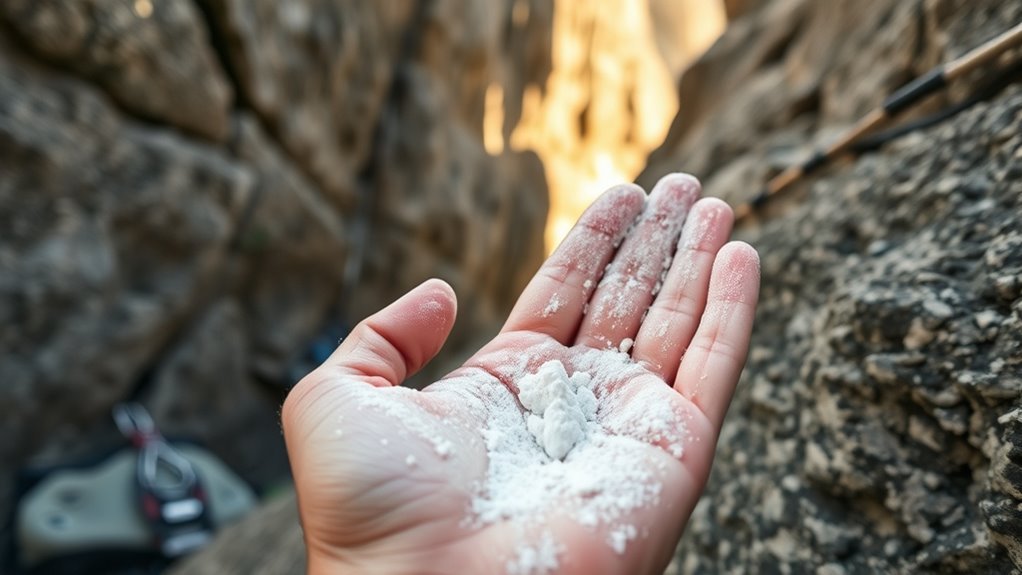
This composition of climbing chalk ensures it remains insoluble in water, allowing it to soak up sweat effectively without turning to paste. When you use climbing chalk, you’re applying fine magnesium carbonate dust, which enhances grip by keeping your hands dry.
While some products include additives, the majority rely on magnesium carbonate’s natural properties. Understanding that climbing chalk primarily consists of magnesium carbonate (MgCO₃) helps you appreciate its reliable performance and why it’s favored among climbers worldwide.
Sources and Production Methods of Magnesium Carbonate
When you pick up a block of climbing chalk, you’re holding a product mainly sourced from magnesite, a mineral mined from underground deposits worldwide. The extraction process heats magnesite to remove impurities, followed by chemical treatment to produce pure magnesium carbonate powder.
Besides natural sources, synthetic magnesium carbonate is created through laboratory reactions involving magnesium salts and sodium bicarbonate. China, especially Liaoning Province, leads magnesite mining but faces significant environmental impact concerns.
The final magnesium carbonate is processed into forms like loose powder, blocks, or liquid chalk for climbing use. So, while natural sources provide most of the magnesium carbonate in climbing chalk, synthetic options offer an alternative production method.
However, environmental impact remains a key challenge in mining operations, particularly in heavily concentrated areas like China’s Liaoning Province.
Conclusion
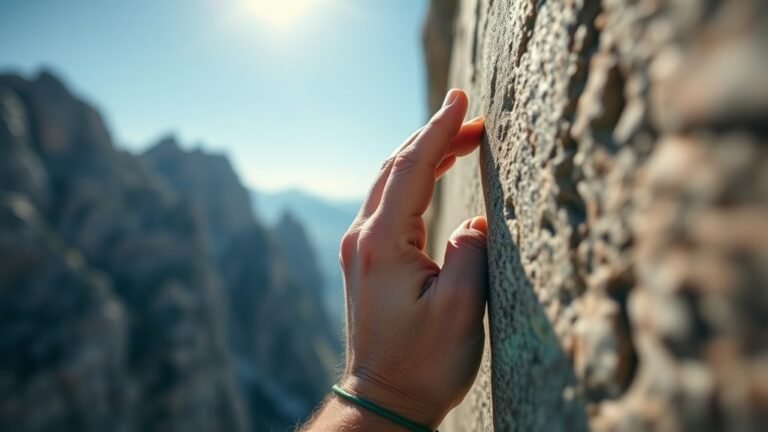
Now that you know climbing chalk is mainly magnesium carbonate, imagine it as your silent climbing partner. It grips the rock as tightly as you do.
Whether mined from nature or crafted in labs, this powdery magic dries your hands and boosts your confidence.
So next time you chalk up, remember you’re not just dusting off sweat. You’re harnessing a natural force that helps you reach new heights, one grip at a time.
Climbing chalk is more than just a tool—it’s a key to better performance and safety on the rock. By reducing moisture, it enhances your grip and keeps you steady, making each climb smoother and more secure. Understanding what climbing chalk is made of lets you appreciate the science behind your ascent and why it’s an essential part of every climber’s gear.