Are Rock Climbing Shoes Supposed to Be Tight for the Right Fit?
You want your rock climbing shoes to fit snugly—tight enough to give you precise control and better grip on holds, but not so tight that they cause pain or numbness. Finding the right fit for rock climbing shoes is essential for both performance and comfort.
Shoes that are too tight can lead to blisters, circulation problems, and long-term foot issues.
A slight stretch over time helps, so aim for a comfortable yet secure fit that balances performance and foot health. Keep going to discover how to find that perfect balance.
Understanding the Ideal Fit for Climbing Shoes
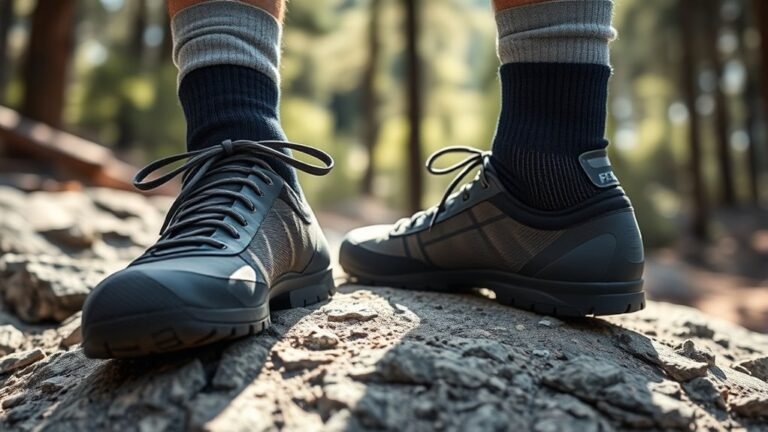
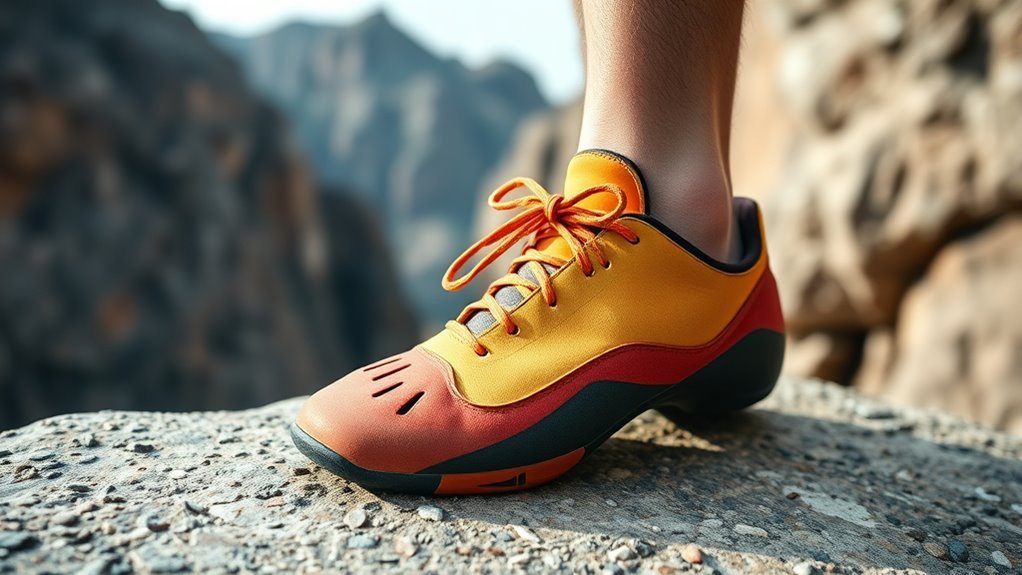
Although you want your climbing shoes to fit snugly for precise footwork, they shouldn’t cause pain or numbness. Getting the proper fit means your toes should be near the end of the toe box with a slight curl, not crammed uncomfortably.
Pay attention to your foot shape when choosing shoe size, since tight shoes that don’t match it can cause discomfort. You need a snug fit that prevents heel slippage and excess movement inside the shoe, ensuring stability on the wall.
Keep in mind that leather shoes will stretch over time, so factor in some shoe stretch when picking your size. Prioritize comfort and support over extreme tightness—while tight shoes may seem ideal, the proper fit balances performance with lasting foot health.
Risks and Benefits of Tight Climbing Shoes
Finding the right balance between snugness and comfort in climbing shoes directly impacts your performance and foot health.
Tight shoes offer better grip and sensitivity, allowing precise foot placements on small holds. A snug fit improves your control, enhancing performance without sacrificing comfort.
However, if shoes are too tight, they increase injury risk, causing blisters, numbness, and circulation problems.
Over time, wearing overly tight shoes can lead to long-term damage like bunions and nerve issues.
Remember, climbing shoes will stretch slightly, so aim for a proper fit that’s snug but not painful.
Prioritize comfort vs. performance wisely to protect your foot health while maximizing grip and sensitivity.
Avoid compromising either, and you’ll climb safer and more effectively.
Conclusion
You want your climbing shoes snug but not painfully tight, so you get the best grip without hurting your feet.
Imagine Sarah, who wore overly tight shoes and developed painful blisters, forcing her off the wall for weeks. By switching to a slightly looser pair that still hugged her feet well, she climbed longer and felt more comfortable.
Remember, the right fit boosts your performance while keeping your feet healthy and happy. So, when choosing rock climbing shoes, aim for a fit that’s snug enough to provide excellent grip but not so tight that it causes pain or discomfort. This balance ensures you can climb effectively and safely without risking foot injuries.