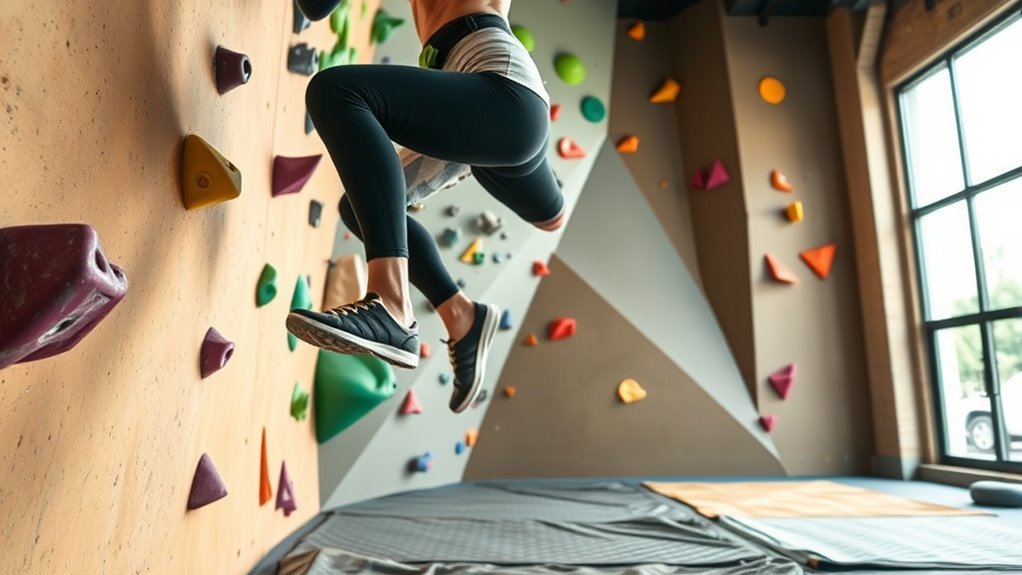
10 Essential Tips on What to Wear to a Rock Climbing Gym
You’ll want to wear flexible, comfortable clothes made from moisture-wicking fabrics to stay dry and move freely. Avoid restrictive or baggy garments that can snag or limit your motion. Layer up to manage indoor temperature shifts.
Tie back long hair securely for safety. Rent or buy snug climbing shoes and ensure your harness fits well and is properly adjusted. Don’t forget chalk and a chalk bag to keep your grip strong.
Keep these basics in mind to climb with confidence—and there’s more to help you climb smarter.
Choose Flexible and Comfortable Clothing
When you head to a rock climbing gym, choosing flexible and comfortable clothing makes a big difference in your performance. Opt for climbing-specific pants or stretchy leggings that allow full mobility without restriction.
Flexible, comfortable clothing like climbing-specific pants or stretchy leggings enhances your performance by allowing unrestricted movement.
Avoid jeans or thick fabrics that limit your range of motion. Wearing layers is smart, as it helps you regulate your body temperature.
Start with a breathable, close-fitting top that won’t snag or bunch during climbs. Snug-fitting clothes prevent fabric from catching on holds or harnesses, keeping you safe and focused.
Prioritize comfort and flexibility over style, so you can move confidently and efficiently on the wall. By selecting the right gear, you’ll improve both your comfort and climbing ability every time you hit the gym.
Opt for Moisture-Wicking Fabrics
Since rock climbing can get intense quickly, you’ll want to wear moisture-wicking fabrics that pull sweat away from your skin. These fabrics keep you dry and comfortable, preventing sweat buildup that can affect your grip and focus.
When choosing climbing clothes, look for materials like polyester, nylon, or synthetic blends designed for moisture management. Here’s why moisture-wicking fabrics matter:
- They reduce chafing and skin irritation caused by dampness
- They dry quickly, keeping you comfortable throughout your session
- They maintain skin dryness, enhancing your grip on holds
- They minimize the need for frequent towel breaks, letting you climb continuously
Opting for climbing clothes made from moisture-wicking fabrics keeps you comfortable and boosts your safety on the wall. It’s a simple change that really makes a difference!
Avoid Restrictive or Baggy Apparel
You’ll want to skip restrictive clothing like jeans that limit your movement and cause discomfort. At the same time, avoid baggy clothes that can snag on holds or get caught in your harness.
Wearing well-fitted, stretchy apparel keeps you safe and lets you climb freely. Trust me, it makes a big difference when you’re up on the wall!
Restrictive Clothing Limits Movement
Although it might seem convenient, wearing clothes that are too tight or too loose can seriously limit your movement at the climbing gym. Restrictive clothing reduces your range of motion, making it tough to stretch or reach holds effectively.
To climb efficiently, you need flexibility and freedom in your gear. Keep these points in mind:
- Tight clothes restrict your arms and legs, limiting high steps and wide reaches.
- Non-stretchy fabrics hinder flexibility and risk tearing during dynamic moves.
- Bulkiness can interfere with harness fit, compromising safety and comfort.
- Avoid overly loose clothing that can snag or get caught, causing distractions.
Choose well-fitted, stretchy apparel that supports your movement without restricting your range of motion or flexibility.
Baggy Clothes Cause Snags
Wearing clothes that are too loose can be just as problematic as restrictive gear when climbing. Baggy clothes often get caught on holds or climbing equipment, leading to dangerous snags that can cause falls or damage your gear.
Loose fabric might also block your view of essential handholds and footholds, making it harder to climb efficiently. Plus, excessive bagginess can interfere with how your harness fits, compromising your safety during climbs.
When your clothes snag on protruding edges or ledges, you risk rips or unexpected slips. To keep yourself safe and agile, avoid wearing overly loose apparel. Choose clothing that fits well without restricting movement, so you can focus on climbing smoothly without worrying about snags or compromised gear.
Select Appropriate Footwear for Climbing
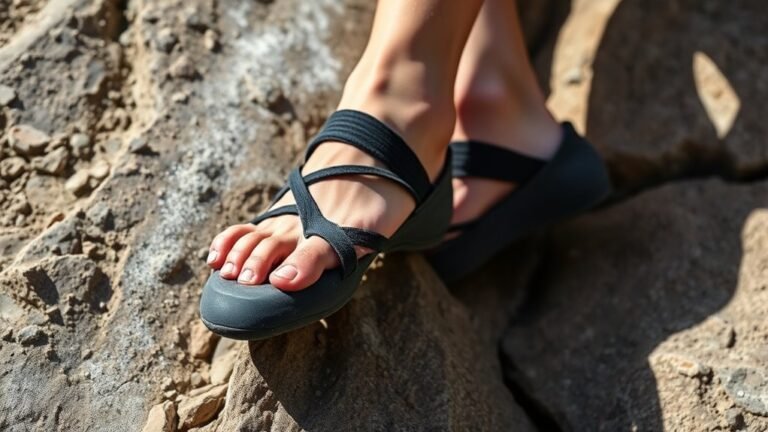
Since proper footwear directly impacts your grip and control, selecting the right climbing shoes is essential for both safety and performance. You can rent climbing shoes at the gym first to guarantee a perfect fit and avoid an early investment.
Remember, climbing shoes should fit snugly—not painfully tight—to maximize control and prevent slipping. When it comes to wearing socks, it’s optional; barefoot increases sensitivity, but thin socks can prevent blisters and improve hygiene.
Climbing shoes fit snugly for control; socks are optional—barefoot for sensitivity, thin socks for blister prevention.
Keep these tips in mind:
- Choose climbing shoes that fit snugly for precise foot placement
- Avoid overly tight shoes to prevent discomfort
- Consider wearing low-thin socks if you want extra protection
- Rent shoes initially to find your ideal fit before buying
Proper footwear boosts your climbing effectiveness and safety. It really makes a difference when you’re on the wall!
Consider Wearing Layers for Temperature Control
You’ll want to wear layers so you can easily manage the gym’s changing temperature. Adding or removing a lightweight jacket or hoodie keeps you comfortable without slowing you down.
This way, you can adjust your clothing on the fly and stay focused on your climb. It’s all about staying comfy and ready for whatever the gym throws at you!
Manage Indoor Temperature Easily
Although indoor temperatures can shift during your climbing session, layering your clothes lets you quickly adapt without breaking your rhythm. Using moisture-wicking base layers is key to effective temperature control, keeping sweat away and your skin dry.
You’ll find that lightweight jackets or hoodies work great for easy removal when things heat up. Here’s how to manage indoor temperature easily:
- Wear moisture-wicking layers to regulate body heat and stay dry
- Choose lightweight outer layers that are simple to add or remove
- Use layering to prevent overheating during intense climbs or chills between sessions
- Opt for flexible clothing that supports quick adjustments without interrupting your flow
Adjust Clothing During Climb
When indoor temperatures shift during your climb, adjusting your layers lets you stay comfortable without stopping. Layering with moisture-wicking base layers keeps your skin dry, while breathable mid-layers help regulate your body heat.
You can easily add or remove a lightweight jacket or hoodie depending on how warm or cool you feel. This flexibility keeps you focused and energized throughout your session.
| Layer Type | Purpose | Fabric Suggestions |
|---|---|---|
| Base Layer | Moisture-wicking, dry skin | Synthetic blends, wool |
| Mid Layer | Breathable, temperature control | Lightweight fleece |
| Outer Layer | Added warmth, easy removal | Lightweight jacket, hoodie |
Remove Jewelry and Loose Accessories
Since jewelry and loose accessories can easily snag on climbing holds or equipment, removing them before you start climbing is essential for your safety. Jewelry like rings, necklaces, and dangly earrings pose risks that aren’t worth taking.
When caught, they can cause cuts, bruises, or worse. Metal rings especially can complicate injuries if stuck on your fingers. To keep yourself and the gear safe, follow these tips:
- Remove all rings, bracelets, and necklaces to prevent snagging.
- Avoid dangling earrings that can catch on holds.
- Store accessories safely away from the climbing area.
- Respect gym rules that often require you to de-accessorize for safety and hygiene.
Secure Long Hair for Safety
Just like removing jewelry and loose accessories keeps you safe from snagging hazards, securing long hair plays a big role in preventing accidents at the climbing gym.
You should always tie back your long hair with a secure hair tie or ponytail to stop it from blocking your vision during climbs.
Loose or messy hair can easily get caught on holds or equipment, creating safety risks.
Using a headband or hair clip helps keep your hair out of your face, maintaining clear visibility.
Before you start climbing, double-check that your hair is firmly tied to ensure your safety and keep your focus sharp.
Taking these simple steps will help you climb confidently and avoid unnecessary hazards.
Rent or Invest in Proper Climbing Shoes
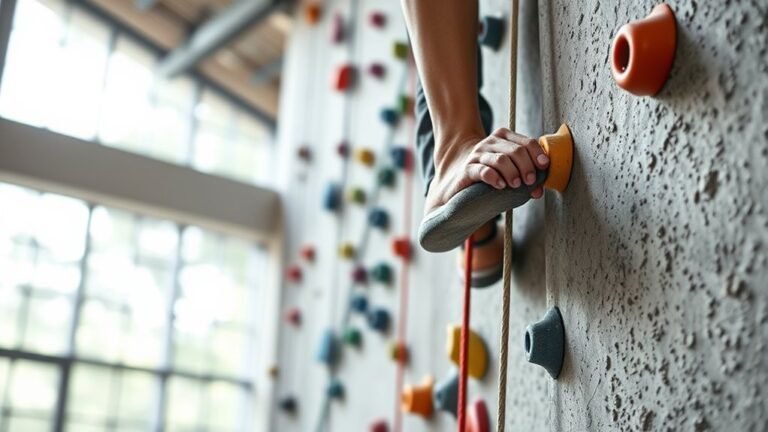
Choosing the right climbing shoes can make a huge difference in your performance and comfort at the gym. You can either rent shoes initially or invest in your own pair once you’re sure about your preferences.
Climbing shoes need to be snug-fitting to maximize grip and control on holds without causing pain.
Consider these points when deciding: Renting lets you try different styles before committing. Properly fitted shoes enhance your climbing performance.
Shoes are typically worn without socks, though thin socks are optional. Investing in quality climbing shoes offers better durability and comfort over time.
Choosing snug-fitting climbing shoes improves your climbing experience, reduces foot fatigue, and helps you climb with confidence every time.
Use a Harness That Fits Well
After finding climbing shoes that fit well, the next gear to focus on is your harness. A proper harness fit is vital for your safety and comfort while climbing. Make sure the waistband sits about two fingers above your hip bones and fits snugly without pinching.
Adjust the leg loops so they stay in place but don’t restrict movement or circulation. Always secure all buckles properly, double-back or lock them to prevent slippage. Before climbing, check your harness for any looseness or discomfort that could compromise safety.
Regularly inspect it for signs of wear, like fraying or worn buckles, and replace it if necessary. Prioritizing a well-fitted harness ensures you stay safe and confident on every climb. It really makes a difference out there!
Bring Essential Accessories Like Chalk and a Chalk Bag
Don’t forget to bring chalk and a chalk bag to keep your hands dry and improve your grip while climbing. While many gyms provide chalk, having your own bag is more hygienic and convenient.
Choose a lightweight bag that fits comfortably around your waist or harness for easy access during your session. It makes a big difference when you can grab chalk quickly without losing focus.
Chalk Benefits Explained
While climbing, chalk plays a crucial role by absorbing sweat from your hands. This boosts your grip and prevents slipping.
Using chalk is especially helpful in a humid or heated gym where your hands might get sweaty quickly. Keeping your hands dry lets you climb more confidently and safely.
Bringing your own chalk ensures consistent grip quality and better hygiene compared to shared gym supplies. Remember these benefits:
- Improves grip by reducing moisture on your hands
- Prevents slipping for safer climbs
- Enhances comfort in sweaty or humid gym environments
- Personal chalk and chalk bags reduce germ exposure
Choosing Chalk Bags
Keeping your chalk within easy reach makes a big difference when climbing. Choosing the right chalk bag guarantees you can quickly improve your grip without interrupting your flow.
Many climbers prefer personal chalk bags attached to their harnesses for convenience and hygiene. This way, they avoid shared chalk buckets, which can get messy.
When selecting your chalk bag, look for a secure drawstring closure to keep chalk inside and a brush holder to maintain your grip clean. Also, pick a size and style that matches your climbing equipment and personal aesthetic.
A clip or loop lets you attach the bag firmly to your harness or belt. That way, it stays accessible throughout your session.
Bringing your own chalk bag means you’re familiar with your gear and have a clean, dependable chalk supply every time you climb. It’s just one less thing to worry about on the wall.
Gym Chalk Availability
Many climbing gyms offer chalk stations where you can use loose chalk, chalk blocks, or buy powdered chalk. While these options are convenient, bringing your own chalk bag gives you better control over chalk quality and hygiene.
A personal chalk bag attached to your harness or waist loop keeps chalk within easy reach during climbs. When choosing your chalk bag, consider size and style: zippered, open-top, or belt clip options.
Also think about a lightweight design for comfort and minimal bulk. Durable materials are important for gym use.
You want easy access to maintain grip without interrupting your climb. Having your own chalk and chalk bag ensures reliable grip and reduces exposure to shared germs at the climbing gym.
Don’t forget this essential accessory to maximize your climbing performance. It really makes a difference!
Conclusion
You might walk into the gym dressed like you’re ready for a casual hangout, but once you start climbing, you’ll realize how vital the right gear is. Flexible clothes and snug climbing shoes transform your experience from awkward to agile.
While your comfy hoodie keeps you warm between climbs, your chalk bag guarantees your grip never slips. Balancing comfort and function isn’t just smart—it’s what makes every climb feel like a victory.
Choosing what to wear to a rock climbing gym is essential for both safety and performance. Prioritize breathable, stretchy fabrics that allow for a full range of motion. Don’t forget climbing shoes that fit well to help you grip holds confidently.
In the end, the right outfit can make all the difference. So, when you head to the climbing gym, remember: comfort, flexibility, and proper gear like chalk bags and climbing shoes are your best friends. Dress smart, climb smarter, and enjoy every move on the wall!