What Is Trad Climbing?
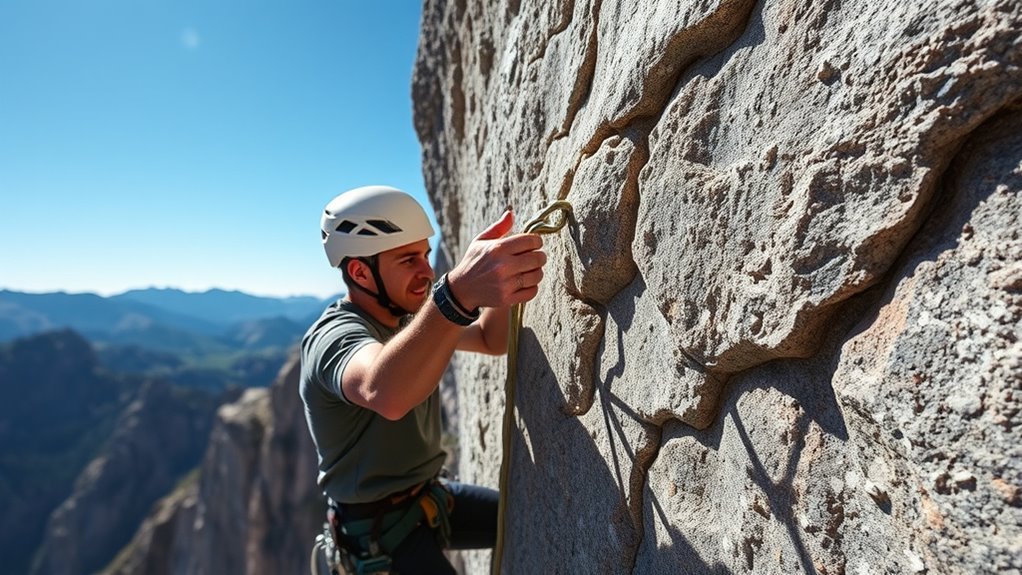
Trad climbing is a style of climbing where you place and remove your own protection gear as you ascend. Instead of relying on fixed bolts, you use natural rock features to secure yourself.
This means you’ll be using equipment like cams, nuts, and slings to keep safe.
Each placement needs to be carefully tested to make sure it holds. It takes skill and mental focus to do this well.
Plus, trad climbing is all about respecting the environment since you leave minimal impact on the rock.
If you’re interested in mastering the gear and techniques behind trad climbing, there’s a lot more to learn beyond the basics. It’s a rewarding challenge that connects you deeply with the rock and the outdoors.
Definition and Characteristics of Trad Climbing
Although trad climbing demands a high level of skill, it offers a deeply rewarding experience where you place and remove your own protection gear as you climb.
Trad climbing challenges you to skillfully place and remove your own protection gear for a rewarding ascent.
In traditional climbing, you rely on natural rock features to secure your gear, making gear placement critical for climbing safety. You’ll need strong route-finding skills and technical knowledge to select the best spots for nuts, cams, and other protection devices on often unbolted climbing routes.
Unlike sport climbing, trad climbing requires you to assess protection points on the fly, emphasizing minimal impact and clean climbing ethics.
This style challenges you mentally and physically, blending adventure with precision in gear removal and safety management. Mastering these characteristics defines your success in trad climbing.
Essential Gear and Safety Considerations
To climb safely and confidently in trad, you need the right gear and a solid understanding of how to use it. Traditional gear like cams, nuts, slings, and quickdraws are essential for protection placements.
You must inspect and test each placement carefully to ensure protection reliability. Using diverse gear types helps you adapt to various rock features, enhancing climbing safety.
Practice gear placement and anchor building regularly, especially for multi-pitch climbing, to build confidence and ensure secure anchors.
| Gear Type | Purpose | Notes |
|---|---|---|
| Cams | Expandable protection | Versatile for cracks of varying sizes |
| Nuts | Passive protection | Simple, reliable, lightweight |
| Slings | Extend placements | Prevents rope drag |
| Quickdraws | Connect gear to rope | Used for clipping protection |
| Hexes | Large passive gear | Good for irregular cracks |
Conclusion
Now that you know trad climbing is all about placing your own protection as you ascend, you’re ready to embrace the adventure with confidence. Think of it as painting your own safety net with every move you make.
With the right gear and a careful mindset, you’ll not only climb but also connect deeply with the rock and the challenge. So gear up, trust your skills, and let the journey shape you.
Trad climbing is more than just a physical activity—it’s a mental game that tests your judgment and adaptability. By mastering how to place your gear securely, you build both safety and trust in yourself. This connection to the rock and the process makes trad climbing a uniquely rewarding experience.
So, whether you’re new or seasoned, keep learning, stay safe, and enjoy every moment on the rock. Trad climbing offers a thrilling blend of adventure, skill, and personal growth that’s hard to match.