10 Tips to Choose the Right Size Climbing Shoes
To pick the right climbing shoe size, start by measuring both feet accurately and choose based on your longer foot. Trying on different last shapes is key to finding what fits your foot anatomy best and suits your climbing style.
Remember, leather climbing shoes stretch over time, but synthetic ones do not.
Make sure your shoes are snug but not painful, especially around the heel and toe box. It’s all about balancing comfort with performance.
Using size charts can help, but getting expert advice is even better.
Knowing these basics will set you on the right path to finding your perfect fit. And trust me, there’s plenty more to discover when it comes to choosing climbing shoes!
Understand Your Foot Measurements
How do you guarantee your climbing shoes fit perfectly? Start by getting an accurate foot measurement. Stand on paper with your heel against a wall and mark the tip of your longest toe.
Then measure the distance from the wall to this mark to find your foot length. Since your feet often differ in width and length, always measure both and base your shoe size on your longer foot.
Next, convert this measurement using a shoe sizing chart specific to the brand. Shoe sizes vary due to brand differences and last shape, so this step is key.
Prioritizing measurement accuracy assures a proper fit, avoiding discomfort or poor performance. Remember, a precise fit is essential for climbing, so don’t skip this important step before picking your shoes.
Explore Different Last Shapes
Since climbing shoe fit depends heavily on your foot shape and climbing style, exploring different last shapes is essential. Last shapes influence shoe fit, toe box volume, heel fit, and overall support, making them a key part of climbing shoe design.
Climbing shoe fit hinges on your foot shape and style, making last shapes crucial for comfort and performance.
To find the right fit and support, consider how last shape influence matches your foot anatomy.
- Neutral lasts offer a roomier toe box and relaxed fit, ideal for all-day comfort and beginners.
- Asymmetric lasts focus power toward the big toe, enhancing precision on technical routes.
- Aggressive lasts feature a downturned shape, maximizing power transfer for overhanging climbs.
Try multiple options to see which last shapes best complement your foot anatomy and climbing style for ideal performance and comfort.
Use EU Sizing for More Precision
When choosing climbing shoes, you’ll find that EU sizing offers finer increments than US sizes, allowing you to get a much more precise fit. With 30 EU sizes covering the same range as 24 US sizes, you can select shoes that closely match your foot measurements.
Using EU sizing and shoe size conversion gives you better sizing accuracy, especially when consulting a size chart. This precision helps account for brand differences and last shapes, improving your overall shoe fit.
It’s particularly useful during online shopping, where you can’t try shoes on beforehand. By relying on EU sizing, you reduce guesswork and minimize sizing errors, ensuring your climbing shoes fit comfortably and perform well on the wall.
Account for Shoe Material Stretch
Why does shoe material matter so much in climbing shoe fit? Because the shoe material directly affects how much your climbing shoes will stretch after break-in, impacting comfort and performance.
When choosing your initial sizing, consider these factors:
- Leather shoes can stretch up to a full size, so pick a snug fit that won’t cause pain initially.
- Synthetic shoes stretch very little—often less than half a size—maintaining their original fit over time.
- Unlined leather shoes stretch more than lined ones, sometimes expanding considerably after just two weeks.
Consider Your Climbing Style and Intensity
Understanding how your climbing shoes will stretch is just one piece of the puzzle; your climbing style and intensity play a big role in deciding the right fit.
If you focus on bouldering or overhanging routes, you’ll want a tight fit that enhances power transfer and precision. This performance-oriented fit means your shoes should fit snugly, often 0.5 to 2 sizes smaller than your street shoes, even if it sacrifices some comfort.
On the other hand, if your climbing style leans toward trad or multi-pitch, prioritize an all-day comfortable fit closer to your street size to handle longer sessions.
Your climbing intensity matters too—higher intensity demands a snugger fit, while less intense climbs allow for more comfort without compromising control.
Learn Proper Shoe Fitting Techniques
Since proper fit can make or break your climbing experience, you’ll want to measure both feet carefully and try on shoes with attention to snugness and comfort.
Start by measuring your feet: stand against a wall with paper beneath, mark your longest toe, and consult a shoe size chart. Remember, shoe material affects fit—leather stretches during the break-in period, synthetic does not.
Also, consider brand-specific sizing and shoe last shape, as these influence how the shoe molds to your foot.
When trying on shoes, focus on achieving a snug fit by tightening laces or straps evenly to avoid dead space or slippage. Follow these steps:
- Measure feet accurately and check size charts.
- Assess snug fit, factoring in material stretch.
- Tighten laces for even pressure and proper fit.
Evaluate Heel and Toe Box Fit
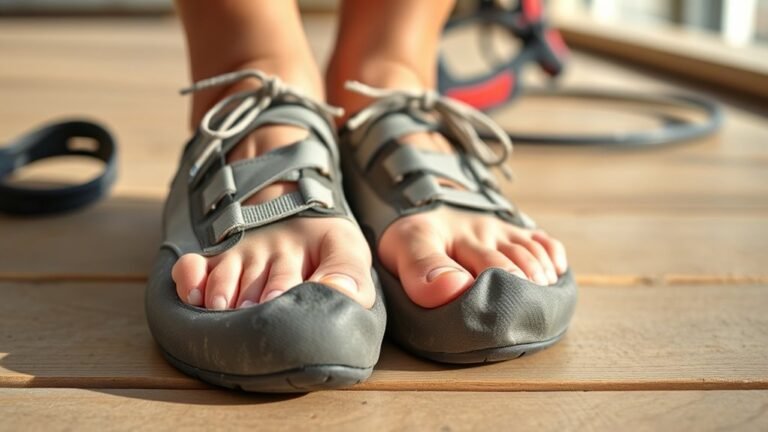
After ensuring your climbing shoes fit snugly overall, pay close attention to the heel and toe box areas. The heel fit should be snug without pinching, providing enough heel tension to minimize heel movement during climbs. This proper fit prevents slipping, boosts climbing performance, and avoids painful blisters.
If you have narrow heels, look for shoes with lower shoe volume and pre-tensioned designs to secure your foot firmly. For wider heels, opt for models with more shoe volume to maintain shoe comfort without sacrificing support.
In the toe box, your toes should lie flat or gently curl without excessive pressure or dead space. Avoid toe curling that causes discomfort, as it can hinder performance. Balancing heel fit and toe box comfort ensures your shoes enhance both stability and overall climbing efficiency.
Use a Climbing Shoe Size Calculator
When you’re choosing climbing shoes, using a size calculator can save you a lot of guesswork by matching your foot measurements with brand-specific sizing charts. A climbing shoe size calculator offers personalized sizing based on your foot dimensions, last shape, and material stretch. This helps you find the best fit across different shoe models.
For example, the Epic TV climbing shoe size calculator is praised for its accurate size recommendations.
Here’s how to make the most of a size calculator:
- Input precise foot measurements to get tailored brand-specific sizing.
- Consider material stretch and last shape for realistic fit expectations.
- Use the calculator’s advice as a starting point, then try several sizes to ensure a suitable fit.
This approach streamlines your search and improves comfort and performance. It really takes a lot of the hassle out of finding the right climbing shoes.
Consult Experts or Experienced Climbers
You’ll get valuable advice by talking to expert climbers who know how different shoes fit various foot shapes. Don’t hesitate to visit local shops where staff can guide you through trying on multiple models.
Tapping into online forums and communities also helps you learn sizing tips and brand recommendations from seasoned climbers. It’s a great way to get honest feedback and discover what might work best for you.
Seek Professional Advice
Because climbing shoes come in various shapes and sizes, consulting experienced climbers or knowledgeable store staff can make a huge difference in finding your perfect fit. Seek professional fitting at specialty stores where staff accurately measure your foot and assess your climbing style. Their expert advice helps you navigate brand variation and last shape differences, ensuring both comfort and performance.
When you seek professional advice, focus on:
- Getting an accurate foot measurement and understanding how shoe size varies by brand.
- Learning how materials like leather or synthetic stretch over time to pick the right initial fit.
- Utilizing fitting policies to try multiple pairs until you find the ideal balance of comfort and performance.
This approach guarantees a shoe that suits you perfectly.
Learn From Experience
Although finding the right climbing shoe often involves trial and error, consulting experts or experienced climbers can considerably speed up the process. You’ll gain valuable insights into brand-specific fit nuances and learn fitting tips tailored to your foot shape.
Listening to personal sizing experiences from seasoned climbers helps you understand common challenges and solutions. Expert advice guides you through differences in shoe lasts, materials, and climbing styles, ensuring a better climbing shoe fit.
Attending fitting events or workshops offers professional guidance and hands-on learning. By learning from climbers who’ve navigated sizing hurdles, you reduce guesswork and improve your chances of finding the perfect fit faster.
Combining your experience with expert input makes the trial and error process more efficient and effective.
Purchase From Retailers With Good Return Policies
When you buy climbing shoes, choose retailers with flexible return policies so you can try different sizes without stress. Look for easy exchange processes that let you swap out shoes quickly if the fit isn’t right.
This way, you’ll find the perfect pair without worrying about being stuck with uncomfortable shoes. It makes the whole buying experience a lot less stressful, right? Just knowing you have options can really help.
Flexible Return Options
Selecting climbing shoes from retailers with flexible return policies can save you time and frustration if the fit isn’t perfect. When shopping online, prioritize stores offering hassle-free returns and size exchanges within 30 days.
Before buying, check customer reviews to verify the retailer’s reputation for smooth return processes. And don’t forget to keep the original packaging intact to guarantee your return or exchange goes smoothly.
Focus on these key points:
- Choose retailers with clear return policies that allow you to try multiple sizes without penalties.
- Opt for stores offering free or low-cost return shipping to minimize costs when sending back shoes.
- Verify flexible returns and exchanges even for lightly worn shoes to avoid losing money on a poor fit.
This approach helps you confidently select climbing shoes that truly fit your feet.
Easy Exchange Process
Having flexible return options is just the start—an easy exchange process makes finding your perfect climbing shoe even smoother. When shopping, check the retailer’s return policy and return window carefully.
Knowing whether you can try at home or only in-store affects your comfort in testing multiple sizes. If you’re making an online purchase, order multiple sizes to compare, but always keep the original packaging and tags intact to guarantee a hassle-free size exchange.
A smooth return process depends on these details, plus responsive customer service that supports quick exchanges. Reading reviews or asking staff about their exchange experience helps you pick a retailer who values your satisfaction.
Prioritizing these factors means you’ll spend less time worrying and more time climbing with shoes that fit just right.
Conclusion
Choosing the right climbing shoe size can make all the difference in your performance and comfort. Remember, “measure twice, cut once”—take your time measuring your feet accurately and consider factors like material stretch and climbing style.
Don’t hesitate to consult experts or use size calculators, and always buy from retailers with good return policies. This way, you can avoid the hassle of ill-fitting shoes and find something that truly works for you.
With these tips, you’ll find the perfect fit that supports you on every climb. Proper climbing shoe size ensures better grip, reduces foot pain, and enhances your overall climbing experience. So, take your time choosing the right size, and enjoy every step on your climbing journey!