What Makes Rock Climbing a Sport?
You know rock climbing is a sport because it pushes your physical strength, stamina, and sharp mental focus to new limits. It’s not just about pulling yourself up a rock; it’s about engaging your entire body, mastering techniques, and solving problems on the fly.
When you climb, you’re constantly managing fear and planning your next move, which makes it both physically and mentally challenging.
Competitions add another layer by testing your skill, speed, and strategy in unique formats. Plus, there’s this amazing community that shares tips, encouragement, and support.
If you want to understand how all these elements come together to make rock climbing a dynamic and growing sport, there’s plenty more to explore. It’s more than just a hobby—it’s a full-on athletic and mental adventure.
Physical and Mental Challenges in Rock Climbing
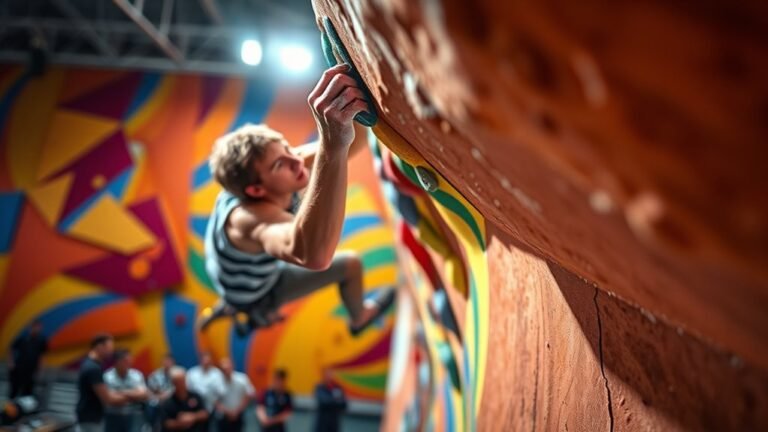
Although rock climbing requires impressive physical strength and endurance, it also demands sharp mental focus and problem-solving skills. You’ll need to master climbing techniques that engage your entire body, especially your core, arms, and legs, to maintain balance and tackle physical challenges.
Mental resilience plays a huge role, as fear management is essential when facing difficult routes. You can’t just rely on brute strength; precise technique and constant mental focus help you conserve energy and plan each move efficiently.
Problem-solving comes into play as you adapt strategies on the fly, reading holds and anticipating your next step. The combination of physical strength, endurance, and mental toughness makes rock climbing a unique sport that challenges both body and mind simultaneously.
Competitive Elements and Community in Rock Climbing
Rock climbing tests not only your physical and mental limits but also your competitive spirit and sense of community. In climbing competitions, athletes face distinct challenges in bouldering, lead, and speed, each governed by unique scoring systems.
The Olympic Games have elevated sport climbing’s profile, separating medals for speed and combined boulder-lead events. Yet, the community remains tight-knit, emphasizing collaboration and shared knowledge.
You’ll find mutual encouragement and open exchange of betas both in gyms and online platforms like theCrag and MountainProject.
- Global competitions showcase elite athletes and innovative routes
- Community fosters inclusivity and support for newcomers
- Collaboration thrives through sharing betas and grading insights
- Sport climbing blends fierce competition with camaraderie and teamwork
This balance makes rock climbing a compelling and evolving sport.
Conclusion
When you climb, you’re not just testing your strength; you’re challenging your mind too. Rock climbing demands focus, problem-solving, and endurance, making it a true sport.
Plus, with over 8 million climbers worldwide competing and supporting each other, you’re part of a vibrant community. It’s pretty amazing to be connected with so many people who share the same passion.
So, whether you’re scaling indoors or outdoors, you’re engaging both body and mind in a dynamic, competitive activity. Rock climbing pushes your limits and rewards you with a sense of accomplishment that few other sports can match.
In short, rock climbing is much more than just a physical challenge—it’s a sport that combines mental strategy, physical endurance, and community spirit, making it one of the most exciting and fulfilling activities out there.