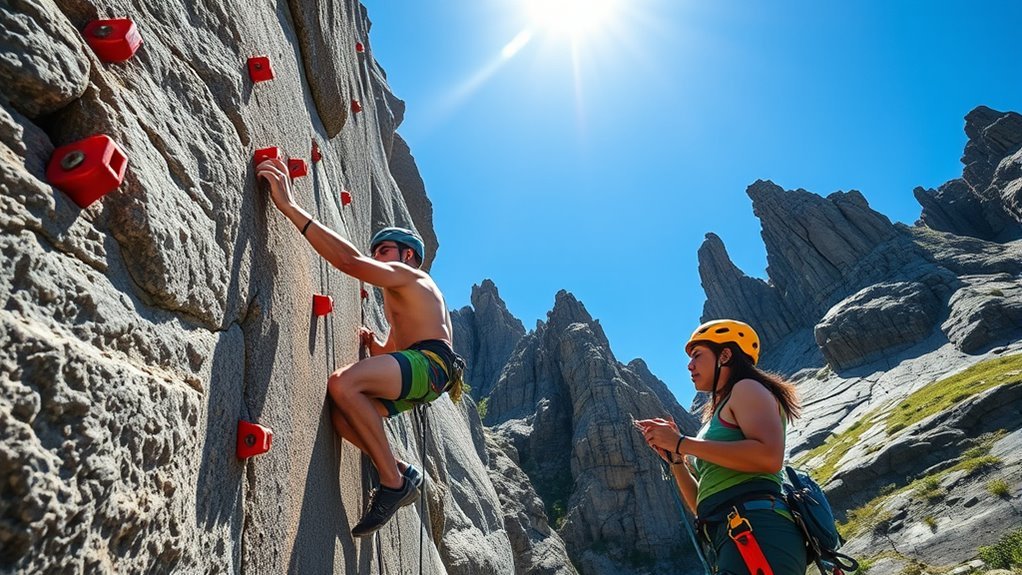
What Is Considered Sport Climbing and How to Do It
Sport climbing is a popular type of climbing where you tackle routes secured with preplaced bolts. This setup lets you focus more on your technique and strength without stressing about placing gear as you go.
You’ll clip quickdraws into these bolts while lead climbing, making the ascent smoother and safer.
Using the right gear like climbing shoes, a harness, and a helmet is essential for safety.
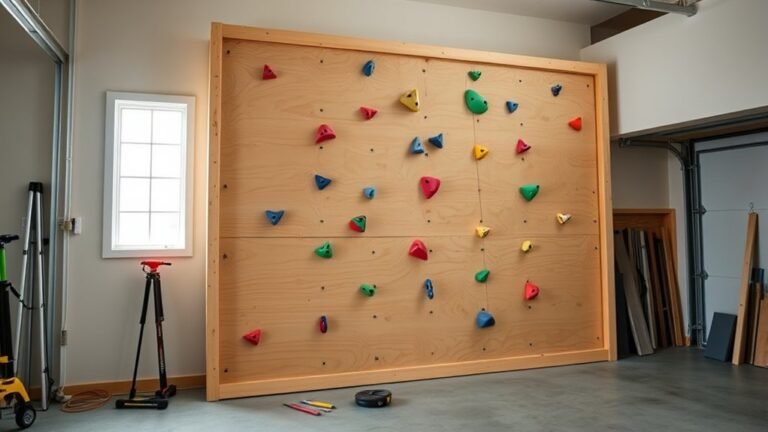
Sport climbing is perfect for short, intense climbs whether you’re indoors at a climbing gym or outdoors on natural rock.
If you want to get better and stay safe, it’s important to understand your gear and follow safety tips closely.
This way, you can enjoy the thrill of sport climbing while minimizing risks.
Key Takeaways
- Sport climbing uses preplaced bolts for protection, focusing on technique and strength on short, high-intensity routes. It’s all about tackling those challenging moves with precision.
- Climbers clip quickdraws into fixed bolts while lead climbing to ensure safety and reduce fall risk. This way, you’re protected as you move up the wall.
- Essential gear includes climbing shoes, helmet, harness, and quickdraws. Don’t forget to regularly check your gear to keep everything safe and sound.
- Beginners should practice proper belaying and controlled falling. And, of course, always wear the right protective gear to stay safe out there.
- Sport climbing offers a safer, confidence-building environment for developing technical skills. You can enjoy it both indoors and outdoors, making it super versatile and fun.
What Makes Sport Climbing Unique?
While traditional climbing requires placing your own protection, sport climbing uses preplaced bolts that let you focus on technique and strength. In sport climbing, these bolts provide consistent protection along climbing routes, reducing fall potential and enhancing safety.
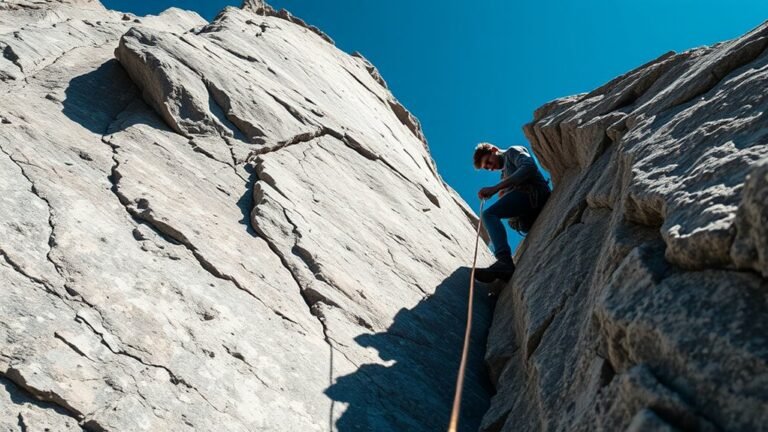
Whether you’re indoors climbing on artificial walls or outdoors climbing natural rock, the fixed protection points let you concentrate on mastering technical skill and maneuvering challenging moves. Lead climbing is common in sport climbing, where you clip into each bolt as you ascend, managing fall risks effectively.
This approach emphasizes high-intensity, short routes that test your strength and precision without the added worry of placing gear. Sport climbing’s unique setup lets you progress confidently, knowing safety is built into every route.
Sport Climbing Gear and Safety Tips for Beginners
Because safety is essential in sport climbing, you should always start with the right gear and proper precautions. Begin by wearing climbing shoes for grip and a helmet to protect against falling debris, especially outdoors.
Safety in sport climbing starts with the right gear: climbing shoes for grip and a helmet for protection.
Your harness must fit snugly around your waist and legs; double-check all buckles before use. Use quickdraws to clip your rope into preplaced bolts, reducing drag and keeping you secure.
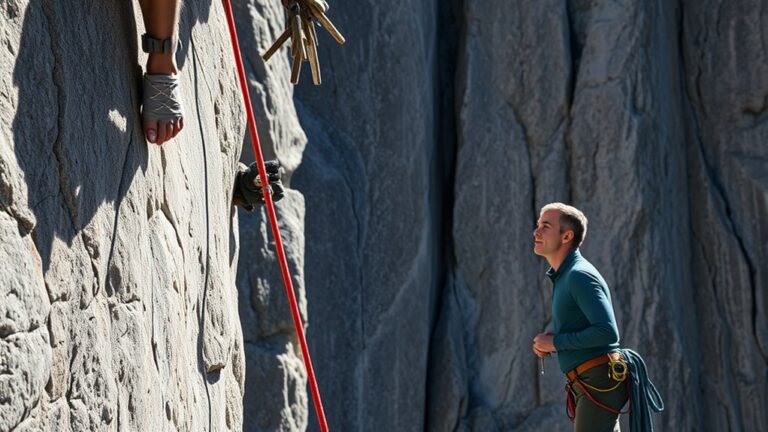
Practice proper belaying techniques to manage rope slack and catch falls safely. Inspect bolts and other hardware regularly, replacing any worn or corroded pieces to guarantee reliability.
Master controlled falling techniques to avoid injury. With the right safety gear and careful harness fitting, you’ll enjoy outdoor climbing while minimizing risks and building confidence.
Frequently Asked Questions
What Is Considered Sport Climbing?
Sport climbing means you climb routes with fixed bolts for protection, focusing on technique over placing gear. You’ll follow pre-set paths, either outdoors or indoors, emphasizing skill and safety without the risks of traditional climbing.
Is Rock Climbing Good for Osteoporosis?
Yes, rock climbing’s great for osteoporosis because it strengthens bones in your arms, hands, and spine. When you climb regularly, you stimulate bone growth and improve your musculoskeletal health, reducing fracture risks safely and enjoyably.
Can Climbing Cause Plantar Fasciitis?
Yes, climbing can cause plantar fasciitis if you overuse your feet or wear improper shoes. You should stretch, strengthen your feet, and rest if you feel heel pain to prevent or treat this common injury.
Is Rock Climbing Good for Dyspraxia?
Yes, rock climbing is great for dyspraxia. It helps you improve coordination, motor planning, and spatial awareness. Climbing indoors offers a safe, controlled space to practice movements, boosting your confidence and physical skills effectively.
Conclusion
So, you’ve learned what makes sport climbing unique and how to gear up safely. Now, all that’s left is to ignore every safety tip and wing it—because what could possibly go wrong, right? Just kidding.
Sport climbing’s thrill comes from trusting your equipment and skills, not from reckless leaps. So, gear up properly, follow the rules, and enjoy the climb—because falling is only fun when it’s in a video game.
Remember, sport climbing is all about technique, safety, and confidence. When you trust your gear and respect the process, every climb becomes an exciting challenge. So, embrace the adventure, stay safe, and make the most of your sport climbing experience!