5 Essential Climbing Gear to Use
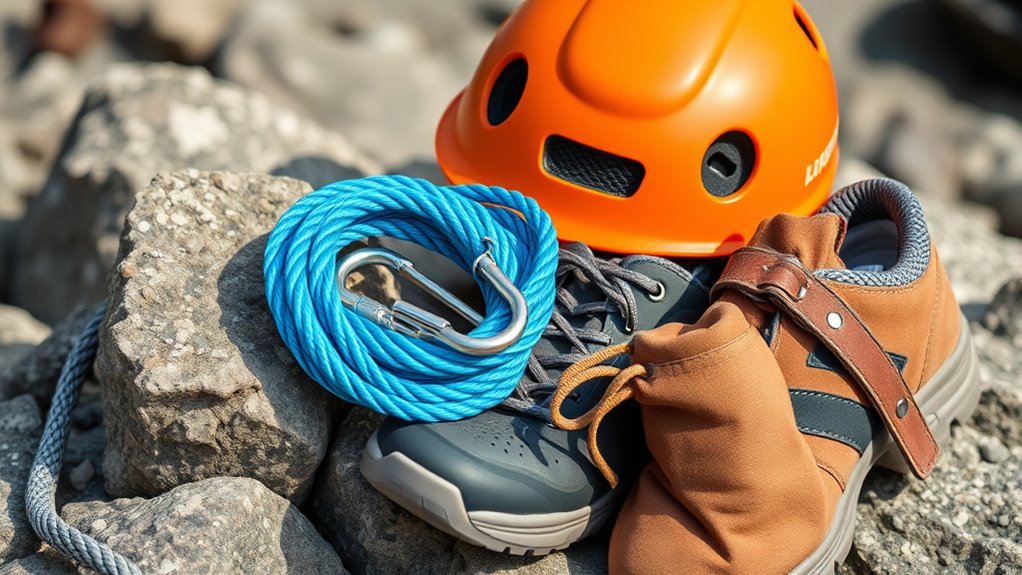
For safe and successful climbing, you need five essential gear pieces that make all the difference. First up are climbing shoes that fit snugly, giving you precise footwork on any surface.
Next, a comfortable, adjustable harness paired with a lightweight helmet keeps you protected while you climb.
Don’t forget climbing chalk and a chalk bag to keep your grip dry and steady.
Lastly, a durable dynamic rope with secure protection gear is key for your safety on the wall.
Picking gear that matches your skill level and climbing style really boosts your confidence and performance.
Keep exploring, and you’ll see how each piece can enhance your climbing experience and help you reach new heights!
Key Takeaways
- Climbing shoes with a snug fit provide precision and comfort. They’re essential for effective foot placement on various holds.
- An adjustable harness with secure waist and leg loops keeps you safe and comfortable during climbs. It’s important to have both fit just right.
- Helmets made from lightweight, impact-resistant materials protect your head. Plus, they offer ventilation, which is great for long sessions.
- Dynamic climbing ropes (9.5–11mm) with dry treatment boost safety and durability. They work well both indoors and outdoors.
- Chalk and chalk bags help improve your grip by reducing moisture. This makes handling challenging climbing routes a lot easier.
Choosing the Right Climbing Shoes for Your Needs
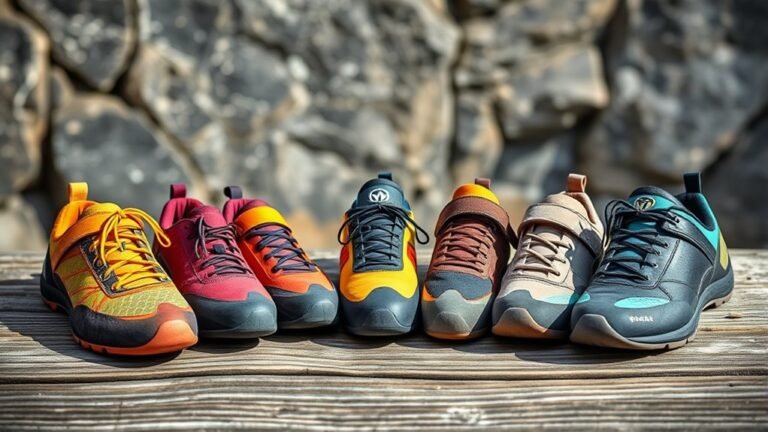
When choosing climbing shoes, you’ll want a snug fit that supports precise foot placement without causing pain. Your climbing shoes should feel tight but comfortable, allowing you to stand confidently on small footholds.
Aim for climbing shoes that are snug yet comfortable to ensure precise foot placement and confidence on small holds.
If you’re new or prefer all-day comfort, neutral shoes offer a relaxed fit and are great for longer climbs. On the other hand, aggressive shoes suit advanced climbers who need maximum precision on tiny holds.
The material plays a big role in fit—leather stretches over time, while synthetic holds its shape longer. Don’t forget about sole hardness: softer soles provide better grip and sensitivity, while harder soles offer durability for tough climbs.
Brands like La Sportiva, Scarpa, and Evolv have models tailored to different styles and feet, so choose wisely. It really pays off to find the right shoe for your climbing style!
Harnesses and Helmets: Essential Climbing Safety Gear
Climbing shoes help you grip the rock, but your safety depends on gear like harnesses and helmets. Harnesses securely attach you to the rope, offering an adjustable fit with waist and leg loops that should feel snug yet comfortable.
Whether you choose sport, trad, or all-day comfort styles, look for durable protection and features like elastic leg loops and gear loops. Helmets provide crucial head protection, made from lightweight materials that combine impact resistance with ventilation and an adjustable fit.
For ideal climbing safety, your helmet must sit level with minimal movement. Brands like Petzl and Black Diamond deliver tested, reliable safety gear, ensuring durability and comfort.
Prioritizing harnesses and helmets means you’re equipped with essential gear that safeguards you from falls and impacts on every climb. It’s all about staying safe so you can enjoy the adventure!
Climbing Chalk and Chalk Bags: Maximizing Grip and Convenience
How can you maintain a reliable grip on challenging routes? Climbing chalk is your best ally for managing moisture and reducing sweat that causes slipping.
You can choose between loose chalk, liquid chalk, or chalk balls. Liquid chalk dries faster and provides a stronger grip, perfect for quick chalk application mid-climb.
Chalk balls offer controlled use with less mess, helping you conserve chalk and keep hands dry. Chalk bags are essential for carrying your chalk, featuring drawstring closures and belt attachments for easy access and convenience.
Using chalk sparingly and reapplying only as needed preserves your grip without excessive buildup on holds or gear. With the right climbing chalk and chalk bag features, you’ll maximize grip and climb confidently.
Climbing Rope and Protection Gear: What to Pick for Security
Although having the right rope and protection gear might seem overwhelming at first, choosing dynamic ropes and reliable hardware guarantees your safety on every climb.
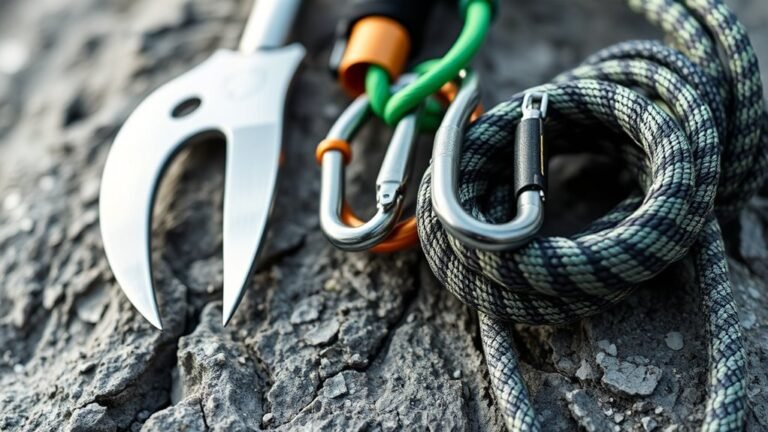
Opt for climbing ropes with dry treatment to resist moisture and reduce weight. Use quickdraws with longer slings to minimize rope drag on tricky routes.
Always rely on locking carabiners for secure attachment to protection points and belay devices. Incorporate cams and nuts in cracks to protect yourself effectively.
| Gear Type | Key Feature |
|---|---|
| Climbing Ropes | Dynamic, 9.5–11mm, dry-treated |
| Quickdraws | Two carabiners, reduce rope drag |
| Protection Gear | Cams and nuts, fit various cracks |
| Carabiners | Locking, straight or bent gates |
Choose wisely for safety and efficiency on every climb.
Selecting the Right Climbing Gear for Your Style and Skill Level
Picking the right rope and protection gear is just one part of the equation. You need climbing gear tailored to your style—whether sport, trad, bouldering, or alpine—and your skill level.
Start with beginner-friendly climbing shoes that fit comfortably and a harness with adjustable leg loops and gear loops for versatility. Don’t overlook your chalk bag; it’s essential for grip, especially as challenges increase.
Choose ropes suitable for both indoor and outdoor use to maximize adaptability. As your skill level improves, regularly assess and upgrade your gear to match your evolving needs.
Proper fit and quality in harnesses and climbing shoes directly affect your safety and endurance, so invest wisely to climb confidently and comfortably.
Frequently Asked Questions
How Do I Properly Care for and Maintain My Climbing Gear?
You should regularly inspect your gear for damage, clean it with mild soap and water, dry it away from direct sunlight, store it in a cool, dry place, and retire any equipment showing significant wear or damage.
What Are the Best Practices for Packing Climbing Equipment Efficiently?
Don’t just toss gear chaotically; instead, pack tightly by placing bulky items first, then smaller essentials. You’ll save space and avoid damage. Roll soft items and use compartments to keep everything accessible and organized.
Can Climbing Gear Be Rented, and Is It Safe to Do So?
Yes, you can rent climbing gear, and it’s generally safe if you choose reputable shops. Always inspect equipment carefully before use, ask questions about maintenance, and don’t hesitate to replace anything that looks worn or damaged.
How Do Weather Conditions Affect the Choice of Climbing Gear?
When weather throws curveballs like rain or freezing winds, you’ll pick waterproof jackets and insulated gloves to stay warm and dry. Hot sun means lighter gear and sun protection. Always match your gear to nature’s mood.
Are There Eco-Friendly or Sustainable Options for Climbing Equipment?
Yes, you can find eco-friendly climbing gear made from recycled materials or sustainably sourced fabrics. Brands now focus on durability and reducing waste, so choosing these options helps protect the environment while supporting responsible production.
Conclusion
When it comes to climbing, having the right gear can make all the difference between a smooth ascent and a tough climb. You want to choose shoes, harnesses, chalk, ropes, and protection that fit your style and skill level like a glove.
Remember, every expert was once a beginner, so don’t be afraid to start small and build up your kit. With the right essentials, you’ll be ready to reach new heights safely and confidently.
Choosing the right climbing gear is key to your success and safety on the wall. From sturdy climbing shoes to reliable ropes and harnesses, each piece plays a crucial role. Don’t forget chalk for a better grip and protection gear to keep you secure.
By investing in these five essential climbing gear items, you set yourself up for enjoyable and safe climbs every time. So start with what fits your needs, learn as you go, and watch your skills—and your climbing kit—grow together.