What Makes Climbing Mount Everest Hard?
Climbing Mount Everest challenges you with deadly thin air—oxygen levels drop to one-third of normal—making every breath painful and increasing altitude sickness risk. This extreme altitude is one of the toughest parts of the climb and really tests your body’s limits.
You’ll also face brutal weather, from -40°C cold to fierce 200 mph winds and unpredictable snowstorms. The mountain doesn’t make it easy; conditions can change in an instant, so you always have to be ready.
The rugged terrain demands technical skills to navigate icefalls, crevasses, and avalanches. It’s not just about walking up a hill—this is serious mountaineering.
Your physical fitness and mental toughness are pushed to the limit. Every step is a challenge, but that’s what makes the climb so epic and rewarding.
Keep exploring to uncover what truly shapes this epic climb.
Key Takeaways
- Extremely low oxygen levels at high altitude cause severe fatigue and risk of altitude sickness. It’s tough because your body just can’t get enough air up there.
- The weather is brutal. You’re dealing with extreme cold, powerful winds, heavy snowfall, and storms that can pop up out of nowhere.
- The terrain is no joke either. There are steep icefalls, crevasses, unstable surfaces, and areas where avalanches can happen at any moment.
- Climbing Everest takes serious physical fitness. You also need technical skills and mental toughness to push through all the tough conditions.
- Plus, the routes are dangerous. You have to plan carefully, be agile, and stay resilient to handle all the environmental hazards.
Why Everest’s Thin Air and Harsh Weather Make Climbing Tough
Although climbing Mount Everest is a dream for many, its thin air and harsh weather make the challenge incredibly tough. At high altitude, oxygen levels drop to about one-third of what you’re used to, causing low oxygen and severe hypoxia.
Climbing Everest is a tough challenge due to thin air and severe oxygen shortage at high altitudes.
This thin air increases your risk of altitude sickness, especially in the “death zone” above 8,000 meters, where survival without supplemental oxygen becomes nearly impossible.
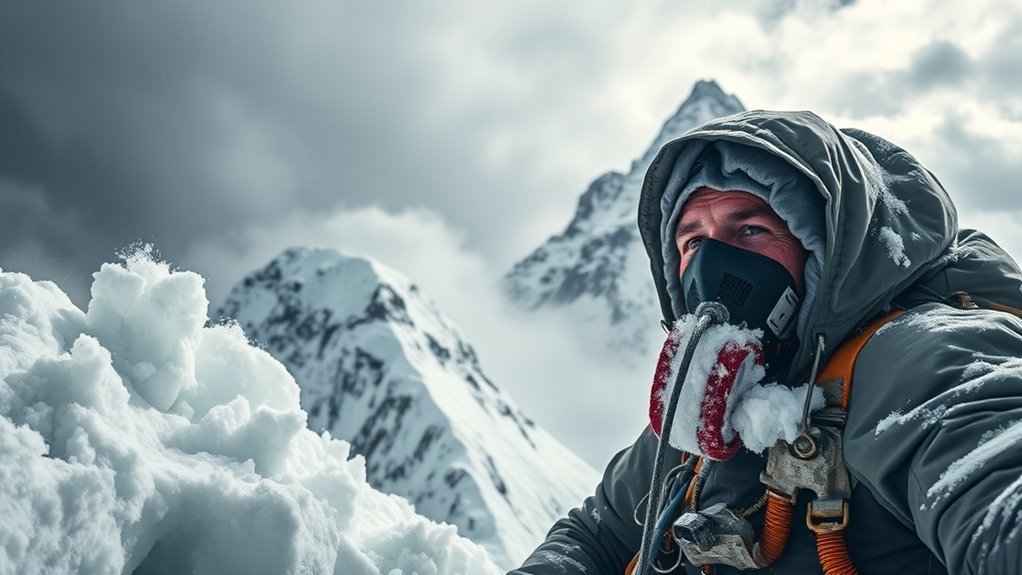
The extreme cold, sometimes below -40°C, combined with powerful winds reaching up to 200 mph, creates brutal weather conditions that test your endurance. Snowstorms and heavy snowfall can block routes and trigger avalanches, making the challenging terrain even more dangerous.
Facing these conditions means you must be well-prepared and acclimatized to survive Everest’s unforgiving environment. It’s not something you can just wing—you really have to train and plan for it.
How Everest’s Terrain and Your Fitness Shape the Climb
Because Everest’s terrain includes steep icefalls, crevasses, and technical climbing sections, your fitness and skills directly impact how safely and successfully you can navigate the mountain. The rugged terrain demands endurance and technical climbing skills to overcome shifting ice and extreme temperatures.
High altitude reduces oxygen, increasing fatigue and the risk of high-altitude cerebral edema, so maintaining peak physical fitness is critical. You’ve got to be prepared for the physical and mental toll of prolonged exposure to harsh conditions.
| Challenge | Terrain Feature | Required Skill/Fitness |
|---|---|---|
| Steep Icefalls | Icefalls | Technical climbing skills |
| Hidden Crevasses | Crevasses | Agility and careful navigation |
| Oxygen Deprivation | High altitude | Endurance and physical fitness |
| Extreme Conditions | Rugged terrain | Mental toughness and resilience |
Frequently Asked Questions
Why Can’t You Boil an Egg at the Top of Mount Everest?
You can’t boil an egg atop Everest because water boils at just 69°C there, too low to cook it properly. The reduced atmospheric pressure lowers boiling temperature, so the egg stays raw despite boiling water.
Why Can’t You Climb Mount Everest After 2pm?
You can’t climb Everest after 2 pm because the mountain turns into a frozen nightmare! You’ll face deadly winds, plummeting temperatures, and fading daylight, making your descent nearly impossible and putting your life at extreme risk.
Why Do Planes Not Fly Over Everest?
You don’t see planes flying over Everest because the extreme altitude means thin air and low oxygen, which can cause engine failure and loss of control. Plus, unpredictable weather and hazardous terrain make flying there too risky.
Can an Average Person Climb Everest?
You can’t simply stroll up Everest’s icy spine; you’ll need more than grit—you’ll need skills, gear, and acclimatization. Without them, the mountain’s fierce breath and jagged teeth will swiftly turn dreams into danger.
Conclusion
Climbing Mount Everest challenges your courage and conditioning, confronting you with cruel cold, crushing climbs, and cloud-thin air. You’ll battle biting winds and unpredictable weather while steering narrow, nerve-wracking ridges and rocky routes.
Your fitness fuels your fight against fatigue, and your focus faces fierce forces. Every step tests your strength and spirit.
Still, the stunning summit’s siren song sparks your stubborn soul, urging you onward despite Everest’s exacting, exhausting embrace.
Mount Everest is hard because it pushes every part of you—physically and mentally. The cold, the thin air, and the tough terrain aren’t just obstacles; they’re relentless challenges that demand courage, conditioning, and focus. But it’s that breathtaking summit that keeps climbers coming back, no matter how tough the climb gets. If you want to conquer Everest, be ready to face the mountain’s harsh realities head-on and keep your spirit strong every step of the way.