How Safe Are Climbing Harnesses?
You can trust climbing harnesses to keep you safe, but only if you regularly inspect them for wear and damage. It’s important to check stitching, webbing, buckles, and load-bearing areas like the belay loop for signs of fraying, cuts, or deformation.
These are the areas that take the most strain and need your attention.
Harnesses come with safety features like locking buckles, reinforced webbing, and strong tie-in points, all designed to handle heavy loads during your climb.
Keeping these components in good shape ensures your protection on every ascent.
So, keep going to understand how these features work together to secure you and why regular maintenance is key to your safety while climbing.
Key Takeaways
- Climbing harnesses are designed with reinforced webbing and load ratings between 10-15 kN for high strength and safety. This means they can handle a lot of force without breaking.
- Regular inspection of stitching, webbing, buckles, and labels is important. It helps make sure the harness stays in good shape and prevents failure during use.
- Critical load-bearing components like belay loops and tie-in points go through testing to withstand high stress. This is to avoid any compromise when you need them most.
- Safety features such as locking buckles and non-directional tie-in points keep the harness secure. They work well under different conditions, so you can trust them.
- It’s also key to follow lifespan limits and check for wear regularly. Doing this reduces the risk of accidents and keeps your harness reliable every time you climb.
How to Inspect a Used Climbing Harness for Safety Risks
Before you trust a used climbing harness with your safety, you need to inspect it thoroughly. Start by examining all stitching for fraying, cuts, or loose threads. These can really weaken the harness, so don’t skip this step.
Next, check the webbing for signs of wear like thinning, discoloration, or abrasion. These are clear indicators of potential safety risks you don’t want to ignore.
Inspect webbing carefully for thinning, discoloration, or abrasion—these signs warn of serious safety hazards.
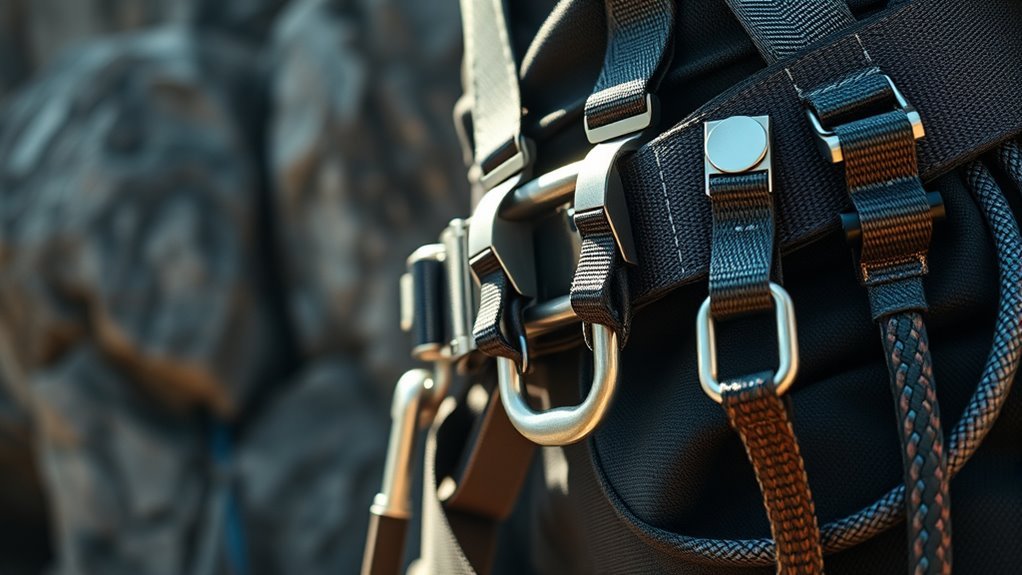
Don’t overlook the buckles and hardware. Look closely for corrosion, cracks, or any deformation that might affect how they lock or release.
Be sure to test critical load-bearing parts, such as the belay loop and tie-in points. Check for any tears or deformities because these parts take the most stress.
Finally, make sure all labels and inspection tags are present and legible. They’ll confirm the harness hasn’t exceeded its recommended lifespan, which is super important.
Safety Features Built Into Climbing Harness Design
When you choose a climbing harness, you’re relying on built-in safety features designed to protect you during every climb. These features focus on maintaining structural integrity and handling high load capacity, often rated between 10-15 kN.
Key components include locking speed buckles that prevent slipping and non-directional tie-in points that stay strong even if misrouted. Reinforced webbing and gear loops support loads up to 4.5 kN.
Adjustable-rise systems keep you balanced, reducing injury risk during falls. Regular inspection guarantees these safety features remain effective over time.
| Feature | Purpose |
|---|---|
| Locking Buckles | Prevent slipping |
| Non-directional Tie-in | Maintain strength if misrouted |
| Reinforced Webbing | Support high load capacity (4.5 kN) |
| Adjustable Rise | Keep climber balanced |
| Regular Inspection | Preserve structural integrity |
Frequently Asked Questions
How to Know if a Climbing Harness Is Safe?
You know a climbing harness is safe if it fits well, shows no wear or frayed stitching, all buckles lock securely, meets UIAA or EN standards, and you replace it after a significant fall or when it ages beyond its lifespan.
What Is the Fatality Rate of Rock Climbing?
You might be surprised, but the fatality rate in rock climbing is about 1 to 2 deaths per 100,000 participants annually. With proper gear and precautions, you can climb safely and drastically reduce your risk.
Are Climbing Harnesses OSHA Approved?
Climbing harnesses aren’t directly OSHA-approved, but if you use them at work, they must meet OSHA’s safety standards. Most recreational harnesses follow safety guidelines similar to OSHA’s, ensuring you get reliable fall protection.
Why No Harness for Bouldering?
You don’t wear a harness for bouldering because short falls don’t need arrest gear; instead, you rely on crash pads and spotters. Using a harness could actually increase injury risk by elevating your fall height unnecessarily.
Conclusion
When checking your climbing harness, always trust your tactile touch and thorough thinking. Safety starts with spotting snags, stains, or stress signs before scaling.
Remember, reliable rigging rests on robust design and regular review. Don’t dare to descend with doubts—diligence delivers dependable defense.
By blending careful care with consistent checks, you conquer climbs confidently and securely. So, stay sharp, stay safe, and savor every safe summit with a sturdy, sound harness!
Regularly inspecting your harness for wear and damage is key to climbing safety. A well-maintained harness not only protects you but also boosts your confidence on the wall. Consistent checks ensure your climbing gear performs as expected, reducing risks. Ultimately, your safety depends on a combination of quality equipment and vigilant maintenance. Keep your harness in top condition, and each climb will be as safe as it is thrilling.