5 Insights on Rock Climbing as an Olympic Sport
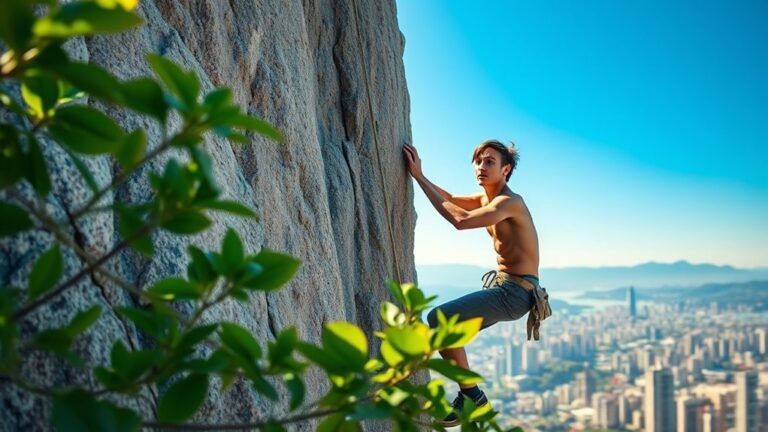
You’ll find that Olympic climbing evolved from traditional rock climbing, shifting to artificial walls for fairness and environmental protection. This change ensures a level playing field for all athletes and helps preserve natural climbing sites. It’s pretty cool how the sport combines physical strength with mental strategy.
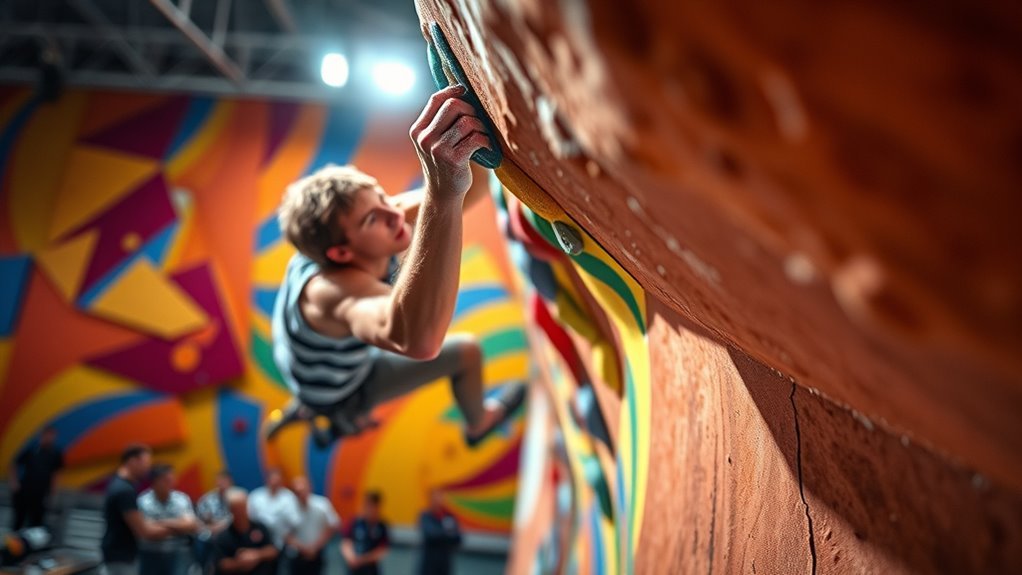
Olympic climbing includes three distinct disciplines—bouldering, lead, and speed—each requiring unique skills and strategy. Bouldering focuses on short, powerful moves, lead tests endurance on longer routes, and speed is all about racing up the wall as fast as possible.
The rules now award medals separately, letting athletes specialize and shine in their best events. Top climbers like Janja Garnbret and rising stars like Brooke Raboutou highlight the sport’s growing talent.
With upcoming events, especially Paris 2024, the competition is only going to get more intense and exciting.
Key Takeaways
- Olympic climbing evolved from traditional rock climbing, transitioning to artificial walls for standardized competition and environmental protection. This change helped make the sport more accessible and fair for everyone involved.
- The sport features three distinct disciplines: bouldering, lead climbing, and speed climbing. Each one requires unique skills and strategies, which keeps things exciting and challenging.
- Separate medals for speed and combined boulder/lead events allow athletes to specialize and optimize performance. It’s great because climbers can focus on what they do best.
- Notable climbers like Janja Garnbret and Brooke Raboutou highlight the sport’s growing global talent and diversity. They really show how climbing is attracting amazing athletes from all over the world.
- The 2024 Paris Olympics marks a milestone with separate speed and combined events. This change reflects climbing’s increasing Olympic prominence and popularity.
Evolution of Olympic Climbing From Traditional Roots
How did rock climbing transform from a leisurely pastime into an Olympic sport? It all began with traditional rock climbing in the late 19th century as a recreational activity. You’d see climbers tackling natural environments, but the shift towards competition started in 1985 with SportRoccia near Turin, Italy, introducing organized events.
Soon after, artificial wall competitions kicked off in 1986 in France, moving climbing from natural rock to purpose-built infrastructures. This change helped protect natural environments and allowed standardized competition routes.
Key Characteristics of Olympic Climbing Disciplines
Although Olympic climbing combines three distinct disciplines, each demands unique skills and strategies that challenge athletes in different ways.
You’ll find bouldering tests problem-solving on short, 4.5-meter climbing walls without ropes, while lead climbing requires stamina to ascend over 15 meters on complex climbing routes within six minutes.
Speed climbing pushes you to race head-to-head on a standardized 15-meter overhanging wall, chasing the world record of 5.00 seconds.
In Olympic climbing competitions, mastering each discipline’s nuances is key as medals are now awarded separately.
| Discipline | Key Characteristic |
|---|---|
| Bouldering | Short, rope-free problems |
| Lead Climbing | Long routes, timed ascent |
| Speed Climbing | Fastest time, standardized wall |
| Wall Height | 4.5m (bouldering), 15m (others) |
| Equipment | Ropes (lead), none (bouldering) |
How Olympic Climbing Rules Affect Competition Strategy
Understanding the unique demands of each climbing discipline sets the stage for grasping how Olympic rules shape competition strategies. With the 2024 Olympics separating events, you can focus on discipline specialization, tailoring your training to climbing rules and scoring criteria specific to speed climbing, lead climbing, or bouldering.
In speed climbing, the standardized 15-meter route design and timing push you to perfect explosive power and quick starts. Meanwhile, lead climbing and bouldering require adapting to varied route designs, demanding endurance and problem-solving.
Olympic regulations now award separate medals for speed and combined boulder/lead events, so your competition strategy hinges on leveraging strengths rather than balancing all disciplines. Ultimately, understanding these rules lets you optimize your approach, maximizing performance within each event’s constraints.
Top Climbers and Rising Stars to Watch
When you follow the world of Olympic climbing, names like Janja Garnbret and Brooke Raboutou quickly stand out. Janja Garnbret dominates lead and bouldering, having won gold at Tokyo 2020. Meanwhile, Brooke Raboutou made history as the first American woman to medal in speed climbing at Paris 2024.
Alberto Ginés is a rising star who impressed everyone by claiming gold in the men’s combined event at Tokyo and the 2021 World Championship. Keep an eye on other rising stars like Colin Duffy and Natalia Grossman. They really shine in international competitions.
Samuel Watson also sets world records in speed climbing, showcasing the sport’s emerging talent. These Olympic climbers are redefining the limits of lead, bouldering, and speed climbing. It makes the sport thrilling to watch!
Upcoming Olympic Climbing Events to Know
The excitement around top climbers and rising stars only grows as you look ahead to the upcoming Olympic climbing events. At the 2024 Paris Summer Olympics, you’ll see speed climbing and combined bouldering and lead events held separately at the Le Bourget Climbing Venue from August 5-10.
This shift abandons the combined competition format used in Tokyo, allowing athletes to focus on their specialized climbing disciplines. Speed climbing will feature head-to-head races on a 15-meter wall, timed electronically to the thousandth of a second—pushing athletes to challenge the world record.
With 68 climbers competing, athlete rankings will shape intense battles in Olympic rock climbing. By Los Angeles 2028, expect even more diversification, with separate medals for speed, bouldering, and lead, highlighting the sport’s growth and excitement.
Frequently Asked Questions
What Is the 3 Second Rule in Bouldering?
The 3 second rule in bouldering means you shouldn’t hang or rest on a hold for more than three seconds. You want to move quickly and efficiently to save energy and keep your flow smooth during a climb.
Is Rock Climbing Good for Osteoporosis?
Yes, rock climbing is good for osteoporosis because it increases bone density and strength. You’ll stimulate bone growth through weight-bearing and resistance, but be sure to use proper technique and safety to avoid injuries that could worsen your condition.
What Are the Benefits of Sport Climbing?
You’ll boost your strength, endurance, and flexibility—climbers improve grip strength by up to 50%. You’ll sharpen problem-solving skills and gain better balance, coordination, and mental focus while enjoying a supportive community that motivates you constantly.
Will Rock Climbing Be in the 2028 Olympics?
Yes, rock climbing will be in the 2028 Olympics. You’ll see it evolve with specialized events, building on its growing popularity and success in previous Games, especially with separate speed and combined climbing disciplines showcased.
Conclusion
You might not expect that a sport rooted in raw adventure now demands such precise strategy, but that’s exactly what makes Olympic climbing so thrilling.
As you watch top climbers tackle speed, bouldering, and lead disciplines, you’ll see how tradition and innovation climb hand in hand.
Just when you think you’ve figured out the game, rising stars remind you that the next challenge is always just a hold away.
Get ready to be hooked. Olympic rock climbing combines physical strength, mental focus, and strategic planning like few other sports. Whether it’s the explosive pace of speed climbing or the problem-solving nature of bouldering, each discipline tests athletes in unique ways. This blend of adventure, skill, and innovation is what makes rock climbing such an exciting Olympic sport to watch and follow.