5 Key Factors That Affect How Much Rock Climbing Does Cost
Your rock climbing costs depend mainly on the type of climbing you choose—indoor bouldering is cheapest, while outdoor traditional climbing costs more due to gear and travel.
How much rock climbing does cost can vary a lot based on where and how you climb.
You’ll spend differently on gear, ranging from minimal for indoor bouldering to extensive for outdoor sport climbing.
Training and safety classes add to expenses but boost your skills and reduce risks.
Memberships or day passes also affect your budget.
Keep exploring to uncover smart money-saving tips and essential gear details.
Key Takeaways
- Climbing discipline (indoor bouldering, top-rope, outdoor sport) significantly impacts gear and membership expenses.
- Gear costs vary widely by style, from $50 for indoor bouldering to $700+ for outdoor sport climbing.
- Gym memberships or daily passes create fixed costs for indoor climbing, while outdoor climbing has variable ongoing expenses.
- Safety training and climbing classes add to costs but are essential for skill development and accident prevention.
- Transportation, anchors, and protection gear increase expenses primarily in outdoor climbing scenarios.
How Different Climbing Disciplines Affect Your Costs
Although rock climbing is thrilling, your costs will vary greatly depending on the discipline you choose. If you stick to indoor climbing, especially at a climbing gym, you’ll find it more budget-friendly.
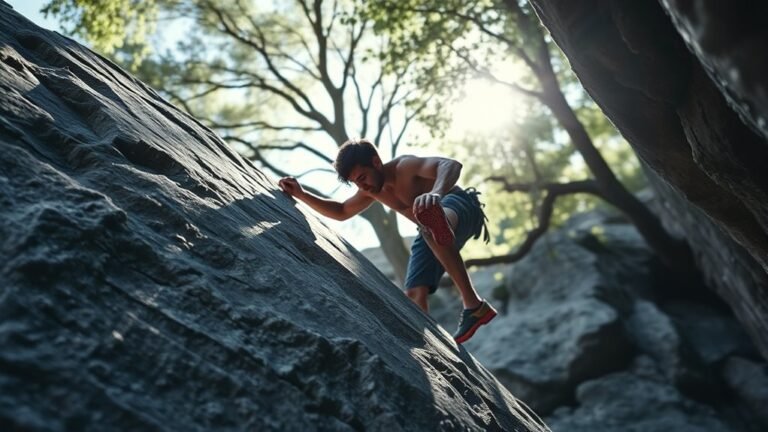
Indoor bouldering requires minimal gear investment—often just climbing shoes and chalk. Daily fees hover around $40, with annual memberships between $950 and $1150.
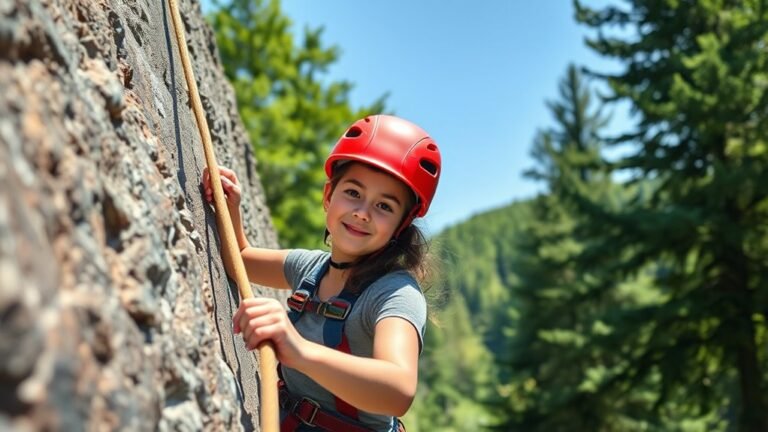
However, if you prefer indoor top-rope or lead climbing, expect to spend $200 to $400 on gear, plus annual memberships ranging from $1000 to $1500 due to higher safety needs.
Outdoor disciplines generally demand more expensive gear and extra costs. But focusing on indoor climbing at a climbing gym keeps your initial and ongoing expenses more manageable, letting you enjoy the sport without breaking the bank.
Indoor vs. Outdoor Climbing: A Cost Comparison
Choosing between indoor and outdoor climbing considerably impacts your expenses. Indoor climbing usually requires a gym membership, with daily passes around $40 or annual fees near $1000. This often includes classes and gear costs.
Deciding on indoor or outdoor climbing greatly affects your costs, with gym memberships or gear investments shaping your budget.
Outdoor climbing has higher initial gear costs—about $700 for sport climbing and $350 for bouldering—but lower ongoing fees. However, outdoor climbing demands additional expenses for anchors, protection, and transportation. Plus, it requires more skill and safety knowledge.
Consider these cost factors: Indoor climbing offers consistent access but higher fixed costs. Outdoor climbing gear costs vary by quality and trip frequency.
Outdoor trips may incur travel and anchor-setting expenses. Indoor climbing is more accessible with less specialized gear.
Your choice affects how you budget for climbing adventures and gear investments. So, think about what fits your style and wallet best!
Essential Gear Costs for Each Climbing Style
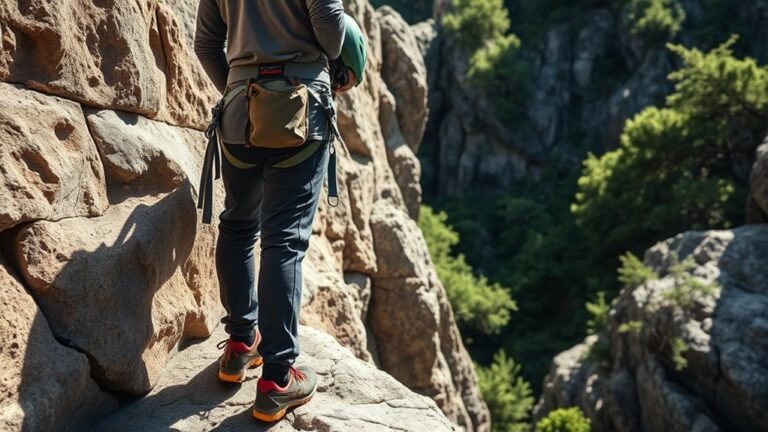
When you start climbing, your gear needs will vary a lot depending on the style you choose. For indoor climbing, bouldering only requires shoes and chalk.
Top-rope or lead climbing, on the other hand, needs harnesses and belay devices. Outdoor climbing calls for more specialized equipment. Outdoor bouldering gear tends to cost more, and sport climbing requires a full rack and rope. Traditional climbing takes the most extensive and expensive gear.
| Climbing Style | Approximate Gear Cost |
|---|---|
| Indoor Bouldering | $50–$150 |
| Indoor Top-Rope/Lead | $200–$400 |
| Outdoor Bouldering | $200–$350 |
| Outdoor Sport | ~$700 |
Your climbing gear choices directly impact your budget, so it’s smart to plan based on the style you want to pursue.
Climbing Classes and Safety Training Expenses
Since climbing involves inherent risks, investing in classes and safety training is essential for your confidence and well-being. Climbing classes typically range from $40 to $140, depending on length and instruction type.
Investing in climbing classes boosts your confidence and safety amid the sport’s inherent risks.
Safety training, like belay and rappelling courses, can add $50 to $150 but is vital for outdoor climbs. Many gyms offer introductory courses that bundle equipment rental with instruction. Sometimes this is included in your visit fee or membership.
Here’s what you can expect from climbing classes and safety training: hands-on belaying and rappelling practice, proper anchor building techniques, fall management, and accident prevention.
The instruction cost varies by course duration and complexity. Prioritizing safety training helps you climb smarter and reduces injury risks.
Smart Ways to Save Money Without Sacrificing Safety
Although climbing gear and training can get pricey, you don’t have to break the bank to stay safe and improve your skills. Buying used climbing shoes and gear lets you save without compromising safety.
Also, punchcards or annual memberships at climbing gyms offer affordable access, helping you practice consistently. Investing in safety courses guarantees you learn proper techniques, reducing risks and costly mistakes.
| Money-Saving Tip | Benefit |
|---|---|
| Used Climbing Shoes | Lower cost, maintain performance |
| Punchcards | Flexible, cost-effective gym access |
| Safety Courses | Proper technique, prevent accidents |
Frequently Asked Questions
How Much Does Rock Climbing Usually Cost?
You’ll usually spend around $40 per day for indoor bouldering or $950 to $1500 annually for memberships and gear. Outdoor climbing gear costs vary, starting from about $350 up to $1800 depending on the discipline.
Why Are Rock Climbing Holds so Expensive?
You’ll find rock climbing holds expensive because they’re handcrafted from durable materials by skilled artisans, take time to make, and involve ethical labor and shipping costs. Their quality and sustainability drive up the price compared to mass-produced options.
Why Does It Cost $40,000 to Climb Mount Everest?
Climbing Everest is like buying a ticket to the sky—you’re paying for permits, expert guides, oxygen, and gear. You’ll also cover travel, insurance, and emergency services, all adding up to that $40,000 price tag.
What Is the Main Challenge of Rock Climbing?
The main challenge of rock climbing is managing the risk of falls while maintaining control on difficult routes. You’ll need strength, endurance, skill, and safety techniques to navigate changing conditions and avoid injury effectively.
Conclusion
Climbing costs can climb quickly, but by carefully considering your climbing discipline, choosing indoor or outdoor options wisely, and investing in essential gear and safety classes, you can control your cash outlay. Smart savings strategies let you scale expenses without sacrificing safety.
So, stay savvy, stick to your budget, and start scaling summits with confidence. With a little planning and persistence, you’ll conquer costs and challenges alike, making your climbing journey both thrilling and thrifty.
Remember, understanding the key factors that affect how much rock climbing does cost is your best tool. From gear choices to the type of climbing you do, every decision impacts your budget. Keep these tips in mind to enjoy rock climbing without breaking the bank—your adventure awaits!