How Many Calories Do You Burn Rock Climbing: 5 Fast Ways
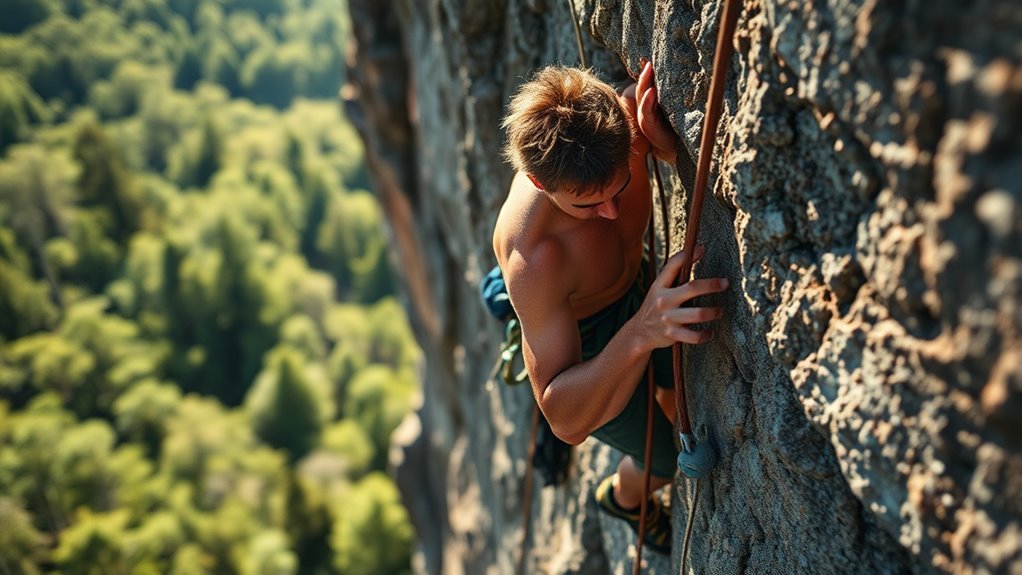
You burn about 8 to 11 calories per minute of active rock climbing, but tracking your actual climbing time is key for accuracy since rests don’t count. Rock climbing is a fantastic way to burn calories while having fun and challenging yourself physically.
To estimate calories burned, use your body weight and MET values by multiplying weight, METs, and hours climbed.
Wearables and apps come in handy here—they monitor your heart rate, movement, and effort to give you a more precise number.
Keep in mind, your climbing style and how often you rest also affect the total calories burned. So, keep going and stay consistent to uncover detailed ways to maximize your calorie tracking and get the most out of your climbs!
Key Takeaways
– Estimate calories by multiplying active climbing time by about 700 kcal/hour, adjusting for effort intensity.
This gives a good starting point for how much energy you’re burning.
– Track only active climbing minutes, excluding rest, to avoid overestimating calorie burn.
Don’t count the time you’re just hanging out on the wall or taking breaks.
– Use METs formula: Calories = body weight (kg) × MET value × hours climbed, for standardized calorie estimates.
It’s a handy way to get a more precise number if you know your weight and climbing intensity.
– Continuous climbing styles and shorter rests increase calories burned, averaging 8-11 calories per minute of active climbing.
So, keep moving and take fewer breaks if you want to torch more calories.
– Wearables and apps using heart rate and movement data improve calorie estimates by accounting for effort and breaks.
They help you get a clearer picture of your actual calorie burn throughout your session.
Estimating Calories Burned Based on Climbing Time
Although rock climbing sessions often include rest breaks, you should focus on the actual climbing time to estimate calories burned accurately. Total calories burned depend largely on your active climbing time, not the entire session length.
Rest periods reduce your climbing time, so excluding them is essential for precise calorie estimation. To get a reliable number, multiply your active climbing time by a standard calorie rate, like 700 kcal/hour, but adjust it based on your climbing effort’s intensity.
Tracking devices or activity logs can help you monitor your climbing time and effort more closely. By focusing only on the time spent actively climbing and considering your exertion, you improve the accuracy of your calorie calculations during rock climbing.
Why Tracking Active Climbing Minutes Improves Calorie Accuracy
When you track only your active climbing minutes, you capture the true effort you put into each session. This leads to more accurate calorie estimates.
Since session time often includes rests and social breaks, focusing on active climbing minutes prevents overestimating calorie burn. It makes sense, right? You want your numbers to reflect what you actually did.
This effort measurement reflects actual effort levels, helping you tailor nutrition and training. Using timers sharpens calorie accuracy by distinguishing intense climbs from downtime.
| Session Component | Duration (minutes) | Impact on Calorie Burn |
|---|---|---|
| Active Climbing | 30 | High |
| Rest Periods | 20 | Low |
| Socializing | 10 | Minimal |
Tracking active minutes ensures your calorie burn matches your real workout intensity. It’s a simple step that makes a big difference.
Calculating Calories With METS and Body Weight
Because rock climbing intensity varies, you can estimate your calorie burn by using MET values combined with your body weight and climbing duration. METs, or metabolic equivalents, quantify the energy expenditure of activities like indoor rock climbing.
To calculate calories burned during a climbing session, multiply your body weight in kilograms by the activity’s MET value and the time spent climbing in hours. For example, if you weigh 70 kg and climb at an intensity of 9 METs for one hour, you’d burn around 630 calories.
This formula—Calories = Body weight × METs × Hours—offers a standardized way to estimate how much energy you expend regardless of your body weight or climbing style. It helps you track your energy output more accurately during each indoor rock climbing session.
How Rest Periods and Climbing Style Influence Calorie Burn
Rest periods and your climbing style play an essential role in how many calories you burn during a session. When you take longer or more frequent breaks, your total active effort shortens, decreasing your overall calorie burn.
A rest-heavy approach leads to lower calorie expenditure, even if your climbing is intense during active phases. On the other hand, climbing styles that emphasize continuous movement—like speed climbing or endurance routes—increase calorie burn by minimizing downtime.
Since active climbing burns roughly 8-11 calories per minute, cutting rest periods boosts your calorie expenditure considerably. Your rest durations will vary depending on difficulty and fitness, so understanding how these factors combine helps you better estimate your calorie burn.
To maximize calorie burn, focus on reducing rest periods and choosing a climbing style that keeps you moving steadily. It really makes a difference!
How to Use Apps and Wearables to Track Your Climbing Calories
Tracking your calorie burn during climbing can be tricky since effort levels and rest periods vary so much. Wearable devices like heart rate monitors and fitness trackers help by analyzing your heart rate and movement in real-time to estimate calories burned.
Many apps let you input your climbing session duration and effort level, refining calorie estimates further. By combining wearable data with activity logs, you can better account for rest periods and intensity changes during climbs.
Inputting your climb duration and effort into apps sharpens calorie estimates by factoring in rests and intensity.
Some wearables even use GPS and sensors to track routes, improving accuracy. Keep in mind, calorie counts from devices can be off by up to 40%, but calibrating them with your personal data makes estimates more reliable.
Using these tools together gives you a clearer picture of your climbing calorie burn. It’s a handy way to stay on top of your fitness goals without too much guesswork.
Frequently Asked Questions
How Many Calories Can Rock Climbing Burn?
You can burn between 500 to 900 calories per hour rock climbing, depending on your intensity and style. Keep climbing actively without long rests to maximize calorie burn and get a solid workout every session.
What Burns 500 Calories in 30 Minutes?
You can burn 500 calories in 30 minutes by doing high-intensity activities like vigorous rock climbing, bouldering, or interval training. Keep your effort high and rest minimal to maximize calorie burn during those intense sessions.
How Many Calories Are Burned Climbing 5 Flights of Stairs?
Climbing 5 flights of stairs burns about 50 to 70 calories, depending on your weight and pace. You’ll torch more calories if you speed up or carry extra weight, making it a quick, effective workout.
Is Bouldering 2 Days in a Row Bad?
Bouldering two days in a row can be risky if you don’t rest properly. Your muscles and tendons need recovery to avoid injury and fatigue. Listen to your body, take breaks, and consider lighter sessions to stay safe.
Conclusion
Think of rock climbing as a blazing fire—each move you make fuels the flames, burning calories and building strength. By tracking your active minutes, you get a clearer picture of how much energy you’re using.
Your body weight and climbing style also play a big role in how many calories you burn. Using apps like Kindling can help you keep that blaze alive and growing by monitoring your progress.
So grab your gear and embrace the climb. Every reach and rest stokes your personal fire of fitness and health, helping you burn calories effectively while having fun. Rock climbing is not just a sport; it’s a powerful way to boost your calorie burn and improve overall fitness. Keep climbing, keep burning, and watch your health soar!