
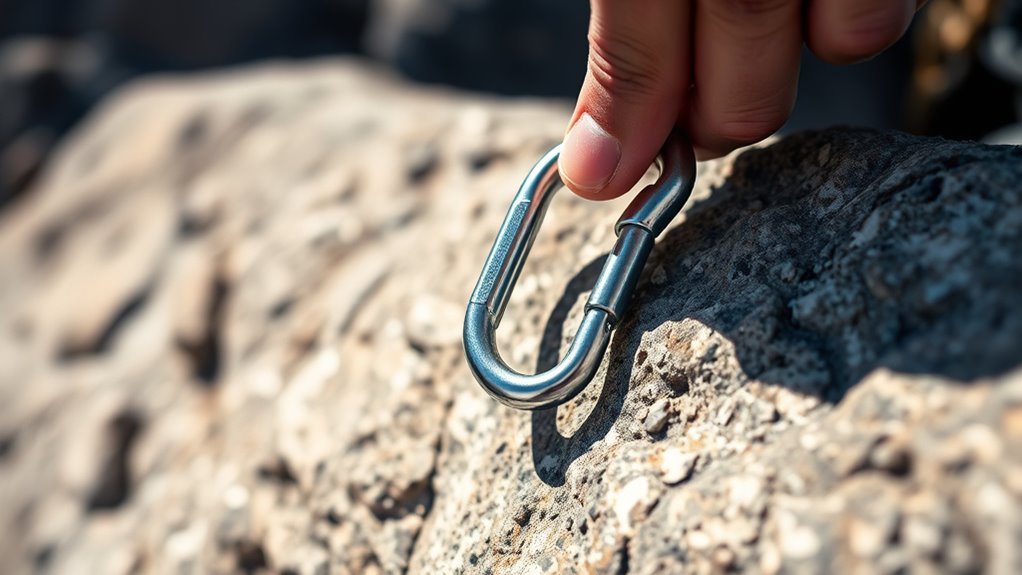
What Is a Rock Climbing Latch Called?
The latch on a rock climbing device is called a carabiner gate. It’s a spring-loaded mechanism that keeps the gate closed tightly under tension. This secures your ropes and gear while letting you quickly clip and unclip.
Some gates lock manually or automatically to prevent accidental openings. This gives you extra safety during climbs.
Others, like wiregates, are lightweight and easy to open fast.
Keep exploring to find out about the different types of carabiner gates and how they work. Understanding these can help you choose the right gear for your climbing adventures. It’s all about staying safe and efficient on the rock!
Key Takeaways
- A rock climbing latch is commonly called a carabiner gate. It’s a spring-loaded mechanism that controls access to ropes and gear.
- The gate opens when you apply pressure and closes automatically to keep things safe.
- Carabiner gates come with different mechanisms like manual, twist-lock, or auto-locking.
- If you need something lightweight for quick clipping, non-locking gates like wiregates are a popular choice.
What Is a Carabiner Gate and How Does It Work?
Although you might not always notice it, a carabiner gate plays a crucial role in rock climbing by controlling access to ropes and gear. The carabiner gate is a spring-loaded mechanism that guarantees the gate stays closed under gate tension, preventing accidental openings.
When you apply pressure, the gate opening allows you to clip or unclip gear quickly. Many carabiners feature an auto-locking or manual locking mechanism, adding extra security by engaging a gate lock that keeps the gate closed during climbs.
The gate design balances easy access with maintaining the carabiner’s load-bearing strength, guaranteeing safety without sacrificing convenience. Whether straight or bent, the gate’s spring-loaded action and locking options work together seamlessly to protect you on every climb.
Types of Carabiner Gates Used in Rock Climbing
When you choose a carabiner for climbing, understanding the different types of gates can make a big difference in safety and convenience. Carabiners come with locking gates and non-locking gates.
Locking mechanisms, like the manual locking screwgate carabiner, twist-lock, and auto-locking carabiner, guarantee secure gate closure to meet safety requirements during critical activities such as belaying or rappelling.
Non-locking gates, including the popular wiregate design, are spring-loaded and open easily with a simple push. This makes them ideal for quickdraws and gear racking.
Wiregates are lightweight and resist freezing in cold conditions. Knowing when to use each type helps you maintain safety without sacrificing efficiency on the rock.
It’s all about making sure your gate lock won’t accidentally open when you need it most.
Frequently Asked Questions
What Is a Rock Climbing Clasp Called?
A rock climbing clasp is called a carabiner. You’ll use locking carabiners for safety-critical connections, preventing accidental openings, while non-locking ones help with quickdraws or gear racking. They’re strong, reliable, and essential for climbing gear.
What Are Climbing Stakes Called?
Climbing stakes are called pitons, and you might find it cool that over 90% of traditional aid climbers still rely on them for safety. You’ll hammer these metal spikes into cracks to secure your rope and gear firmly.
What Are the Hooks That Rock Climbers Use?
The hooks rock climbers use are called carabiners. You’ll find them made from aluminum or steel, with spring-loaded gates that secure ropes and gear. They’re strong and reliable, designed to keep you safe during climbs.
What Are Rock Climbing Anchors Called?
Rock climbing anchors are called protection or simply anchors. You’ll use devices like nuts, cams, bolts, or pitons to secure your rope. These anchors keep you safe while climbing, belaying, or rappelling.
Conclusion
Now that you know a carabiner gate is the essential latch keeping you safe, you’ll never look at your gear the same way again. These tiny metal wonders hold more power than a superhero’s grip, locking your climbing world together.
Whether it’s a straight, bent, or wire gate, each type plays a critical role in your climb. So, trust your carabiner—it’s your lifeline on the rock!
Understanding the importance of the carabiner latch is key for any climber. This simple yet strong mechanism ensures your safety by securely connecting ropes and gear. Next time you clip in, remember the carabiner gate is not just a part of your equipment—it’s the crucial latch that keeps you protected during every move.