How Difficult Is Climbing Kilimanjaro: 3 Key Challenges
Climbing Kilimanjaro tests you with extreme altitude, where oxygen levels drop to half of what you’d find at sea level. This can cause headaches and fatigue if you don’t acclimate well. So, taking time to adjust is super important.
You’ll also face unpredictable weather and terrain shifts—from humid rainforests to icy slopes. That means you’ll need the right gear and have to adapt quickly to changing conditions.
Plus, the climb demands serious physical and mental strength. You’ll have to push through exhaustion and altitude sickness to reach the summit.
Keep going to explore how these challenges shape your journey to the top.
Key Takeaways
- High altitude causes oxygen deficiency, leading to symptoms like headaches, nausea, and fatigue. So, acclimatization is really important to avoid these issues.
- Kilimanjaro’s weather can be pretty unpredictable. You might face sudden storms or temperatures dropping to -15°C, which means you need versatile gear to stay comfortable.
- The mountain covers five different climate zones. This means you have to keep adapting to changing terrain, from lush rainforest to icy slopes.
- Physical strength and mental resilience are key. You’ll need both to handle long, tough hikes and the effects of altitude sickness.
- Mental toughness and perseverance are what really get you through. They help you push past discomfort, fatigue, and challenging weather conditions during the climb.
Why Climbing Kilimanjaro Is So Tough at High Altitude
Although climbing Kilimanjaro offers stunning views, you’ll quickly realize how tough it is at high altitude. At nearly 5,900 meters, oxygen levels drop to about half of what you’d find at sea level, causing oxygen deficiency that challenges your body.
The thin air leads to mountain sickness symptoms like headaches, nausea, and fatigue. These can severely impact your physical and mental state.
Altitude sickness is the primary hurdle. If you don’t manage it well, serious health risks such as cerebral or pulmonary edema can occur.
Your summit success rates depend heavily on proper acclimatization. Rushing the climb reduces your chances dramatically.
Understanding these high altitude risks and allowing time for your body to adjust at high elevations is essential. It’s the key to overcoming the challenges of Kilimanjaro’s mountain sickness.
How Weather and Terrain Affect Your Kilimanjaro Climb
Because Kilimanjaro spans five distinct climate zones, you’ll face a wide range of weather conditions and terrain types on your climb. From the humid rainforest at the base to the arctic summit, the terrain diversity demands constant adaptation.
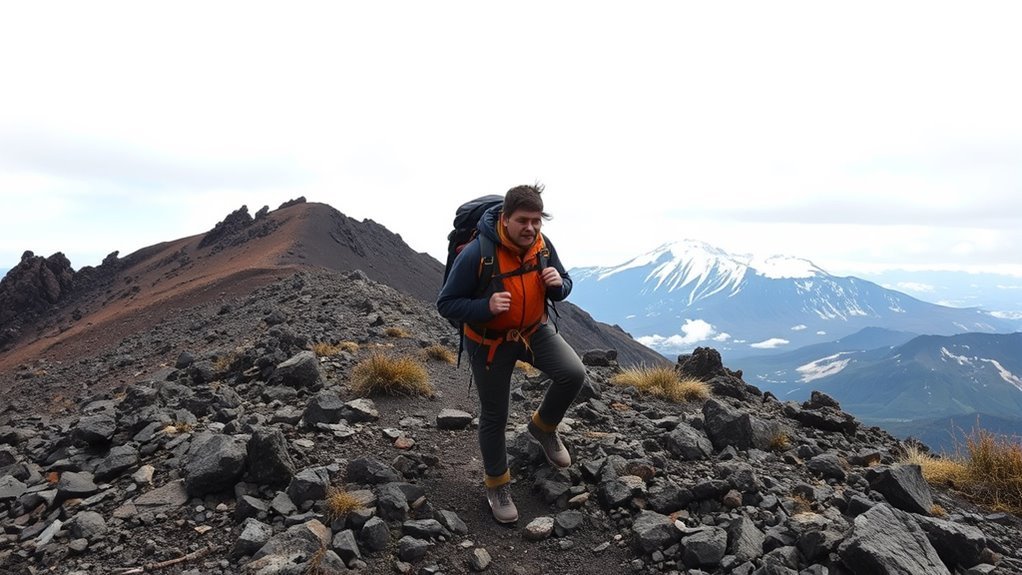
Weather fluctuations can be sudden—temperatures may plummet to -15°C at higher elevations, and unexpected storms can disrupt trekking conditions. This weather impact, combined with shifting terrain—from lush forests and heathlands to rocky scree and snowfields—raises the climb difficulty markedly.
You’ll need to prepare for varying climbing conditions, carrying appropriate gear to handle rain, cold, and rough paths. Understanding how weather and terrain shape the mountain environment is essential for managing the physical and logistical challenges of your Kilimanjaro climb.
The Physical and Mental Grit You Need to Reach the Summit
To reach Kilimanjaro’s summit, you’ll need more than just physical strength—you’ll have to summon serious mental grit. Mental resilience is essential to push through cold temperatures, fatigue, and the risk of altitude sickness, which affects over half of climbers.
You’ll need to pace yourself slowly to allow proper acclimatization, reducing severe symptoms. Summit night demands 12–14 hours of grueling hiking, testing both your physical endurance and mental readiness.
Perseverance helps you confront mental fatigue and unpredictable weather conditions. Preparing your mind for discomfort is just as important as training your body.
Frequently Asked Questions
Can a Beginner Summit Kilimanjaro?
Yes, you can summit Kilimanjaro as a beginner if you prepare well, choose a longer route, climb slowly, and use experienced guides. With patience and proper training, you’ll increase your chances of success considerably.
What Is the Hardest Part of Climbing Kilimanjaro?
The trickiest part you’ll face is the “nighttime adventure” to the summit—long, steep, and oxygen-thin. You’ll need grit to conquer altitude’s challenges, cold, and exhaustion, but pushing through makes the victory unforgettable.
What I Wish I Knew Before Climbing Kilimanjaro?
You wish you knew how essential proper acclimatization and pacing are before climbing Kilimanjaro. Mental toughness matters as much as fitness, and choosing a longer route drastically boosts your chances of summiting successfully.
What Is the Fatality Rate of Kilimanjaro?
Fatality figures fall fairly low—about one in 4,000 climbers. You’ll face risks mostly from altitude sickness, but with cautious care and capable guides, you can conquer Kilimanjaro confidently and safely, minimizing mortal mishaps.
Conclusion
Climbing Kilimanjaro isn’t just a hike; it’s a dance with the mountain’s moods. You’ll battle thin air that steals your breath, weather that shifts like a stormy sea, and terrain that tests every step.
But with grit as your compass and heart as your engine, you’ll rise above the clouds and touch the sky. Every challenge you face is a beat in the rhythm of your triumph—keep climbing, your summit awaits.
The difficulty of climbing Kilimanjaro lies in these key challenges: altitude sickness from the thin air, unpredictable weather changes, and tough, varied terrain. Yet, the reward is incredible. With the right preparation and mindset, conquering Kilimanjaro becomes more than just a physical feat—it’s a powerful journey of endurance and spirit. So, embrace the climb, face the challenges head-on, and soon you’ll stand victorious at Africa’s highest peak.