7 Tips to Keep Climbing Shoes Clean
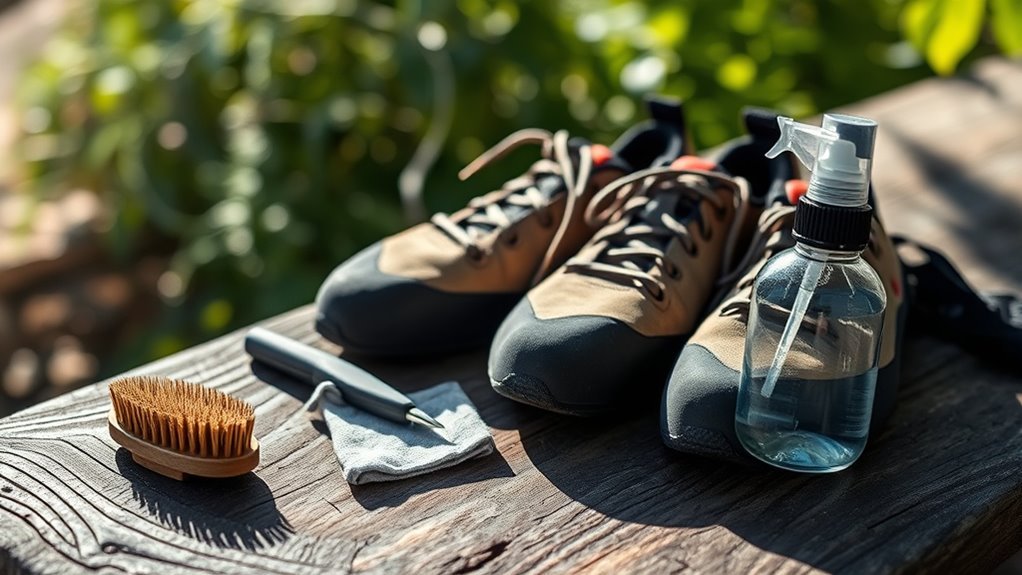
To keep your climbing shoes clean and in top shape, it’s important to give them some regular TLC. After every climb, wipe off dirt and chalk with a damp cloth or a soft brush. This simple step helps prevent buildup that can wear down your shoes faster.
Try not to soak your shoes; instead, hand wash them gently with mild soap when they get really dirty. Magnesite buildup can be a pain, so apply chalk carefully and clean the soles regularly to keep your grip strong.
When you’re done climbing, store your shoes in a dry, well-ventilated spot. Stuffing them with newspaper is a great trick to control odors.
Also, keep an eye on wear and tear, and don’t hesitate to repair or resole your shoes promptly.
Following these tips will not only protect your climbing shoes but also boost your climbing performance by keeping your gear reliable and comfortable.
Key Takeaways
- Wipe soles with a damp cloth or soft brush after every climb to remove dirt and chalk buildup. This keeps your shoes in good shape and ready for the next session.
- If you notice some stubborn dirt, gently scrub it off using coarse sandpaper or a wire brush. Just be careful not to soak the shoes while doing this.
- When it’s time for a deeper clean, hand wash your shoes in warm water with a mild detergent. After washing, let them air dry away from any heat sources to avoid damage.
- Always store your shoes in a dry, well-ventilated area. You can even use newspaper or cedar balls inside to help prevent odors from building up.
- Make it a habit to regularly check the high-wear areas of your shoes. Cleaning off any magnesite buildup will help maintain that rubber grip and extend the life of your climbing shoes.
Why You Should Keep Your Climbing Shoes Clean
Because dirt and grime can quickly reduce your climbing shoes’ grip, keeping them clean is essential for maintaining traction and control. When you clean your climbing shoes regularly, you prevent dirt, mud, and magnesite buildup that would otherwise diminish their rubber’s effectiveness.
Clean shoes also feel better on your feet, preserving the material’s comfort and ensuring you perform at your best. Neglecting to clean your shoes can cause uneven wear and damage the rubber, shortening their lifespan.
Plus, dirty climbing shoes often develop unpleasant odors and harbor bacteria, which isn’t just gross—it can affect your foot health. By keeping your climbing shoes clean, you not only extend their life but also enhance safety and hygiene, making your climbing experience more enjoyable and effective.
How to Remove Dirt and Chalk From Climbing Shoe Soles
Keeping your climbing shoes free from dirt and chalk is key to preserving their grip and overall performance. To keep your soles clean, focus on removing debris after every climb.
Use a damp cloth or soft brush to wipe off dirt, mud, and chalk, especially around the sole-rand junction, toe, and ball of the foot. For stubborn dirt, gently scrub with coarse sandpaper or a wire brush to restore grip.
Remember, avoid soaking your shoes in water; instead, clean the soles with a damp cloth and dry them thoroughly away from direct heat.
- Wipe soles with a damp cloth or soft brush
- Target sole-rand junction, toe, and ball areas
- Gently scrub tough dirt with sandpaper or wire brush
- Remove debris regularly to maintain grip
- Dry shoes away from direct heat after cleaning
Best Practices for Hand Washing Climbing Shoes
When you hand wash your climbing shoes, start by filling a sink with warm water and adding a small amount of mild detergent or dish soap. Soak your shoes in the soapy water for 30 to 60 minutes to loosen dirt and grime.
Next, gently scrub the shoes with a soft toothbrush or cloth, focusing on areas with mud, chalk, or magnesite buildup. Rinse thoroughly with clean water to remove all soap residue, ensuring no detergent remains that could damage the material.
After rinsing, avoid direct heat or sunlight—let your shoes air dry naturally with good airflow or a fan. This way, you’ll keep your climbing shoes clean and help extend their lifespan.
Is It Okay to Machine Wash Your Climbing Shoes?
You might be tempted to toss your climbing shoes in the washing machine, but it’s risky—especially if they’re leather. Machine washing is only safe for synthetic shoes, and even then, you need to follow specific steps to avoid damaging them.
Knowing when and how to machine wash can help keep your shoes in good shape without cutting their lifespan short. So, it’s worth being careful and understanding what works best for your shoes.
Machine Washing Risks
How safe is it to machine wash your climbing shoes? Generally, machine washing isn’t a good idea, especially for leather shoes. The agitation and heat can cause serious damage by weakening adhesives and deforming the shoe’s shape.
This reduces their performance and shortens their lifespan. Instead, stick to hand cleaning for the best results.
Here are key risks of machine washing your climbing shoes:
- Damage to adhesives that hold the shoe together
- Deformation of shoe shape due to agitation and heat
- Delamination of glued parts over time
- Reduced grip and performance from material breakdown
- Shortened overall lifespan of your shoes
Avoiding machine washing helps maintain your shoes’ fit and functionality longer. That way, you keep climbing comfortably and confidently.
Synthetic Shoe Exceptions
Although machine washing is generally discouraged for climbing shoes, it can be safe for certain synthetic models if done carefully. Synthetic shoes tolerate machine washing better than leather ones, but frequent cycles can weaken adhesives and harm shoe structure.
Always remove laces or open velcro, use cold water, and avoid bleach. Follow manufacturer guidelines closely for proper shoe care. Hand cleaning remains the best option to preserve your shoes’ longevity.
| Step | Recommendation | Reason |
|---|---|---|
| Shoe Type | Synthetic shoes only | Leather can be damaged |
| Washing Method | Cold water, no bleach | Protects adhesives |
| Preparation | Remove laces/open velcro | Prevents tangling |
| Frequency | Sparingly | Avoids weakening structure |
| Manufacturer Advice | Follow label instructions | Ensures shoe safety |
How to Prevent Magnesite Build-Up on Climbing Shoes
Since magnesite can quickly build up on your climbing shoes and reduce their grip, it’s important to take steps to prevent this common issue. Magnesite and debris buildup on your soles can fill the shoe’s porosity, making them slippery and less effective.
To keep your shoes performing well, focus on maintaining clean soles and avoiding excess magnesite application.
- Avoid applying magnesite directly under the sole.
- Don’t layer magnesite on the shoe surface to prevent a glassy layer.
- Clean soles regularly to remove magnesite and debris buildup.
Use a soft brush or damp cloth to wipe off excess magnesite after climbing. It really helps keep things clean.
Also, store your shoes in a dry, well-ventilated place to avoid moisture and buildup.
These habits help maintain your shoe’s grip and prolong their lifespan. So, a little care goes a long way!
Odor Prevention Tips for Climbing Shoes
You can keep odors at bay by drying your climbing shoes thoroughly after each use. This helps prevent moisture buildup that leads to stink.
Try natural remedies like stuffing them with newspaper or using cedar balls to absorb dampness and freshen them up. These simple steps really make a difference.
They help your shoes stay cleaner and smell better longer. It’s an easy way to keep your gear in great shape!
Effective Shoe Drying
When you finish climbing, make sure to air out your shoes thoroughly by hanging them in a well-ventilated spot away from direct sunlight or heat sources. Proper drying is essential to prevent moisture buildup, which leads to odors and bacteria growth.
To keep your climbing shoes fresh, follow these tips for effective drying:
- Stuff your shoes with newspaper or absorbent materials to draw out moisture faster.
- Use a fan or gentle airflow to speed up the drying process.
- Avoid leaving shoes in confined spaces like backpacks or car trunks.
- Dry your shoes after every use to prevent odor buildup.
- Regularly clean and air out your climbing shoes between sessions.
Natural Odor Remedies
Although climbing shoes are designed for performance, they can quickly develop unpleasant odors if not cared for properly. To keep them fresh, focus on natural odor remedies.
After each climb, wash your feet thoroughly to reduce bacteria transfer. Store your shoes in a well-ventilated, breathable space to promote airflow and prevent moisture buildup.
You can also use absorbent materials like rolled-up newspaper or baking soda inside your shoes for effective odor absorption. Adding a few drops of essential oils or placing herbal sachets inside your shoes helps mask and prevent bad smells naturally.
Regularly airing your shoes between uses allows moisture to evaporate, reducing the growth of odor-causing bacteria and fungi. These simple steps keep your climbing shoes clean, fresh, and ready for your next adventure.
How and When to Resole or Repair Your Climbing Shoes
Since climbing shoes take a beating on rough surfaces, keeping an eye on wear and tear is essential for maintaining their performance. You should resole or repair your shoes when the tread, rand, or sole edges show significant thinning or damage.
Acting early helps you keep grip and comfort intact.
Keep these tips in mind:
- Check high-wear areas like toes, heels, and edges regularly
- Resole after 6-12 months of regular use or sooner if needed
- Use a trusted repair shop or a DIY resoling kit with medium-grade rubber
Also, fix small rips or loose rands promptly with Shoe Goo. Don’t wait until the sole is too thin or compromised to resole.
Following these steps guarantees your climbing shoes stay reliable and last longer.
Frequently Asked Questions
How Often Should You Clean Climbing Shoes?
You should clean your climbing shoes every 1-2 months, or more often if you climb frequently or in dirty conditions. Regular cleaning keeps them fresh, improves grip, and extends their lifespan, so don’t skip it.
Can I Use Dawn Dish Soap for Cleaning Rock Climbing Shoes?
Definitely, you can clean your climbing shoes with Dawn dish soap. It’s gentle yet great at getting grime gone. Just mix a small amount with water, scrub softly, then rinse thoroughly for lasting freshness.
How to Avoid Smelly Climbing Shoes?
You can avoid smelly climbing shoes by washing your feet before use, airing out shoes after climbing, using breathable socks, storing shoes in a ventilated spot, and applying baking soda or natural sprays to keep odors at bay.
Does Cleaning Climbing Shoes Extend Their Life?
Cleaning your climbing shoes is like oiling a bike chain—it keeps everything running smoothly. You’ll extend their life by removing dirt, preventing odor, and stopping material breakdown, ensuring they grip better and last longer on your climbs.
Conclusion
Keeping your climbing shoes clean not only boosts performance but also extends their lifespan. Did you know that properly maintained shoes can last up to 30% longer?
By regularly removing dirt, preventing magnesite build-up, and addressing odors, you’ll climb more comfortably and confidently. Hand washing is best because machine washing can damage your shoes.
Stay on top of repairs to keep your gear in prime shape. Clean climbing shoes mean better grip and durability, helping you perform at your best every time you hit the wall.
So, take care of your climbing shoes with regular cleaning and maintenance. Your feet—and your climbs—will thank you for it! Keeping your climbing shoes clean is a simple but effective way to ensure they last longer and support you through every climb.