How to Know When to Replace Climbing Shoes
You’ll know it’s time to replace your climbing shoes when they no longer fit snugly or start slipping during climbs.
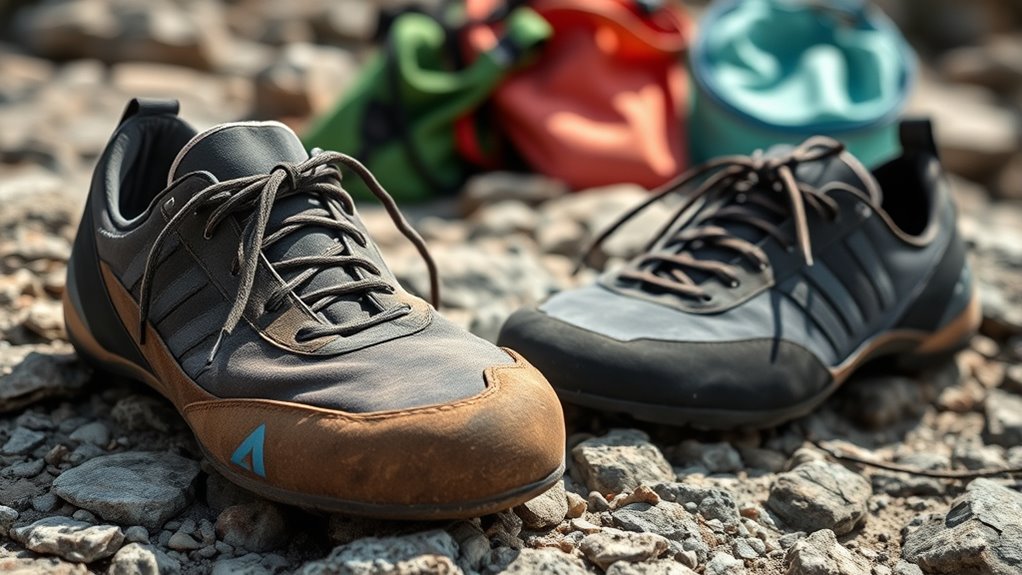
Worn-out rubber edges that lose their grip are another clear sign.
Also, watch out for visible damage like holes or delamination. These issues can seriously affect your climbing performance.
If your shoes lose their supportive shape or performance drops despite resoling, it’s a definite signal to get a new pair.
When comfort, safety, and foot precision begin to suffer, replacing your climbing shoes is the best move.
Keep going to uncover how to decide between resoling and replacing properly. It’s all about making sure you stay safe and climb your best!
Key Takeaways
- Replace climbing shoes if the rubber edges are worn down, reducing grip and foothold precision. It’s a sign they’re not giving you the support you need anymore.
- Change shoes when visible damage like holes, tears, or delamination appears. These issues compromise the structure and can affect your performance.
- If shoes no longer fit snugly or slip during climbs, it’s definitely time to replace them. Climbing with loose shoes isn’t just uncomfortable, it’s unsafe.
- Replace shoes when performance declines despite resoling. If they fail to support small footholds, they’re not doing their job properly.
- Consider replacement if comfort, fit, or safety is compromised. When these factors affect your climbing, it’s a clear signal to get a new pair.
How To Spot When Your Climbing Shoes Need Replacing
Although climbing shoes might seem fine at a glance, you’ll know it’s time to replace them when they no longer fit snugly or start slipping during climbs. Pay close attention to wear on the rubber—when the rubber edges wear down or lose grip, your shoe’s performance drops.
Visible damage like holes, tears, or delamination also signals that the shoe’s structural integrity is compromised. If your climbing shoes lose their original shoe shape or become distorted, they won’t support precise foot placements anymore.
Even after resoling, if you notice a performance decline, it’s a clear sign to replace climbing shoes altogether. Don’t ignore a poor shoe fit or delamination; these issues mean your shoes can’t perform as intended, so it’s time to invest in a new pair.
Deciding When To Resole Or Replace Your Climbing Shoes
Once you recognize the signs that your climbing shoes are wearing out, the next step is figuring out whether to resole them or replace them entirely. You should resole your shoes before the worn rubber wears through to avoid shoe damage and extend their life.
If your climbing shoes still fit well and maintain shoe comfort and support, the resoling process can restore performance. However, if the shoe fit has changed, the shoe shows structural damage, or the shoe support weakens after multiple resoles, it’s time for shoe replacement.
Also, replace shoes if they lose grip due to worn rubber edges or can’t handle small footholds. Ultimately, base your decision on shoe performance, comfort, and safety to keep climbing confidently.
Frequently Asked Questions
How Do I Tell if I Need New Climbing Shoes?
You need new climbing shoes if they feel loose, show holes or worn rubber, lose grip, have rounded edges, or suffer structural damage. These issues reduce performance and safety, so replacing them keeps you climbing strong and secure.
How Long Do Climbing Shoes Normally Last?
Climbing shoes usually last between six months to a year. If you climb aggressively or frequently, expect them to wear out in as little as three to six months. Proper care can stretch their lifespan considerably.
Can Climbing Cause Plantar Fasciitis?
Yes, climbing can cause plantar fasciitis if you overuse your feet or wear shoes that compress your arch. You should pick climbing shoes with good arch support and stretch regularly to avoid pain and inflammation.
Is It Okay to Boulder 2 Days in a Row?
Yes, you can boulder two days in a row if you let your shoes dry properly between sessions and listen to your feet. Just watch for discomfort or wear, and consider rotating shoes to avoid overuse.
Conclusion
You love the way your climbing shoes hug every edge, but worn-out soles and stretched-out fits can betray your grip. Don’t cling to the comfort of old shoes that hold you back; instead, listen to the subtle signs—thinning rubber, holes, or slipping heels.
Resole when the sole’s tough but worn; replace when the shoe’s shape and support fade. Knowing when to let go means climbing stronger and safer, ready to conquer every challenge ahead.
Remember, climbing shoes are your foundation on the wall. When the rubber thins or holes appear, it’s time for a resole to maintain grip and precision. But if the shoe loses its shape or no longer supports your foot properly, replacing them ensures you don’t sacrifice performance or safety. Keeping your climbing shoes in top shape helps you climb confidently and push your limits without worry. So, stay alert to the signs, and don’t hesitate to resole or replace your climbing shoes when needed—your next climb depends on it!