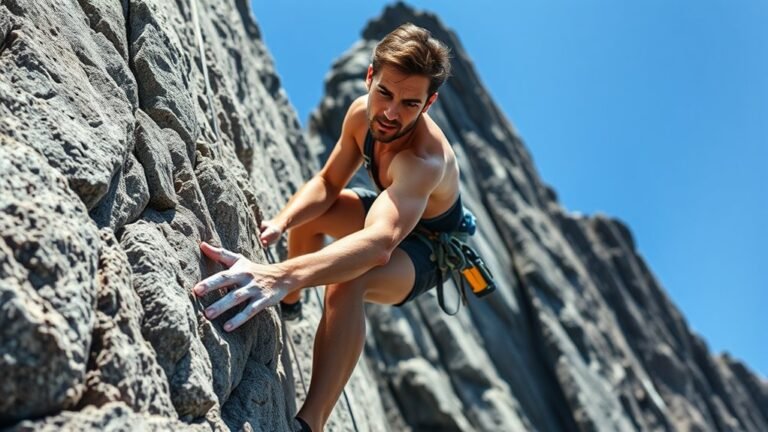
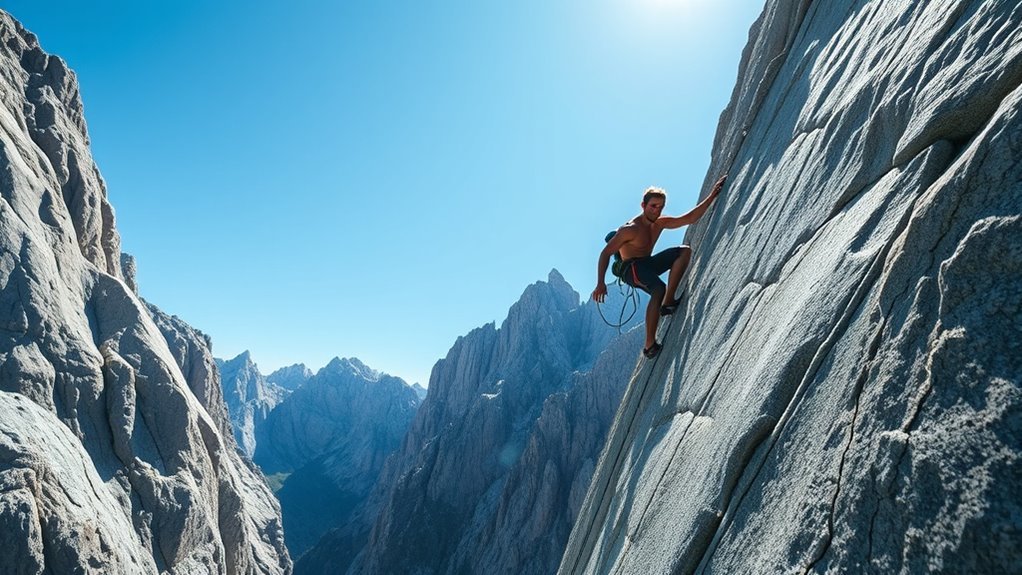
What Is Free Solo Climbing and How Does It Work?
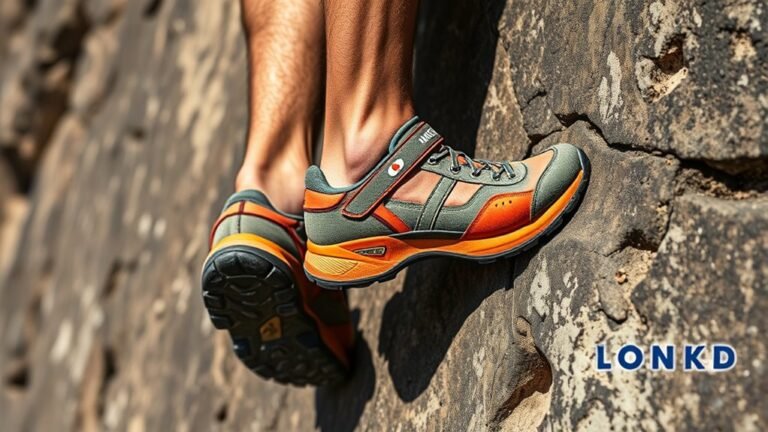
Free solo climbing means you climb natural rock faces without any ropes or safety gear, relying only on your skill, strength, and mental focus. It’s a style of climbing where every move counts because there’s no backup system in place.
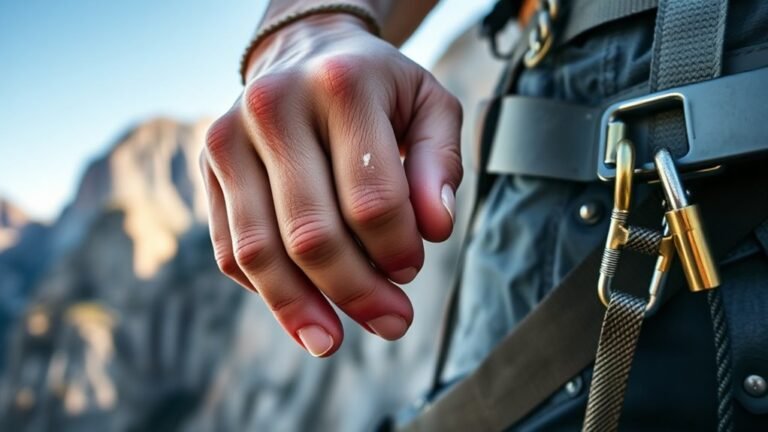
You use just your hands, feet, and chalk, managing extreme risk through precise movements and sharp judgment.
This type of climbing demands peak physical fitness and the ability to stay calm under pressure. It’s not just about muscles; your mind plays a huge role in keeping you safe.
If you want to truly understand the challenges and mindset behind free soloing, there’s much more to explore ahead.
Understanding the Basics of Free Solo Climbing
Although free solo climbing might seem straightforward, it demands exceptional skill since you climb without any protective gear or safety equipment. In this climbing discipline, you rely entirely on your climbing skill and risk management to navigate natural surfaces.
You use only your hands, feet, and chalk, avoiding any climbing equipment like ropes or harnesses. Whether tackling bouldering problems, sport climbs, or multi-pitch routes, every move requires precise climbing techniques.
Because climbing safety depends solely on your judgment, you must be confident in your ability to read and adapt to climbing routes. Free solo climbing challenges you to push your limits while respecting the inherent risks of ascending unprotected.
Understanding these basics helps you appreciate the unique demands of this intense form of climbing.
The Mental and Physical Demands of Free Soloing
Mastering free solo climbing means more than just physical skill—you’ll need sharp mental focus and resilience to handle the intense pressure. You must develop psychological resilience to manage fear and maintain calm during high-risk moves.
Fear management is essential as you assess risks continuously, relying on confidence built through extensive route mastery. Physically, free soloing demands muscular strength and endurance to sustain grip and precise body positioning.
Your technique must be flawless, minimizing fatigue while maximizing control. Repeated practice hones your ability to move efficiently and safely without protection.
Combining risk assessment with mental focus ensures you stay alert and composed. Ultimately, balancing physical endurance with psychological resilience allows you to perform at your technical limits with confidence and clarity.
Conclusion
Free solo climbing pushes you to the edge—literally—where one slip means no safety net. It’s not just about physical strength but total mental focus and trust in your skills.
Did you know that less than 1% of climbers attempt free soloing because of its extreme risks? This shows just how rare and intense the experience is.
If you ever consider it, remember: free soloing demands respect, preparation, and unwavering courage. It’s a unique form of climbing that combines mental toughness with precise technique.
Free solo climbing isn’t for everyone. But for those who do it, the thrill and freedom are unmatched. Always approach free solo climbing with serious preparation and respect for the risks involved.