How Do You Clean Climbing Rope in 7 Easy Steps?
First, inspect your climbing rope carefully for any damage like cuts or soft spots. This step is crucial to ensure your rope’s safety and longevity.
Next, flake it out straight to prevent tangles and make cleaning easier.
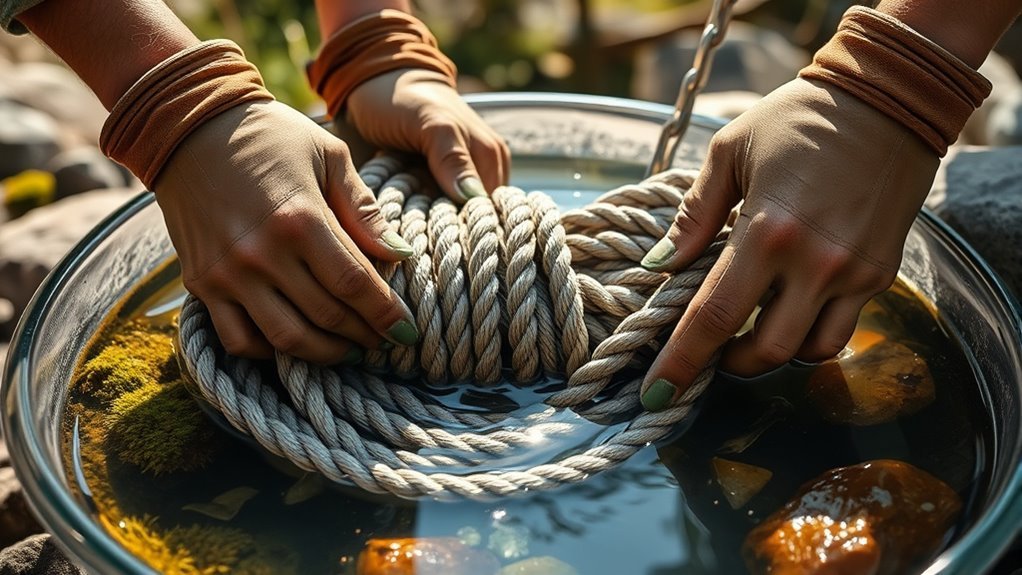
Soak the rope in warm water with mild soap. Gently agitate it to loosen dirt and grime that can weaken the fibers over time.
Rinse thoroughly until the water runs clear, removing all soap residue.
Hang your rope to air dry in a shaded, well-ventilated spot. Avoid direct sunlight as UV rays can damage the rope’s material.
Make sure it’s completely dry before storage to prevent mold and mildew.
Proper care keeps your climbing rope safe and strong. Taking these simple steps not only extends the life of your rope but also ensures your safety on every climb.
There’s always more to learn for the best results, so keep exploring and taking good care of your gear!
Key Takeaways
- Inspect the rope thoroughly for damage before cleaning, checking for cuts, abrasions, or soft spots.
- Flake the rope straight on a clean surface to untangle and prepare it for washing.
- Soak the rope in warm water with mild soap and gently agitate to remove dirt.
- Rinse the rope repeatedly with clean water until all soap residue is gone.
- Hang the rope to dry in a shaded, well-ventilated area, avoiding direct sunlight and heat.
Inspect Your Rope for Damage Before Cleaning
Before you clean your climbing rope, thoroughly inspect it for any damage. Run your hands along the entire length to feel for cuts, nicks, or abrasions that might not be obvious at first glance.
Take a close look at the sheath, too. Watch for flat spots, fuzzy areas, or signs of excessive wear — these could mean there’s damage underneath.
Inspect the sheath carefully for flat spots or fuzziness, as these often reveal hidden damage.
You’ll also want to check for any soft or mushy sections in the core. Those spots weaken the rope’s strength and can compromise your safety.
Discoloration, dirt buildup, or flattened areas might also point to internal or external damage. By combining what you feel and see, you’ll catch potential problems early.
This step is super important. Cleaning a damaged rope can make things worse or put you at risk on your next climb.
Pick the Best Way to Clean Your Rope
After making sure your rope is free from damage, the next step is choosing the best cleaning method to keep it in top condition. You want to protect your climbing rope’s fibers and ensure safety, so here are three effective options:
- Hand washing your rope in a tub with warm water and mild detergent is the safest way. It lets you control cleaning without harsh chemicals.
- Use a mesh laundry bag and wash your rope in a front-loading machine on a gentle, no-spin cycle. This method saves time while preventing tangles.
- Employ the daisy-chain technique when machine washing to avoid knots and make handling easier.
Always rinse thoroughly and dry your rope completely away from direct sunlight to maintain its integrity.
Prepare Your Rope for Cleaning to Avoid Tangles
Before cleaning, flake out your rope to remove twists and straighten it fully.
Then, use the daisy-chain method to bundle it neatly. This keeps the rope from tangling during washing.
This simple step helps you avoid knots and makes the cleaning process much easier.
Flake Out The Rope
When you flake out your climbing rope, you uncoil and spread it in a loose, straight line to prevent tangles during cleaning. This step is crucial to ensure your rope gets thoroughly cleaned and dries evenly.
Here’s how to do it right:
- Lay the rope flat on a clean surface like a tarp or towel to spread it evenly and make inspection easier.
- Gently untangle any twists or kinks, allowing the rope to lie smoothly and maximize contact with water and cleaning agents.
- Inspect the rope carefully as you flake it out, spotting any damaged or heavily soiled sections that need extra attention.
Use Daisy-Chain Method
Although cleaning a climbing rope can get messy, using the daisy-chain method helps you keep it organized and tangle-free. Start by doubling your rope and tying a slip knot a few feet down.
Then, loop the rope through the slip knot repeatedly, creating a daisy chain. This technique keeps the rope manageable and prevents tangles during washing.
After cleaning, simply reverse the last loop to easily untangle and restore your rope’s original shape. Using this method guarantees your rope stays neat, making washing more efficient and less frustrating.
| Step | Action | Benefit |
|---|---|---|
| 1 | Double rope & slip knot | Manageable bundle |
| 2 | Loop through slip knot | Organized daisy chain |
| 3 | Wash thoroughly | Tangle-free cleaning |
| 4 | Reverse last loop | Easy untangling |
Soak and Gently Wash the Rope With Mild Soap
Since dirt and grime can deeply embed in your climbing rope, you’ll want to immerse it in warm water mixed with a mild soap like Dawn or a specialized rope cleaner.
Dirt and grime can embed deep in your climbing rope, so soak it in warm, soapy water for a thorough clean.
Here’s how to soak and gently wash your rope effectively:
- Fill a bathtub or large basin with warm water and add a small amount of mild soap. Flake your rope into the water, making sure it’s fully submerged and loosely coiled to avoid tangling.
- Gently swish and agitate the rope in the water to loosen dirt from both the sheath and core.
- Let the rope soak for a few hours, periodically moving it to help dislodge embedded grime.
This method ensures you soak and gently wash your rope without damaging its fibers. It’s a simple way to keep your rope clean and in good shape!
Rinse Thoroughly to Remove All Soap Residue
You need to rinse your climbing rope thoroughly to make sure all soap residue is completely gone. Leftover soap can weaken the fibers over time, reducing your rope’s lifespan.
Take your time and rinse until the water runs clear. This will help keep your rope strong and safe.
Importance Of Thorough Rinsing
When rinsing your climbing rope, you’ll want to make sure all soap and cleaning agents are completely washed away. Thorough rinsing is vital because leftover soap residue can weaken the fibers, compromising your rope’s integrity and safety.
Plus, soap buildup can make the rope slippery, affecting your grip during climbs.
To guarantee proper rinsing:
- Run the rope through clean water multiple times until the water runs clear.
- Avoid shortcuts, as incomplete rinsing leaves chemicals behind that degrade the rope.
- Rinse before drying to prevent any soap residue from setting into the fibers.
Using plenty of clean water and being patient during this step preserves your rope’s strength and handling. This way, you stay safe on every climb.
Preventing Soap Residue Build-Up
Although cleaning your climbing rope is essential, preventing soap residue buildup requires thorough rinsing with clean water. When rinsing, use your hands to gently work the water through the rope’s fibers to dislodge any soap residues that might cling to the material.
Don’t rush this step—multiple rinses may be necessary, especially if you used mild soap or a specialized rope cleaner. Keep running the rope through fresh, clean water until the water runs clear.
This thorough rinsing ensures all soap residues are removed, which helps maintain the rope’s integrity. Soap buildup over time can cause fiber degradation, weakening your rope.
Air Dry Your Rope in the Shade
Since direct sunlight can weaken your climbing rope’s fibers and cause color fading, air drying it in the shade is essential for maintaining its strength and appearance.
Air drying your climbing rope in the shade preserves its strength and prevents color fading.
To properly air dry your rope, follow these steps:
- Flake out the wet climbing rope to maximize surface area, helping it dry faster and more evenly.
- Lay the rope flat or hang it loosely over a drying rack or shower curtain rod in a shaded, well-ventilated area.
- Make sure the rope is completely dry before storing it to prevent mold, mildew, and fiber deterioration.
Avoid drying your rope in direct sunlight to protect its longevity.
How to Store Your Rope After Cleaning
Properly storing your climbing rope after cleaning guarantees it stays in good condition and ready for your next adventure. Once your rope is completely dry, flake it into a pile on a tarp to keep it organized.
Tie the ends of the rope to the tarp loops to track its length easily. Next, store your clean rope in a dedicated rope bag to protect it from dirt and make transport easier.
Keep the bag in a cool, dry place away from direct sunlight, heat, and harmful chemicals like battery acid. Alternatively, you can coil the rope properly and hang it using a sling girth-hitch or hook to prevent kinks.
Following these steps assures your rope stays safe and durable for many climbs ahead. It’s a simple routine that really pays off!
Frequently Asked Questions
What Is the Best Way to Clean a Climbing Rope?
The best way to clean your climbing rope is by hand washing it in warm water with mild soap or using a mesh bag in a gentle machine cycle. Always rinse thoroughly and dry it in the shade before storing.
How Do I Wash a Climbing Rope?
Think of your climbing rope as a hardworking traveler needing a gentle bath. You’ll soak it in warm water with mild soap, swish it softly, rinse thoroughly, then let it air dry away from harsh sunlight to stay strong.
How to Make Rope Look New Again?
You can make your rope look new again by gently washing it with mild soap, avoiding harsh chemicals. Dry it fully away from sunlight, then carefully fluff the fibers to reduce fuzziness and restore its smooth appearance.
How Many Times Can You Wash a Climbing Rope?
You can give your climbing rope a gentle bath about 3 to 5 times before its strength starts to fade like a well-loved story. Beyond that, it’s best to let it rest for safety’s sake.
Conclusion
Cleaning your climbing rope isn’t just about appearance—it’s about safety and longevity. By following these simple steps, you’re giving your rope a fresh start, ready to support your next adventure.
Remember, a clean rope is like a trusted friend: it stands strong when you need it most. So, treat your rope well, and it’ll return the favor, keeping you secure on every climb.
A well-maintained climbing rope not only lasts longer but also performs better when it counts. Regular cleaning helps remove dirt, grime, and chemical residues that can weaken the fibers over time.
So, keep your climbing rope clean to ensure safety, durability, and reliability on all your outdoor excursions. Clean rope, clear mind, safe climb!