Should You Wear Socks With Climbing Shoes?
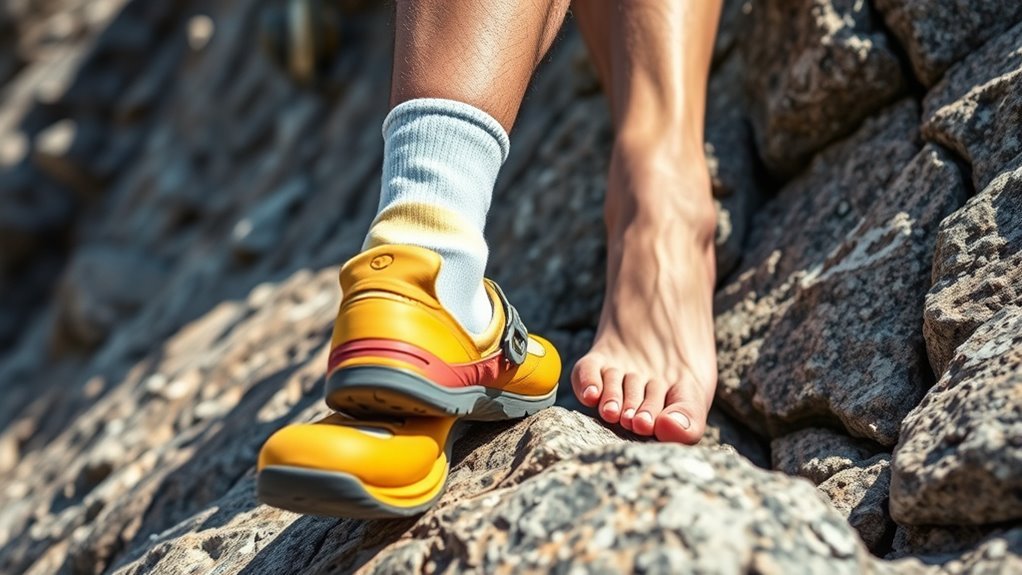
You can wear socks with climbing shoes if you want extra comfort, protection from blisters, and better hygiene—especially when using rental shoes or climbing long indoors. Socks can help keep your feet feeling fresh and prevent sweat buildup, which is a common issue during extended climbing sessions.
Socks might reduce your precise feel on small holds and cause a less snug fit. This can be a downside if you’re trying to maximize performance on tricky routes. Some climbers prefer going sockless to maintain that direct contact with the rock or wall.
Thin liner socks work best because they reduce irritation without dulling your foot’s sensitivity too much.
However, if you’re curious about when and why climbers choose to go sockless or socked, keep exploring to find what fits your style. Trying both ways can help you discover what feels best for your climbing needs.
Pros and Cons of Wearing Socks in Climbing Shoes
While wearing socks with climbing shoes can reduce foot odor and prevent fungal infections—especially if you often use rental shoes—it might also dull the sensitivity you need for precise foot placements.
Climbing socks help manage foot sweat and add comfort by reducing irritation from seams, which is particularly helpful during long sessions at an indoor climbing gym. However, thicker socks can cause slippage and reduce your foot sensitivity, making it harder to get a better feel on small holds.
Many climbers using climbing shoes prefer thin liner socks since they strike a balance between protection and maintaining tactile feedback. Ultimately, wearing socks comes down to personal preference and the specific climbing activity.
You just have to weigh the pros of comfort and hygiene against the cons of decreased foot sensitivity.
When and Why Climbers Choose to Wear Socks
Because climbing shoes often fit snugly, you might choose to wear socks to add comfort and prevent blisters during long sessions. Many climbers opt for socks when their shoes are slightly larger or stretched, improving fit and support.
Wearing socks also promotes better hygiene, especially if you’re using rental shoes or sharing gear. This can help reduce the risk of fungal infections.
In cold weather outdoor climbs, socks keep your feet warm and nimble. On the flip side, some climbers prefer going sockless for maximum sensitivity and a closer feel of the rock.
Ultimately, the choice to wear socks comes down to personal preference, balancing comfort, foot health, and hygiene. By thinking about these factors, you can decide when wearing socks with climbing shoes makes the most sense for you.
Conclusion
Whether you slip on socks or go barefoot, your climbing shoes will hug your feet like a second skin—just like how the rough rock meets your fingertips.
Wearing socks can add comfort and prevent blisters, but going sockless gives you better sensitivity and control. So, just as your fingers find the perfect grip, choose what feels right for your feet.
After all, both paths lead you upward—one step, one hold, one climb at a time. When deciding whether to wear socks with climbing shoes, remember comfort and performance matter most. Socks might help prevent blisters and keep your feet cozy, while climbing barefoot can enhance your feel and precision on the wall.
In the end, it’s all about what works best for you during your climb. So, experiment and find your perfect fit to get the most out of your climbing shoes and enjoy every ascent.