How Should Climbing Shoes Fit Step by Step
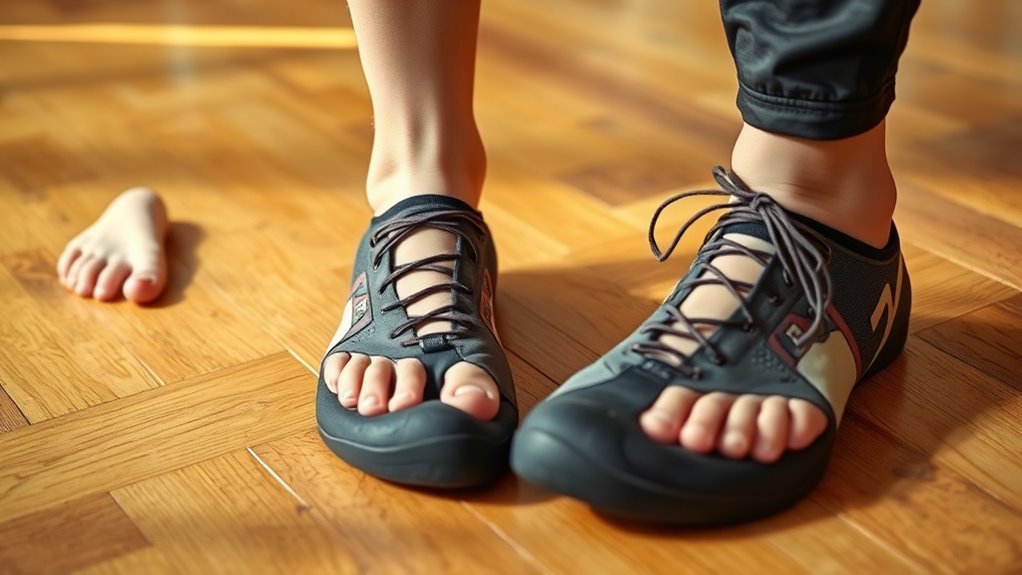
Start by sliding your foot into the climbing shoe and tightening the laces gradually, starting from the toes and moving up to the ankle. Your toes should just touch the front of the shoe without curling painfully. It should feel snug but not numb.
Next, check that your heel fits securely with no slipping or lifting as you move. The sides of your foot should be hugged firmly without any gaps or pinching.
You want a tight fit, but comfort is key. Balancing comfort with a tight fit is essential to maximize control and sensitivity on holds. Keep adjusting and trying on your shoes until you find that perfect sweet spot.
Ready for more? Keep reading to discover detailed tips for perfecting your climbing shoe fit!
Assessing Key Fit Areas of Climbing Shoes
When evaluating how climbing shoes fit, you need to focus on several key areas to guarantee performance and comfort. Start with the toebox—it should have a snug fit where your toes touch the end without being painfully crammed or curled.
Next, check the heel fit; it must feel secure with no slipping, ensuring the heel cup closely conforms to your heel shape. The side wrap is essential too; the shoe should snugly hug the sides of your foot without any dead space or material bunching.
Minimizing dead space inside enhances sensitivity and grip on holds. During your fit assessment, make sure the entire shoe feels secure, with no slipping or loose spots that could undermine your climbing performance.
Adjusting Fit for Comfort and Performance
Although finding the right climbing shoe size is essential, adjusting the fit properly makes all the difference in comfort and performance. Start by tightening laces gradually from your toes to the ankle to achieve a snug fit without causing pain.
Properly adjusting your climbing shoe fit boosts comfort and performance beyond just choosing the right size.
Make sure your toes have solid contact with the shoe’s front, either touching or slightly curled. Also, check that the heel fit is secure, with no shoe slippage or pinching.
Pay attention to how snug the arch feels. The sides should hold your foot firmly without any gaps.
Be careful not to over-tighten, as this can create pressure points and reduce comfort. If you feel numbness or excessive pressure, just loosen the laces a bit.
Proper shoe adjustment is all about balancing snugness and comfort. Doing this will enhance your climbing performance while preventing discomfort or injury.
Conclusion
You might worry that properly fitting climbing shoes will feel too tight or uncomfortable at first, but remember, a snug fit boosts your performance and precision on the wall.
By carefully evaluating key fit areas and making small adjustments, you’ll find the right balance between comfort and control.
Don’t settle for loose shoes—take the time to fit them correctly, and you’ll enjoy climbing more with every step you take.
Getting climbing shoes that fit well is crucial for improving your grip and footwork. When shoes hug your feet just right, you gain better sensitivity and stability, which can make a big difference on challenging routes.
So, don’t rush the fitting process. Try on different sizes, walk around, and pay attention to pressure points. The perfect climbing shoes should feel snug but not painfully tight, letting you climb longer and with more confidence.
Remember, the right fit is the foundation of climbing success—well-fitted climbing shoes lead to greater control, comfort, and overall performance on the wall.