How to Know When to Resole Climbing Shoes
You should resole your climbing shoes when you see the rubber thinning near the toe or heel, peeling away, or exposing stitching. These are clear signs that the shoes are wearing out and need attention.
If your shoes lose grip or feel less responsive on holds, that’s another key sign. Ignoring these issues can hurt your climbing performance and safety.
Resolving on time keeps your shoes sharp and extends their life. It’s a smart way to maintain the fit and performance you rely on during climbs.
Keep going to discover how timely resoling benefits your climbing experience and helps you climb better and longer.
Signs Your Climbing Shoes Need Resoling
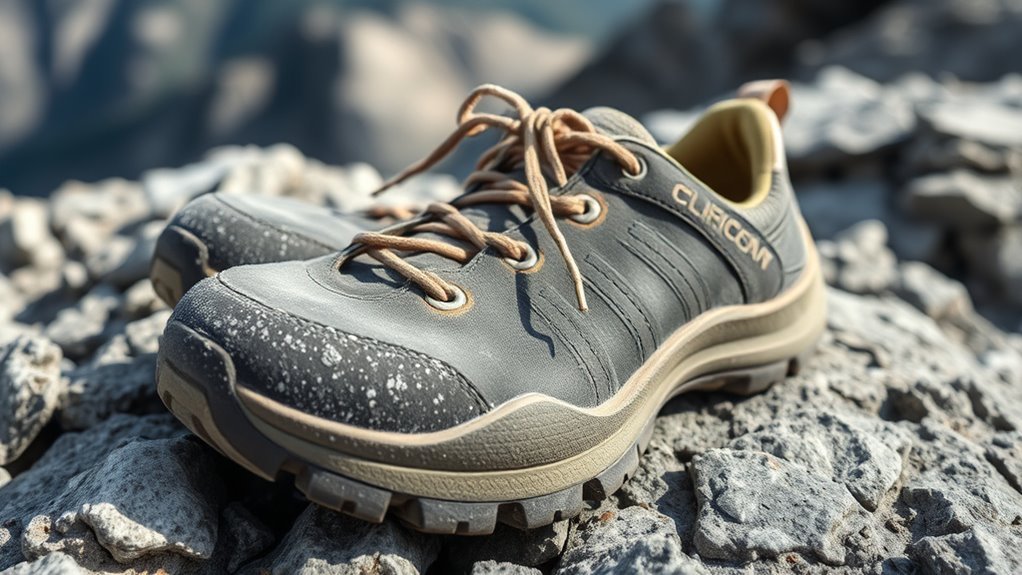
If you notice the line between your climbing shoe’s sole and rand fading or receding, it’s a clear sign you need to resole them. Pay close attention to the soles; thinning rubber or visible holes, especially near the toe or heel, indicate serious wear.
When the rubber starts peeling away, exposing the stitching or fabric underneath, your shoes are definitely wearing out. You might also experience poor edging performance or a loss of grip during climbs, which often results from worn-down rubber.
If the sole seam recedes considerably or the rubber touches the rand, it’s time to act. Ignoring these signs can compromise your climbing performance and safety, so keep an eye on the wear and address it promptly to maintain ideal grip and shoe functionality.
Benefits of Timely Resoling
Although you might be tempted to delay resoling your climbing shoes, doing it promptly keeps their performance sharp and prevents further damage. Timely resoling preserves the sole rubber before it wears down to the point of exposing the rand or upper material, which can lead to costly shoe repair or even complete replacement.
By watching the wear indicator near the big toe and checking the rand’s firmness, you can act before significant thinning or holes develop. Resoling early maintains your climbing shoes’ shape and fit, extending their shoe lifespan and saving you money in the long run.
Plus, it helps prevent damage to critical shoe components, ensuring consistent shoe performance every time you climb. So, don’t wait too long—taking care of your shoes now pays off later!
Conclusion
Just as you wouldn’t ignore a loose bolt on your harness, don’t overlook worn-out soles on your climbing shoes. When you spot thinning rubber or feel less grip on your favorite routes, it’s a clear sign to resole.
Coincidentally, addressing this now means you’ll climb stronger and safer tomorrow. So next time your shoes start slipping, remember: a timely resole keeps your performance sharp and your adventures worry-free.
Don’t wait—take action and climb on! Resoling climbing shoes not only restores the grip and precision you need but also extends the life of your gear. Keeping an eye on sole wear ensures you stay safe and confident on every climb, whether indoors or out. So, if you want to keep crushing your climbs and avoid unexpected slips, knowing when to resole climbing shoes is key. Stay ahead of wear, get them resoled, and keep scaling new heights with every step!