7 Essential Tips on What to Wear for Indoor Rock Climbing
When indoor rock climbing, it’s super important to wear flexible, breathable clothes like synthetic fabrics or lightweight wool. These materials help you stay dry and move freely, which can totally boost your climbing experience.
You’ll want to choose snug but comfortable climbing shoes that give you a great grip on the wall. Layering moisture-wicking gear is also a smart move to manage your body temperature as you climb and sweat.
Avoid loose or restrictive outfits because they can get in your way or even cause accidents. Oh, and don’t forget to remove any jewelry and secure your hair to keep things safe.
Accessories like chalk bags are great for boosting your hold and keeping your hands dry. Prioritize comfort and safety while expressing your style, and you’ll climb with more confidence.
Ready to discover how each choice enhances your climb?
Choose Flexible and Breathable Clothing
When you climb indoors, wearing flexible and breathable clothing keeps you comfortable and agile. Choose moisture-wicking shirts made from synthetic fabrics or lightweight wool to stay dry and prevent discomfort from sweat.
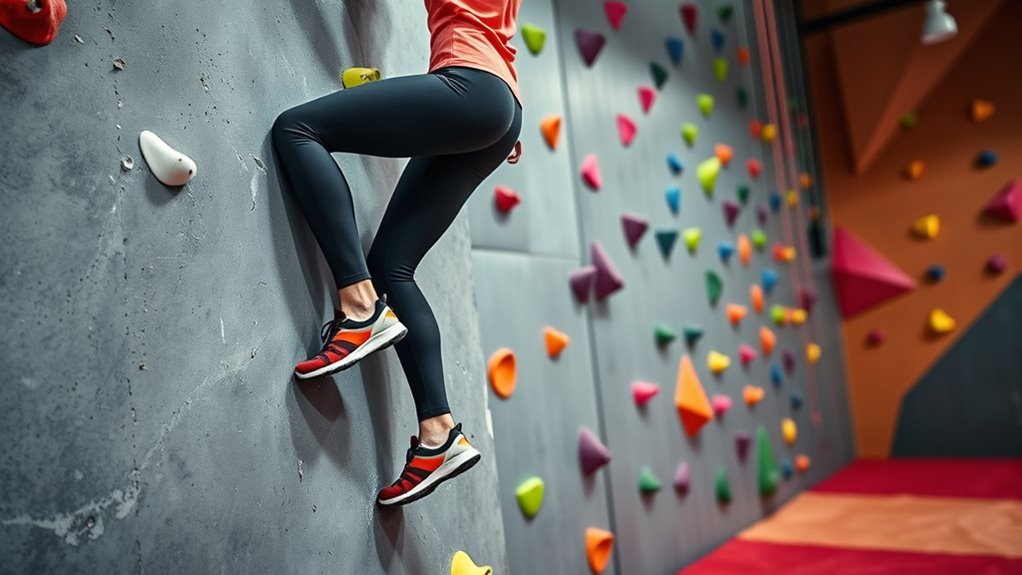
Avoid cotton, as it traps moisture and becomes heavy. Instead, pick stretchy pants, leggings, or athletic shorts that won’t restrict your movement.
Breathable fabrics help regulate your body temperature by allowing airflow, which is vital in heated indoor gyms. Form-fitting tops and bottoms reduce the risk of snagging on holds or harnesses, improving your safety and mobility.
Opt for Proper Climbing Footwear
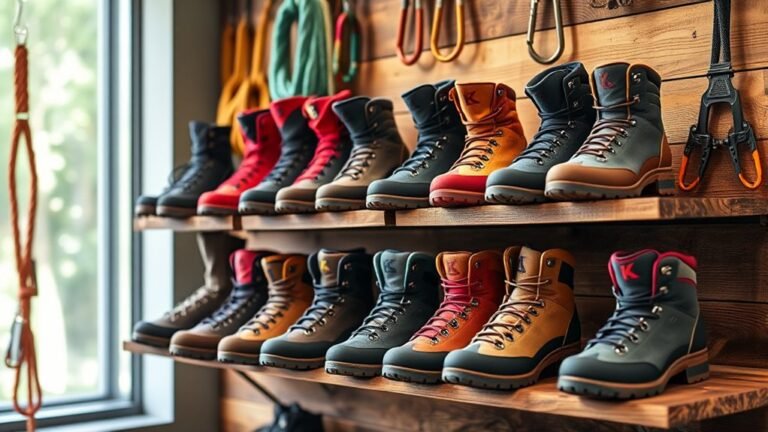
You’ll want climbing shoes that fit snugly to keep your grip strong and avoid slipping. If you’re new, rent shoes at the gym instead of wearing regular sneakers, since climbing shoes have special rubber soles designed for the wall.
Also, consider going sockless for better sensitivity. But if you prefer, thin socks can help with hygiene without sacrificing control.
Shoe Fit Importance
Because climbing shoes directly affect your grip and control, choosing the right fit is essential. Your climbing shoes should feel snug but never painful, offering both fit and comfort.
Shoes that are too loose cause slipping, while overly tight ones lead to numbness or discomfort. Remember, climbing shoes mold closely to your foot with thin soles to improve sensitivity on holds.
Trying multiple sizes and brands helps you find the best balance between support and comfort.
| Fit Type | Description | Impact on Climbing |
|---|---|---|
| Snug | Close to foot, no pain | Maximizes grip and control |
| Loose | Excess space inside shoe | Causes slipping |
| Too Tight | Restrictive and painful | Reduces comfort, causes numbness |
| Balanced | Supportive without cutting circulation | Ideal for long climbs |
Renting vs. Buying
Choosing the right climbing shoes goes beyond just fit; deciding whether to rent or buy can also impact your experience. Renting climbing shoes at the gym lets you try different styles and sizes, helping you find the proper fit without commitment.
Rental shoes should feel snug but not painfully tight, giving you ideal grip and support. However, if you climb regularly, investing in your own pair offers better comfort, hygiene, and performance tailored to your foot’s shape.
Your personal shoes will improve technique and reduce foot fatigue over time. Remember, climbing shoes are usually worn without socks, but if you prefer wearing layers for hygiene or comfort, thin socks can work.
Ultimately, choosing between renting and buying depends on your climbing frequency and commitment.
Socks and Hygiene
Although climbing shoes are designed to be worn without socks for maximum grip and sensitivity, you might prefer thin, low-profile socks to maintain hygiene without sacrificing performance.
Wearing socks can help reduce odor and protect your feet, but thick socks might compromise fit and grip. To balance comfort and hygiene, follow these tips:
- Choose socks made of breathable, moisture-wicking material to keep feet dry.
- Avoid regular shoes around climbing holds to prevent spreading germs.
- Always use dedicated climbing shoes to make certain of proper fit and hygiene.
Layer Your Clothing for Temperature Control
When you layer your clothing for indoor rock climbing, you can easily adjust to temperature changes and stay comfortable throughout your session.
Start with a moisture-wicking base layer to keep sweat off your skin and reduce chafing. Add lightweight, breathable mid and outer layers that you can remove or put on as the temperature shifts.
This approach helps you regulate your body heat without restricting movement, so you stay focused and perform at your best.
| Layer Type | Fabric Characteristics | Purpose |
|---|---|---|
| Base Layer | Moisture-wicking | Keeps skin dry and comfortable |
| Mid Layer | Lightweight, breathable | Provides insulation |
| Outer Layer | Removable, easy to adjust | Temperature regulation |
| All Layers | Flexible, non-restrictive | Maintains mobility and airflow |
Avoid Restrictive or Loose Apparel
Since your clothing directly affects how you move on the wall, you don’t want anything too tight or too loose. When you choose what to wear for indoor climbing, your goal is to maintain full range of motion without risking snagging or discomfort.
Here’s what to keep in mind:
- Avoid restrictive climbing clothes like rigid jeans or tight leggings that limit your flexibility and make reaching holds tough.
- Steer clear of baggy or loose apparel, which can catch on holds or gear, posing a safety risk.
- Pick well-fitted, stretchy fabrics that move with you and don’t block your view of footholds.
Prioritize Safety by Removing Jewelry and Securing Hair
To stay safe while climbing, remove all jewelry and secure your hair before you start. Rings, necklaces, and earrings can easily catch on holds or gear, risking injury and disrupting your climb.
Many climbing gyms require jewelry removal as part of their safety policies, so it’s best to comply. Use a sturdy hair tie to keep long hair pulled back, preventing it from falling into your face or snagging on equipment.
Keeping your accessories minimal not only enhances safety but also minimizes distractions, helping you focus on your movements. By removing jewelry and securing your hair, you ensure a safer, smoother climbing experience with better gear management, letting you concentrate fully on your climb without avoidable hazards.
Select Accessories That Enhance Climbing Performance
Choose accessories that keep your hands dry and your vision clear without adding bulk or distraction. A lightweight chalk bag and breathable headband can boost your grip and comfort while protecting your skin.
Keep your gear minimal to stay focused and safe on every climb. It’s all about having what you need, nothing more. That way, you stay light and ready for anything.
Minimalist Gear Choices
Although gear might seem like a minor detail, selecting minimalist accessories can considerably boost your indoor climbing performance. When you wear indoor climbing attire, such as comfortable climbing pants, your focus should be on essentials that enhance your movement and grip without adding bulk.
Consider these three key minimalist gear choices:
- A lightweight chalk bag to keep your hands dry and improve your grip.
- A simple headband or hair tie to manage sweat and keep hair out of your face.
- A breathable hat or cap to shield your eyes from overhead lighting without interfering with your movement.
Avoid bulky jewelry or accessories that can snag on holds or create safety hazards. Minimalist gear keeps you agile and focused, making your climbing experience smoother and safer.
Hair and Skin Safety
Managing your hair and skin plays a big role in climbing comfort and safety. If you have long hair, tie it back securely with a sturdy hair tie to keep it from blocking your vision or snagging on holds.
For skin safety, avoid gloves or accessories that might irritate your skin or reduce grip. Use chalk to keep your hands dry, preventing slips and blisters caused by moisture.
Choose breathable, moisture-wicking clothing to regulate skin temperature and minimize chafing. Don’t forget to moisturize regularly and inspect your skin for cuts or abrasions before climbing.
Taking these steps ensures your hair stays out of the way and your skin remains healthy, improving your overall climbing performance and reducing injury risk.
Consider Comfort and Personal Style in Your Attire
When you pick your indoor climbing clothes, focus on pieces that let you move freely and feel comfortable, like stretchy leggings or fitted athletic joggers. Prioritize well-fitted tops that stay put, such as moisture-wicking T-shirts or fitted tank tops, to avoid distractions while climbing.
Embrace your personal style by choosing colors and patterns that boost your confidence and motivation. Remember these key points:
- Choose clothing that enhances comfort and flexibility without being too baggy or restrictive.
- Select tops that won’t shift or ride up during climbs.
- Reflect your personal style to feel confident and motivated.
Conclusion
When you gear up for indoor rock climbing, think of your outfit like a well-tuned instrument—each piece should work in harmony to boost your performance. Choose flexible, breathable clothes that move with you and keep you cool.
Wear proper climbing shoes that fit snugly and give you good grip. Layer smartly to stay comfortable, especially if the gym is chilly or warm.
Avoid anything restrictive or loose that might get caught or hinder your movements. And don’t forget safety—remove jewelry and secure your hair to prevent distractions or accidents.
With the right gear, you’ll climb confidently and comfortably, letting your personal style shine through every move. Remember, what you wear for indoor rock climbing plays a big role in your performance and safety. So pick clothes that offer flexibility, breathability, and comfort, paired with the right shoes for grip. This way, you’ll enjoy every climb while staying safe and looking great.