
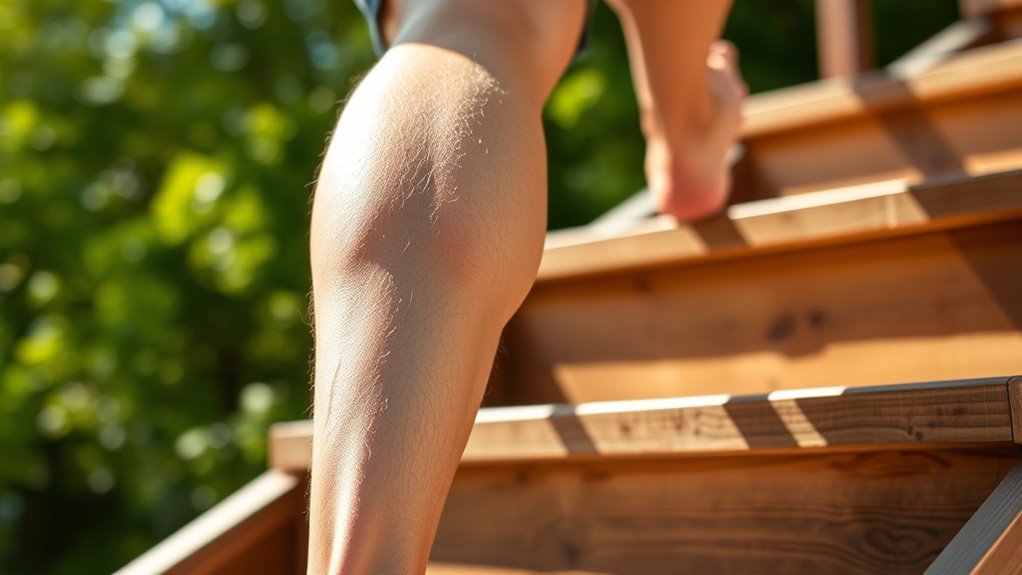
Why Do I Have Knee Pain Climbing Stairs But Not Walking?
You have knee pain climbing stairs but not walking because stair climbing puts much more pressure on your knee—about 3.5 times your body weight—compared to walking.
This extra load can highlight or worsen underlying problems like muscle weakness, cartilage wear, or poor joint alignment.
Walking is less demanding, so it doesn’t trigger pain as much.
If you want to understand why this happens and how to ease the discomfort, there’s more to uncover about causes and treatments.
Knowing why knee pain occurs during stair climbing but not walking can help you manage the pain better and prevent further injury.
Common Causes of Knee Pain When Climbing Stairs
Although climbing stairs might seem simple, it puts about 3.5 times your body weight on the knee joint. This extra pressure makes any existing issues more painful.
You might experience knee pain during climbing stairs due to patellofemoral pain syndrome. This happens when the patella doesn’t track properly and the joint load increases.
Cartilage wear also worsens under this stress, especially if you have early osteoarthritis. Muscle imbalances, like quadriceps weakness or weak hip stabilizers, can cause your knee to collapse inward. This further aggravates the pain.
These factors strain the knee joint more than regular walking. That’s why climbing stairs often triggers discomfort.
Understanding these causes helps you see why knee pain shows up specifically during stair climbing and not during less demanding activities.
Effective Treatments and Exercises for Stair-Related Knee Pain
When you experience knee pain climbing stairs, targeted treatments and exercises can make a big difference. Start with strengthening exercises focusing on your quadriceps and hip abductors to boost joint stability and address muscle weakness.
Strengthen your quads and hip abductors to enhance knee stability and reduce stair-climbing pain.
It’s also helpful to incorporate mobility exercises for your ankle, hip, and knee to reduce strain during stair climbing. Physical therapy plays a vital role by improving muscle balance and biomechanics, helping redistribute load more evenly across your knee.
Using supportive devices like knee braces or gait correction tools can also alleviate pain by aiding load redistribution. Plus, practice movement strategies such as stepping with your unaffected leg first and using handrails for support.
These combined approaches effectively reduce knee pain and improve function during stair climbing. Give them a try and see how much better your knees feel!
Conclusion
When you climb stairs and feel that sharp knee pain, imagine your knee as a well-oiled machine struggling against a steep hill. Walking on flat ground feels smooth and easy, but stairs demand more from your joints and muscles.
By addressing common causes and practicing targeted exercises, you can ease that struggle. This helps your knees glide up each step like a gentle river flowing uphill—strong, steady, and pain-free.
Understanding why you have knee pain climbing stairs but not walking is key. Often, stairs put extra pressure on your knee joints, especially the kneecap and surrounding muscles. Strengthening these areas and improving flexibility can reduce discomfort.
Keep moving forward with care and confidence. With the right approach, you can manage knee pain while climbing stairs and enjoy pain-free movement every day.