What Are Rock Climbing Hooks Called and How to Use Them
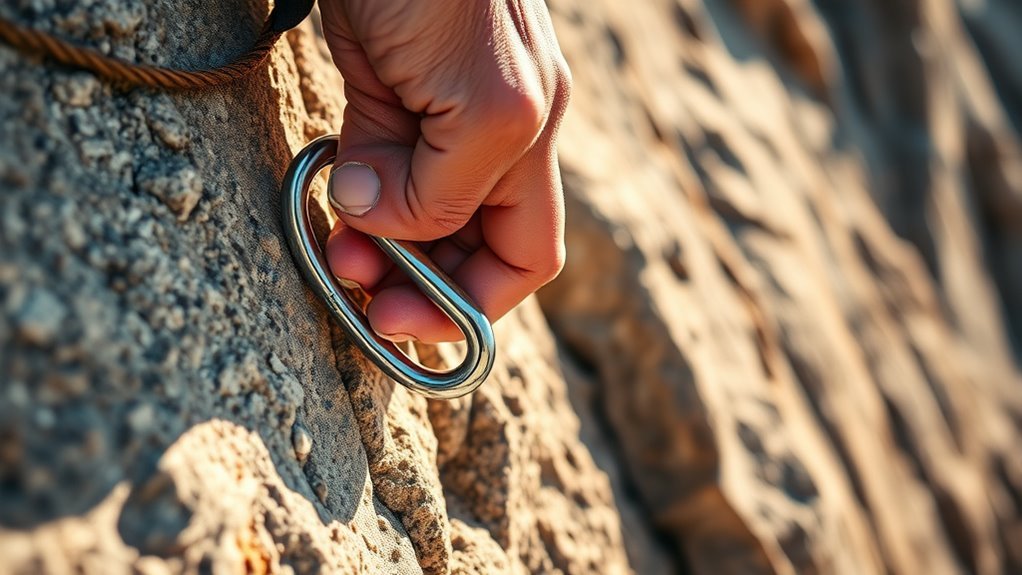
Rock climbing hooks are called carabiners and quickdraws, and they’re essential gear for any climber. You use them to connect your rope to protection points on the wall, which is how you stay safe while climbing.
Carabiners come in two main types: locking and non-locking, each serving different purposes depending on your needs.
Quickdraws are pretty clever—they combine two carabiners with a sling in between. This setup makes clipping your rope easier and helps reduce rope drag, so you can climb more smoothly.
Always make sure the gates of your carabiners are locked and oriented the right way. This simple check can prevent accidents and keep you secure.
By mastering proper clipping techniques and regularly inspecting your gear, you’ll gain confidence in your climbing.
Stick around to learn how to perfect these essential skills next!
Key Takeaways
- Rock climbing hooks are commonly called “pitons” or “climbing hooks.” They are used for securing protection on rock surfaces.
- Hooks are placed by wedging or hammering into cracks and edges. This provides temporary or permanent anchor points.
- Proper placement is key. It ensures the hook is stable and oriented to minimize cross-loading. This helps it withstand climbing forces.
- Always inspect hooks for damage or wear before use. This step is crucial to ensure safety and reliability during climbs.
- Use hooks along with carabiners and quickdraws. This combination allows for secure rope attachment and smooth clipping.
What Are Carabiners and Quickdraws? Types and Uses Explained
Although you might be familiar with basic climbing gear, understanding carabiners and quickdraws is essential for safe and efficient climbing. Carabiners are metal loops with spring-loaded gates, made from lightweight aluminum alloy. They’re used to connect climbing ropes, harnesses, and protection points.
You’ll find two main types: locking carabiners, which have threaded gates to prevent accidental opening, and non-locking carabiners for quick, less critical connections. Quickdraws consist of two carabiners linked by a durable sling. This setup allows you to clip climbing ropes into protection devices or bolts with ease.
Quickdraws are especially useful for reducing rope drag on sport climbs. Both carabiners and quickdraws are crucial safety equipment. Knowing their types and uses helps you manage protection points effectively and climb more securely.
How to Clip Carabiners and Quickdraws Safely: Tips and Common Mistakes
Knowing how to properly clip carabiners and quickdraws can make a big difference in your climbing safety. First, always perform a safety check to confirm the carabiner’s locking gate is fully closed and locked before clipping.
Properly clipping carabiners starts with a thorough safety check to ensure the locking gate is secure.
Avoid cross-loading by keeping the gate oriented away from the wall. This reduces the risk of accidental opening or weakening.
Use the correct clipping technique to ensure the rope runs smoothly through the quickdraw without twisting or excessive friction.
Regular gear inspection is essential—never clip into damaged or worn carabiners or quickdraws. Compromised gear threatens fall prevention.
Proper orientation and thorough safety checks minimize risks. This helps you climb confidently and securely every time.
Frequently Asked Questions
What Are the Hooks Climbers Use Called?
Climbers call those hooks pitons, skyhooks, or Copperheads. You’ll hammer pitons into cracks for anchors, use skyhooks to grip tiny edges, and place Copperheads in seams. Always secure them firmly for safety and easy removal.
How to Use Climbing Hooks?
You hammer the hook firmly into a crack, making sure it’s secure. Then, clip your carabiner and rope to it for protection. Always check the placement’s stability and inspect hooks regularly for safety.
Does Hangboarding Actually Work?
Yes, hangboarding works if you train consistently with proper technique and progressive overload. You’ll build finger strength and grip endurance, but avoid overtraining to prevent injuries. Combine it with other exercises for best results.
What Kind of Hooks Do Rock Climbers Use?
Imagine using pitons like keys unfastening hidden doors; you’ll mostly use pitons, pins, or wedges. Each fits cracks differently, so you’ll need skill placing and removing them carefully to climb safely and protect the rock.
Conclusion
Now that you know carabiners and quickdraws are your climbing lifelines, using them correctly is like weaving a safety net beneath you. Always clip with care—double-checking orientation and avoiding twists—to keep your climb smooth and secure.
Remember, mastering these simple tools turns every grip into a confident step upward. So, gear up smartly, and let your climbing journey be as steady and strong as the hooks holding you tight.
Understanding how to use climbing hooks properly is key to staying safe on the wall. These hooks, often called climbing hooks or aiders, work hand-in-hand with your carabiners and quickdraws to provide reliable support. When used right, they give you that extra edge, making each move more secure.
So, embrace these essential rock climbing hooks and gear, and you’ll find your climbs become not only safer but also more enjoyable. Keep your focus, clip smart, and let your climbing adventure be as strong and dependable as the hooks holding you up every step of the way.