How to Achieve the Highest Rock Climbing Rank
To achieve the highest rock climbing rank, you’ll need to focus on building finger strength and grip endurance through targeted training.
At the same time, honing precise footwork and efficient movement is key to conquering challenging routes. These physical skills form the foundation, but there’s more to reaching the top.
Strengthen your mental toughness by practicing visualization, focus techniques, and adopting a growth mindset. This mental edge helps you tackle tough climbs with confidence and persistence.
Balancing intense workouts with strategic rest is also crucial to maintain peak performance without burning out.
Embrace a variety of climbing challenges to boost your adaptability and problem-solving skills. Keep refining both your physical skills and mindset consistently.
When you do, you’ll discover even more ways to excel on elite climbs and achieve that highest rock climbing rank.
Key Takeaways
- Develop finger strength and grip endurance through consistent, progressive fingerboard training tailored to high-grade climbing demands. This kind of focused training really helps you handle tougher routes.
- Refine technique by focusing on precise body positioning, efficient footwork, and practicing complex moves to build muscle memory. Getting these basics right makes a huge difference on the wall.
- Cultivate mental toughness using visualization, goal setting, and mindfulness to boost confidence and manage climbing stress. Staying calm and confident can totally change your performance.
- Prioritize strategic rest and recovery to maintain peak physical condition and sharpen mental focus for challenging climbs. Don’t underestimate the power of taking breaks — your body and mind need it.
- Enhance adaptability by climbing varied routes, self-assessing progress, and embracing diverse challenges to build resilience and problem-solving skills. Trying different styles keeps you sharp and ready for anything.
Master Physical Conditioning and Climbing Techniques for the Highest Grades
Although reaching the highest rock climbing grades demands exceptional skill, you can get there faster by mastering physical conditioning and refining your climbing techniques. Start by developing finger strength through targeted fingerboard training, including dead hangs and repeaters. This boosts your grip endurance, which is essential for high-grade routes.
Master finger strength with targeted fingerboard training to boost grip endurance and accelerate progress on high-grade climbs.
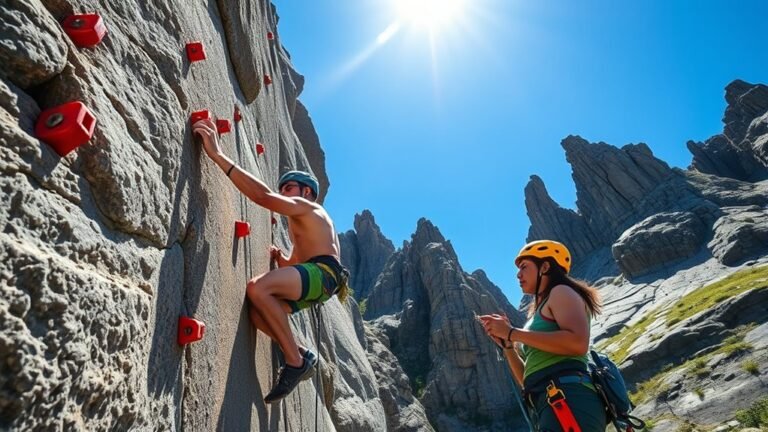
Follow a structured training plan that balances strength, endurance, and technical skills. Make sure to progressively increase difficulty aligned with the grading system.
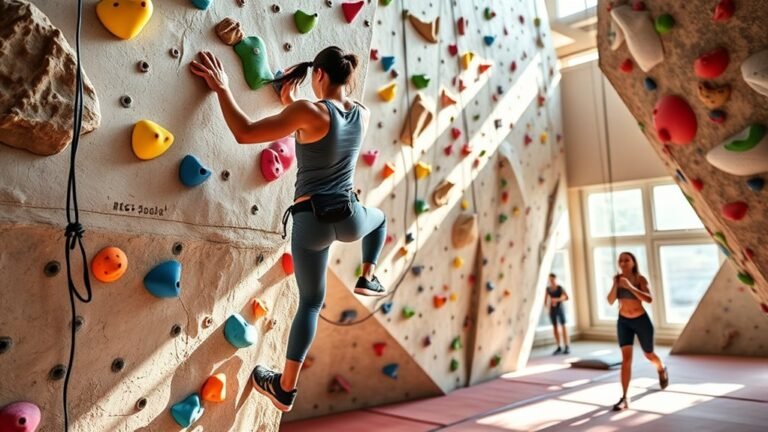
Focus on precise body positioning and footwork to improve efficiency on technical rock climbs. This helps reduce energy waste, which is a game-changer.
Incorporate dynamic movement drills and lock-off exercises to enhance power and control during crux sequences. These moves really help when you need that extra burst.
Regularly simulate difficult moves in controlled settings to build muscle memory. This way, complex climbing techniques start to feel natural.
This approach sharpens your physical readiness for elite climbs and gets you closer to those top grades.
Build Mental Toughness and Smart Strategies to Conquer Elite Routes
When you tackle elite routes, building mental toughness is just as crucial as physical strength. Use visualization and mental rehearsals to prepare your mind for the challenges ahead, boosting confidence and reducing performance anxiety.
Embrace a growth mindset by setting small, achievable goals, learning from failures, and celebrating progress to build resilience. Incorporate focus techniques like mindfulness and controlled breathing to stay calm and composed under pressure.
Don’t underestimate the power of strategic rest; it helps you recover mentally and physically, sharpening your concentration for tough climbs. Regularly exposing yourself to varied, challenging routes enhances adaptability and self-assurance.
Frequently Asked Questions
How Hard Is a 5.7 Climb?
A 5.7 climb is moderately easy for you, perfect if you’re starting out or building basic skills. It challenges you with simple moves and moderate holds, but you’ll handle it confidently with proper technique and safety.
How Many V17 Climbers Are There?
Like stars in a vast sky, fewer than ten climbers have conquered V17 boulders. If you want to join this elite group, you’ll need unmatched skill, dedication, and a passion that burns brighter than most can imagine.
Does Rock Climbing Help With Osteoporosis?
Yes, rock climbing helps with osteoporosis by improving your bone density and strengthening your hips, spine, and forearms. Just make sure you use proper technique and progress gradually to avoid injuries while boosting bone health.
Is 9c or 9a Harder?
9c is definitely harder than 9a. You’ll face tougher moves, require more strength, and need exceptional technique. Since only a few climbers have completed 9c routes, it’s considered the pinnacle of difficulty in climbing grades.
Conclusion
To reach the highest rock climbing rank, you need more than skill—you need grit. Did you know only about 1% of climbers ever achieve elite grades? That’s because mastering physical conditioning, refining techniques, and building mental toughness takes relentless dedication.
Keep pushing your limits and stay smart with your strategies. Embrace every challenge that comes your way. With persistence and passion, you’ll join that top 1% and conquer routes others only dream of.
Remember, achieving the highest rock climbing rank isn’t just about strength or skill alone. It’s about combining physical fitness, mental toughness, and consistent training over time. Stay focused, keep climbing, and never lose your passion. That’s how you rise above and reach the elite level in rock climbing!