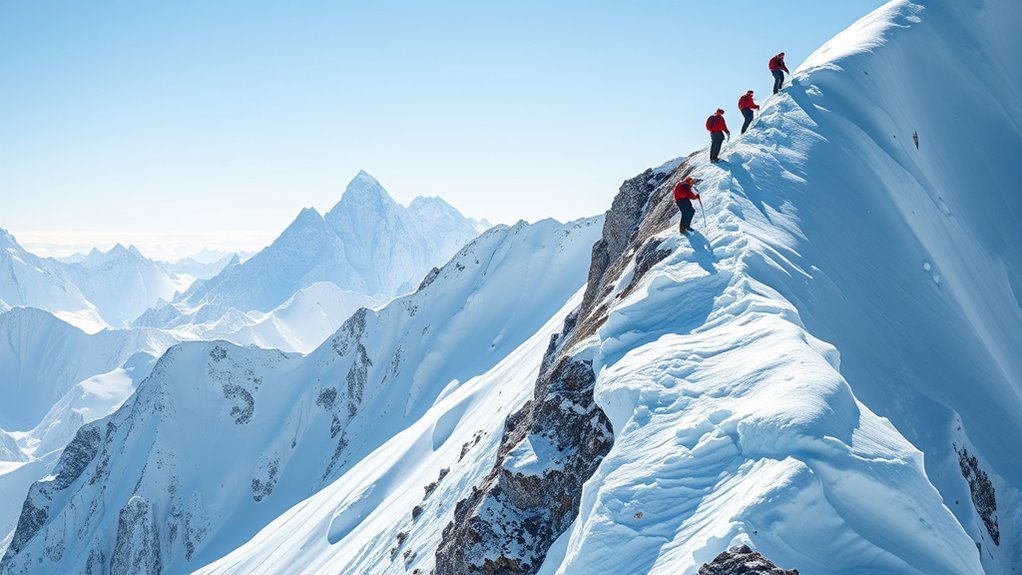
5 Key Facts About the Percentage of People Who Die Climbing Everest
You face about a 1.5% chance of dying when climbing Everest, meaning roughly 1 in 25 climbers. That percentage might sound small, but given how many people attempt the summit each year, it adds up.
Most fatalities happen during the descent, where exhaustion and altitude sickness take a heavy toll.
The deadly “death zone above 8,000 meters poses the highest risk due to thin air and impaired judgment.
Climbing at such extreme altitudes is no joke, and your body struggles to function properly.
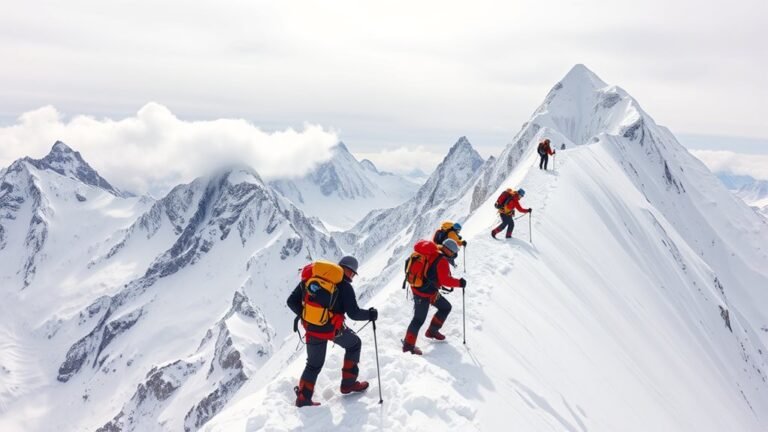
Overcrowding also increases dangers on the mountain, making it harder to move safely.
If you want to understand what drives these risks and how Everest compares to other peaks, there’s plenty more to uncover.
It’s not just about the height – it’s about the conditions, the climbers, and the mountain itself.
Key Takeaways
- The overall death rate for Everest climbers is approximately 1.5% to 2.5%, meaning about 1 in 25 climbers die.
- On average, around 4 to 5 fatalities occur annually on Everest. Most of these happen during the descent phase.
- Most deaths result from exhaustion, altitude sickness, falls, and impaired judgment due to hypoxia above 8,000 meters.
- Overcrowding on Everest’s routes increases risk, especially above 8,000 meters. That’s where the “death zone” severely limits survival time.
- Compared to Everest’s 1.5% death rate, K2 is much deadlier at 25%. Meanwhile, Kilimanjaro’s rate is only 0.03%.
Everest Deaths and Total Climbs: What Are the Numbers?
Although thousands have successfully summited Mount Everest, the climb remains perilous, with at least 346 deaths recorded since 1922. When you look at the climbing statistics, about 13,737 successful attempts have been made, but the death rate hovers around 2.5%.
This means roughly 1 in 25 climbers who reach the summit don’t make it back. Each year, about 4.4 fatalities occur, keeping the overall death rate near 1%.
Many of the deceased remain on the mountain, with over 200 bodies still unrecovered in the high-altitude “death zone.” Due to the extreme conditions, body recoveries are rare, which really underscores Everest’s deadly nature.
These numbers highlight the risks every climber faces while attempting the summit. It’s a stark reminder of just how dangerous this adventure can be.
How Deadly Is Climbing Everest Each Year: and Why?
The numbers show Everest climbing remains a risky endeavor, but understanding how deadly it is each year reveals more about the dangers you’d face. The death rate hovers around 1.5%, with about 5 fatalities per year on average.
This death toll has increased partly due to overcrowding, which heightens risks in the death zone above 8,000 meters. Most deaths happen during descent, caused by exhaustion, altitude sickness, or falls.
Overcrowding above 8,000 meters raises dangers, with most fatalities occurring during descent from exhaustion, altitude sickness, or falls.
If you climb Everest without supplemental oxygen or take non-standard routes, your risk rises considerably. High-altitude mountaineering demands careful preparation because unpredictable weather and environmental hazards add to the challenge.
While the allure is strong, knowing these facts helps you grasp the serious risks involved with climbing Everest each year. It’s not just a climb; it’s a real test of skill, endurance, and luck.
What Makes the Death Zone So Dangerous on Everest?
When you enter the death zone above 8,000 meters on Everest, your body faces extreme challenges due to the thin air and low oxygen levels. The atmospheric pressure is so low that your survival time without supplemental oxygen is limited to just 16-20 hours.
In this high-altitude environment, hypoxia sets in quickly, causing severe bodily damage and altitude sickness. Your judgment impairment increases, making every step riskier.
Here’s what makes the death zone so dangerous:
- Oxygen levels drop drastically, hindering your body’s function.
- Low pressure causes rapid onset of hypoxia and frostbite.
- Altitude sickness worsens, affecting coordination and decision-making.
- Bodily damage accumulates with extended exposure.
- Impaired judgment raises the chances of fatal accidents.
You really have to move fast to survive in this deadly zone.
Why Do More Deaths Happen During Everest’s Descent?
Because you’ve already pushed your body to its limits at extreme altitude, descending Everest becomes far more dangerous. Most fatalities happen during the descent due to exhaustion and impaired judgment caused by hypoxia and altitude sickness.
Descending Everest is deadlier as exhaustion and altitude sickness impair judgment, causing most fatalities.
At high altitude, your concentration wanes, increasing accident risk just when weather conditions often worsen. This combination makes it harder to navigate safely and slows your reaction to hazards.
Rescue difficulty also spikes as physical and mental fatigue set in, reducing your ability to recover from slips or mistakes. The descent demands vigilance, yet your body’s depleted state and the harsh environment conspire to raise the stakes.
Understanding these risks can help you prepare better for the perilous journey down from the summit. It’s a tough part of the climb, so staying alert and ready is key.
How Does Everest’s Death Rate Compare to Other Mountains?
Descending Everest poses unique dangers, but it’s also important to see how its death rate stacks up against other mountains. Everest’s death rate is about 1.5%, which is higher than Kilimanjaro’s 0.03%. This is mainly due to overcrowding and extreme high-altitude conditions.
Despite many climbing attempts, advanced safety measures keep its fatality rate per successful summit relatively low. In contrast, K2 sees a fatality rate around 25%, but fewer climbers attempt it annually.
Here’s a quick comparison to help you understand:
- Everest’s death rate: ~1.5%
- Kilimanjaro’s death rate: ~0.03%
- K2’s fatality rate: ~25%
Overcrowding increases risk on Everest. But safety measures lower fatality per successful summit there.
Frequently Asked Questions
How Common Are Deaths on Everest?
Deaths on Everest aren’t extremely common, but they’re a real risk you can’t ignore. About 1 in 25 climbers die attempting the summit, especially during descent or without oxygen, so you’ve got to be prepared and cautious.
What Is the 2pm Rule on Mount Everest?
Imagine the mountain’s clock striking 2 PM—the 2pm rule tells you to turn back then. You don’t push forward because night’s shadows and thin air become deadly, making your safe descent the top priority.
Is K2 Deadlier Than Everest?
Yes, you’ll find K2 deadlier than Everest because it has a much higher fatality rate. Its steepness and unpredictable weather make climbing riskier, so you’ll face greater challenges and dangers on K2.
Who Was the Youngest Person to Die on Everest?
If you think climbing Everest is a teen-friendly hike, think again. The youngest person to die there was 15-year-old Temba Tsheri, who tragically fell during his attempt, proving mountains don’t care about your age or dreams.
Conclusion
Climbing Everest isn’t just a thrilling adventure; it’s a journey through nature’s ultimate challenge. While the mountain demands respect and caution, it also offers unforgettable experiences that few get to witness.
You’ll face risks that require careful preparation and awareness, especially in the “final frontier” of the death zone. But with the right mindset and respect for the mountain’s moods, you can turn this daring quest into a story worth telling.
Understanding the percentage of people who die climbing Everest highlights the seriousness of this endeavor. It’s not just about reaching the summit but surviving the journey. By acknowledging the risks and preparing well, climbers increase their chances of returning safely with memories that last a lifetime. So, if you’re dreaming of Everest, remember—respect, preparation, and awareness are key to conquering this ultimate challenge.