How to Start Rock Climbing Outdoors in 5 Easy Steps
To start rock climbing outdoors, first get yourself ready by learning about the weather, how to care for your gear, and essential skills like building anchors. Knowing these basics helps you stay safe and enjoy your climb more.
Next, find a certified guide or an experienced climbing partner who communicates well and follows climbing etiquette. Having someone knowledgeable by your side makes a huge difference when you’re just beginning.
Then, try beginner-friendly styles like bouldering or top-rope on easier routes to build your confidence. These styles are less intimidating and perfect for getting a feel for outdoor climbing.
Make sure you choose the proper gear, including a dynamic rope, quickdraws, harness, climbing shoes, and a helmet. Good gear keeps you protected and comfortable on the rock.
Finally, practice safety skills like setting anchors and fall techniques so you can climb smartly and confidently. Taking these steps seriously will help you enjoy every climb while staying safe. Here’s how to take each step further.
Key Takeaways
– Prepare by learning about the weather and rock conditions. Get familiar with essential climbing skills like anchor building and fall management.
It’s super important to know these before you head out.
– Find a certified guide or an experienced climbing partner. This helps with safety, communication, and improving your skills.
Having someone who knows the ropes makes a big difference.
– Start with beginner-friendly climbing styles such as bouldering, top-rope, or easy sport routes graded 5.0 to 5.7.
These are great for getting comfortable outdoors.
– Select the proper gear including a dry-treated dynamic rope, quickdraws, harness, sticky shoes, and a certified helmet.
Good gear keeps you safe and confident.
– Practice safety skills regularly. Focus on building anchors, fall techniques, and clear belayer communication.
Keeping these sharp is key to enjoying climbing safely.
Why You Need Preparation to Climb Outdoors
Before you head outside to climb, you need to prepare thoroughly to handle the unpredictable conditions and challenges you’ll face. Preparation includes getting comfortable with outdoor environments, which vary in weather and rock quality, so you won’t be caught off guard.
Thorough preparation helps you tackle unpredictable outdoor climbing conditions with confidence and readiness.
Training and practice are essential; mastering skills like anchor building, clipping, and fall management will boost your confidence and safety. Don’t overlook gear maintenance—regularly inspecting and caring for your equipment prevents failures that could lead to accidents.
Building your physical fitness and technical skills beforehand helps you adapt quickly on the rock, reducing mistakes. Understanding outdoor etiquette also plays a part, as it keeps climbing areas safe and enjoyable for everyone.
Proper preparation sets you up for success and safety outdoors. It’s really worth the effort!
Find the Right Guide or Climbing Partner
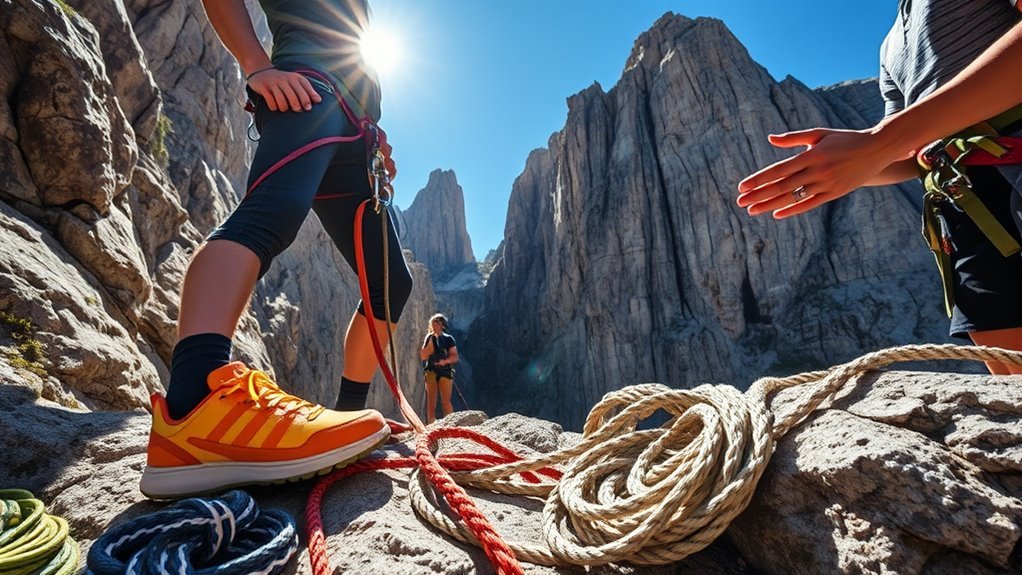
Preparing thoroughly lays a solid foundation, but having the right guide or climbing partner can make all the difference when you take on outdoor climbs. A certified climbing guide, especially one with AMGA certification, brings expertise and conducts thorough safety checks to keep you secure.
Connecting with experienced outdoor climbing partners through gyms or clubs helps you find teammates who communicate well and respect climbing etiquette. To start strong, consider these steps:
- Hire a certified climbing guide for expert instruction and safety.
- Join local climbing communities to meet reliable outdoor climbing partners.
- Attend guided courses to learn essential skills like anchor building firsthand.
Choosing the right people guarantees your climbs are safer, more enjoyable, and packed with valuable learning opportunities. It really makes the whole experience better!
Explore Beginner-Friendly Outdoor Climbing Styles
When you’re ready to climb outdoors, exploring beginner-friendly styles like bouldering, top-rope climbing, and sport climbing can really ease your progression from the gym. Many outdoor climbing areas offer beginner routes graded 5.0 to 5.7, which are perfect for building your confidence.
Joining guided climbs or beginner groups is a great way to learn safety and techniques effectively. It also makes the whole experience more enjoyable and less intimidating.
| Climbing Style | Key Features |
|---|---|
| Bouldering | Short climbs, minimal gear, low risk |
| Top-Rope Climbing | Secure rope systems, gym-like feel |
| Sport Climbing | Pre-placed bolts, lead climbing basics |
Start with these styles to enjoy safe, fun outdoor climbs while steadily improving your skills. You’ll find yourself getting better and having a blast at the same time!
Pick the Right Gear for Outdoor Climbing
After getting comfortable with beginner-friendly climbing styles outdoors, your next step is to pick the right gear that matches the demands of natural rock. Choosing proper climbing gear guarantees both performance and safety during your outdoor rock climbing adventures.
Focus on essential safety equipment tailored for outdoor settings:
- A dynamic, 70-meter, 9.8mm dry-treated rope—durable and versatile for sport climbing routes.
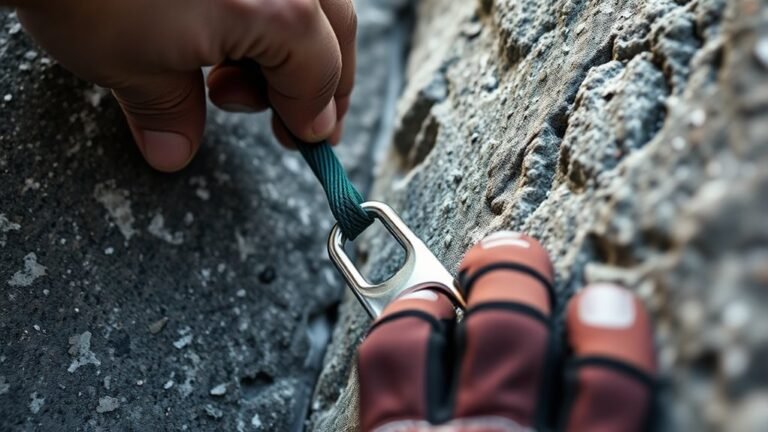
- Quickdraws (10-12), featuring easy clipping and locking carabiners to secure your climb.
- A harness with multiple gear loops and adjustable leg loops for comfort and carrying your gear efficiently.
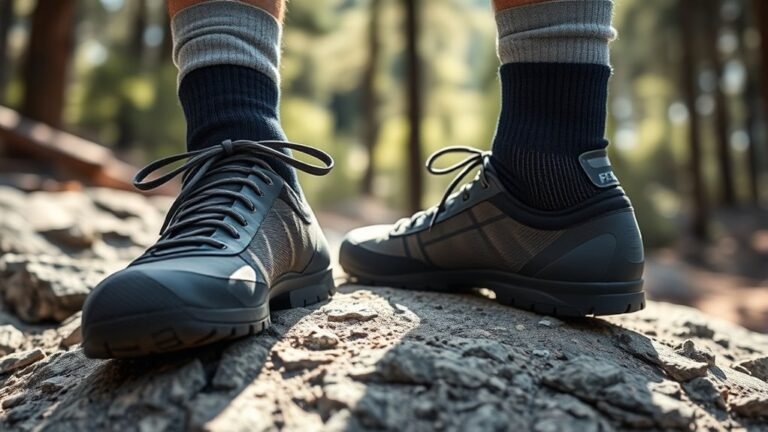
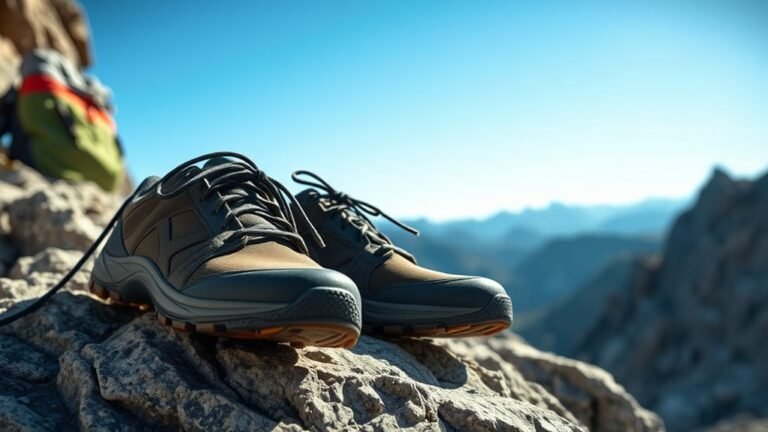
Don’t forget climbing shoes with sticky rubber soles and a certified helmet to protect against falling debris. Picking the right gear keeps you prepared and safe on the rock. It really makes a difference when you’re out there climbing!
Practice Outdoor Climbing Safety Skills: Anchors and Falls
Mastering outdoor climbing safety skills like building anchors and managing falls is essential before tackling more challenging routes. Start by practicing building and cleaning anchors using reliable methods such as the quad or opposing quickdraw setup. This guarantees your safety and confidence on the rock.
Gradually introduce fall practice by clipping into quickdraws at different heights. Take controlled falls to get comfortable and reduce fear. Always communicate clearly with your belayer, making sure they’re attentive and ready to catch you.
Use mock leads to simulate outdoor clipping and fall scenarios. Focus on proper technique and body positioning to minimize injury risk. Regularly review and refine your anchors and fall practice in low-stakes environments to build proficiency.
This way, you’ll be fully prepared for real outdoor climbs and ready to handle whatever the rock throws at you.
Frequently Asked Questions
How to Start Outdoor Rock Climbing?
You should take an outdoor climbing course or hire a guide, practice indoor climbing first, start with easy routes like top-rope or bouldering, learn anchor building, and gradually build your skills while focusing on safety and etiquette.
How to Start Rock Climbing as a Beginner?
You should start rock climbing by taking an introductory course, practicing indoors to build technique, then trying easy outdoor routes. Join groups or hire guides to learn safety, anchor building, and gain hands-on experience confidently.
Does Rock Climbing Help With Osteoporosis?
Yes, rock climbing helps with osteoporosis. It strengthens your bones, boosts bone density, and improves skeletal health. By challenging your body with weight-bearing movements, you build resilience and reduce the risk of bone loss effectively.
How to Rock Climb Step by Step?
You’ll start by learning essential knots and practicing belaying indoors. Then, tackle easy sport climbs, focus on clipping safely, and gradually increase your exposure and fall practice to build confidence before advancing outdoors.
Conclusion
Now that you’ve got the basics down, the real adventure is just beginning. Outdoor climbing isn’t just about reaching the top—it’s about trusting your gear, your partner, and yourself in unpredictable environments.
Every climb will test you in ways you never imagined, pushing your limits and revealing hidden strengths. So, are you ready to take that first step beyond the familiar and discover what lies just out of reach?
Your next challenge awaits. Starting rock climbing outdoors opens up a whole new world of excitement and growth. With the right mindset and preparation, you’ll find that every climb is an opportunity to build skills, confidence, and a deeper connection to nature. Get ready to embrace the thrill of outdoor rock climbing and see where it takes you!