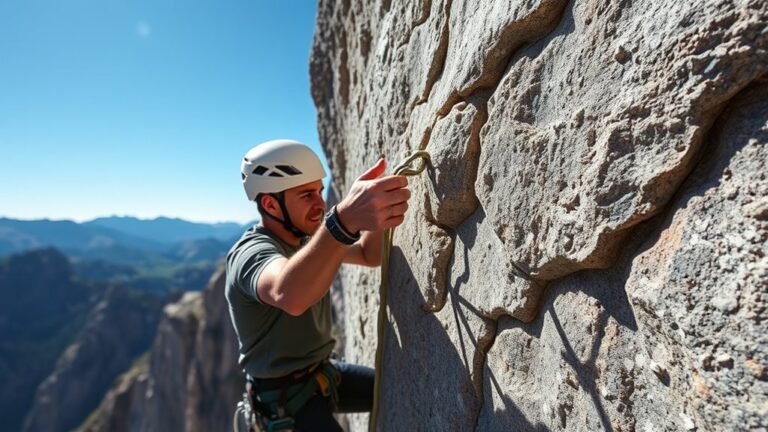
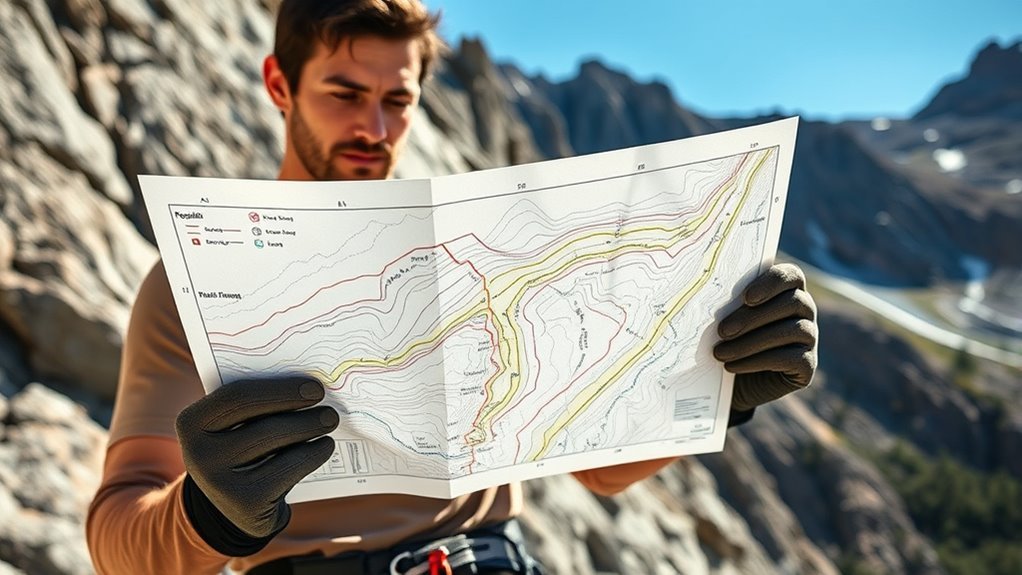
How to Read a Climbing Topo in 5 Easy Steps
To read a climbing topo in five easy steps, start by identifying the start and finish holds. This helps you know your route’s goal and where you need to end up.
Next, scan the topo for cruxes and rest points. These critical spots let you plan key moves and figure out where to conserve energy during your climb.
Then, get familiar with different hold types because they’ll guide your body positioning and technique. Knowing whether you’re dealing with crimps, slopers, or jugs makes a big difference.
After that, visualize your move sequence before you even start climbing. This step helps build your confidence and prepares your mind for what’s ahead.
Finally, stay flexible while climbing by adjusting your plan as you go. Sometimes the route looks different from the ground, and being adaptable is key.
Stick around, and you’ll gain deeper insights that will help you master any route you tackle.
Key Takeaways
- Identify the start and finish holds to understand the route’s beginning and endpoint. This gives you a clear idea of where you’re going right from the get-go.
- Scan the route for cruxes and rest points to anticipate challenges and manage energy. Knowing where the tough spots are helps you plan your moves better.
- Recognize hold types to determine appropriate techniques and body positioning. Different holds mean different grips and stances, so keep an eye on those.
- Visualize the move sequence from start to finish to build a clear mental climbing map. Picture yourself climbing the route step by step before you even touch the wall.
- Adapt your route reading during the climb based on hold feedback and physical condition. Be ready to change your plan if something feels off or harder than expected.
Identify Start and Finish Holds for Your Route Reading
When you start reading a climbing topo, first identify the start holds, which are usually marked clearly to help you plan your initial moves. These start holds set the tone for your climb, so knowing exactly where you begin is essential.
Next, locate the finish holds at the top of the topo; they mark the route’s completion point and help you understand the overall goal. As you examine the topo, use route visualization to picture the entire path from start holds to finish holds.
This mental map lets you anticipate movements and gauge the route’s difficulty. Confirming hold types and positions ensures your plan matches the actual wall features, making your climb more efficient and safe.
Scan the Route to Identify Cruxes and Rest Points
As you scan the topo, focus on areas with small holds or tricky features that signal cruxes—the hardest parts of the climb. Effective route reading involves sharp crux identification and spotting rest points to manage your energy.
To do this, start by visually scanning the entire route for small or complex holds marking cruxes. Then, note symbols or annotations that highlight tough moves or rest spots.
Next, identify shifts where hold size or orientation changes, signaling challenging sections. Finally, locate rest points or gear placements where you can pause and recover. It really helps to plan these spots ahead!
Understand Hold Types and How They Guide Movement
Identifying cruxes and rest points on a climbing topo gives you a solid framework, but to move efficiently, you need to understand the types of holds you’ll encounter. Different hold types like jugs, crimps, slopers, and pockets each suggest specific movement techniques.
By recognizing positive holds versus sloped or negative ones, you can anticipate how much tension or dynamic action you’ll need. The orientation and hold shapes also guide your body positioning and the order of hand and foot placements.
Noticing these details on the topo lets you plan smooth shifts and conserve energy. In short, understanding hold types and their shapes helps you read the route’s movement demands and prepare for efficient climbing before you even step on the rock.
Visualize Your Move Sequence Before You Climb
Although reading a climbing topo can feel overwhelming at first, visualizing your move sequence before you climb helps you approach the route with confidence and clarity. When you visualize the route, you create a mental map that guides your movements and reduces guesswork.
To effectively visualize your move sequence:
- Study the topo to identify key holds and their positions. This helps you plan logical moves.
- Recognize symbols that indicate hold types, so you can anticipate moves like crimps or dynos.
- Imagine the route from start to finish, including body positions and rest spots.
- Map out your moves on the ground. Doing this lowers cognitive load and boosts efficiency.
Adapt Your Route Reading Plan As You Climb
While climbing, you’ll need to continuously update your mental route map to include new holds and sequences you spot along the way. Adapt your route reading by incorporating real-time feedback like hold size, orientation, and texture, which may differ from what the topo suggested.
If a hold feels unstable or your initial beta seems inefficient, adjust your plan immediately. Stay alert for signs of fatigue or difficulty, and modify your approach to conserve energy or prevent mistakes.
Being flexible means shifting to alternative sequences or taking unplanned rests when necessary. By actively adapting your route reading plan as you climb, you’ll navigate challenges more smoothly and increase your chances of a successful ascent.
Frequently Asked Questions
How to Read a Climbing Topo Map?
You start by identifying symbols and lines showing holds, moves, and route flow. Use the legend to understand difficulty and features. Visualize the climb by matching the topo with the actual rock or wall before you begin.
How Do You Read Climbing?
You read climbing by observing the holds, body positions, and movement flow. You anticipate sequences, plan your moves, and adapt to the rock’s features. Staying focused helps you climb efficiently and tackle challenges confidently.
How to Read a Climbing Route Grade System?
You read a climbing route grade by identifying the system used, like YDS or French, then noting the number and letter that indicate difficulty. This tells you the technical challenge and strength needed for the climb.
What Are the Five Fundamentals of Basic Climbing Techniques?
You focus on five fundamentals: proper foot placement, smart body positioning, using handholds correctly, maintaining balance, and moving efficiently. Master these to climb smoothly, save energy, and control your movements effectively on any route.
Conclusion
Now that you’ve revealed the map of your climb, every hold becomes a stepping stone in your story. Like a painter with a brush, you’ll trace your route with confidence, turning challenges into triumphs.
Remember, the wall is your canvas—adapt your plan as you go, flow with the rhythm, and let each move sing.
With these steps, you’re not just reading a topo; you’re dancing with the rock. Reading a climbing topo isn’t just about following lines—it’s about understanding the terrain and making the climb your own. So grab your chalk, trust your instincts, and let the topo guide your adventure. Each climb becomes a unique story, shaped by the way you read and respond to the wall. Keep these tips in mind, and your next ascent will feel smoother, smarter, and a whole lot more fun!