What to Wear for Climbing: 5 Essential Clothing Items
You should wear moisture-wicking base layers to keep sweat off your skin, paired with insulating mid-layers for warmth and a breathable outer shell to block wind and rain. These layers work together to keep you comfortable no matter the weather.
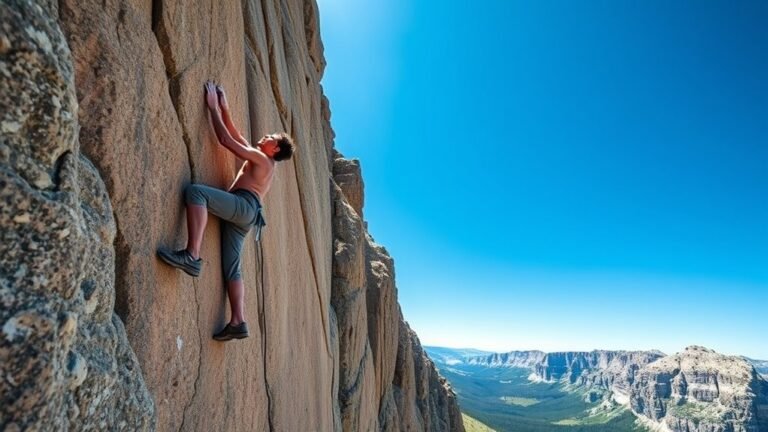
Choosing the right clothing is key for climbing, as it affects your mobility, safety, and overall experience.
Choose snug, stretchy tops with ventilation for moisture control, and flexible, abrasion-resistant bottoms for easy movement. It’s all about staying comfortable while moving freely on the rock face.
Fit your climbing shoes tightly but comfortably for the best grip, and don’t forget essential gear like a harness, helmet, and chalk bag to stay safe and steady.
Learn what makes each piece essential for your climb.
Key Takeaways
- Wear moisture-wicking base layers to keep sweat off your skin and maintain dryness during climbs. They really help you stay comfortable, especially when things get intense.
- Choose insulating mid-layers like fleece for warmth without added bulk. It’s all about staying warm without feeling weighed down.
- Use breathable, waterproof outer layers to protect against wind and rain. These keep you dry and shielded no matter the weather.
- Select flexible, durable climbing bottoms with reinforced panels and articulated knees for ease of movement. You want something tough but that moves with you.
- Opt for snug-fitting climbing shoes that provide grip and comfort without causing pain. The right shoes make all the difference on tricky climbs.
Clothing Layers for Comfort and Flexibility
When you layer your clothing properly, you can easily regulate your body temperature by adding or removing pieces as you climb. Start with moisture-wicking fabrics for your base layer to keep sweat off your skin, helping you stay dry and comfortable.
Next, choose insulating mid-layers like fleece or lightweight jackets that provide warmth without weighing you down or restricting your ability to move freely. On top, wear a breathable outer layer, such as a softshell or waterproof jacket, to shield against wind and light rain while maintaining flexibility.
These clothing layers work together to keep you comfortable in varying temperatures and conditions. By selecting the right combination, you’ll stay warm, dry, and agile throughout your climb, letting you focus on your moves without distraction.
Essential Climbing Tops for Moisture Control
Because staying dry is vital during intense climbs, choosing moisture-wicking tops makes all the difference. These climbing tops use advanced fabrics like polyester and nylon blends that pull sweat away from your skin, keeping you dry and comfortable.
Look for quick-drying materials with HeiQ Fresh technology to reduce odors and maintain freshness throughout your session. Ventilation features, such as mesh panels, enhance breathability by improving airflow, helping you stay cool.
The fit is important too—opt for fitted, stretchy tops that move with you without excess fabric that could snag or restrict your motions. Prioritizing these elements guarantees your climbing tops manage moisture effectively, allowing you to focus on your climb without distraction from damp, heavy clothing.
Best Climbing Bottoms for Flexibility and Protection
Although climbing demands a wide range of motion, you’ll want bottoms that offer both flexibility and protection. The right climbing bottoms combine stretchy materials with durable, abrasion-resistant fabrics to keep you comfortable and safe on every hold.
Climbing bottoms must blend flexibility with durability to keep you comfortable and protected on every hold.
Here’s what to look for:
- Choose climbing bottoms made from breathable, moisture-wicking fabrics with Lycra or spandex for maximum flexibility and unrestricted movement.
- Look for durable, abrasion-resistant fabrics like nylon or reinforced panels to protect your knees and thighs from rough surfaces.
- Opt for designs featuring gussets or articulated knees to prevent fabric bunching and enhance your range of motion.
These elements ensure your climbing bottoms balance flexibility, protection, and comfort—helping you climb efficiently without sacrificing durability. It’s all about feeling good and staying safe while you push your limits.
Choosing Climbing Footwear: Fit and Function
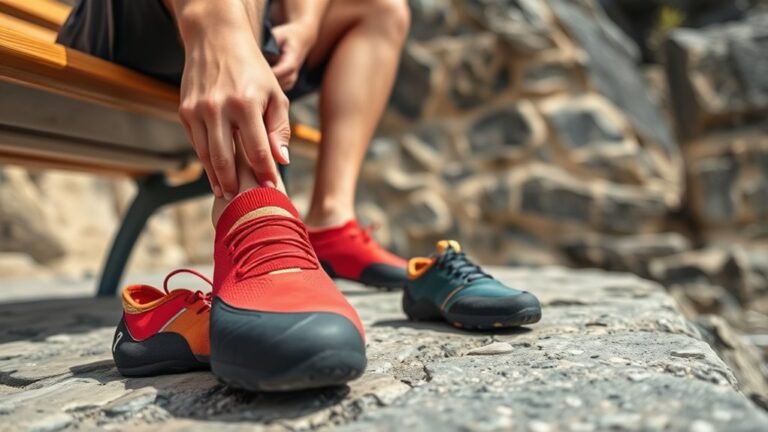
Once you’ve picked climbing bottoms that offer flexibility and protection, it’s time to focus on your footwear. Choosing the right climbing shoes is essential—they should be snug-fitting without causing pain, ensuring maximum grip and control.
For indoor climbing, you might prefer a less aggressive shoe with moderate stiffness. This way, you get both comfort and performance.
Keep in mind, most climbers wear shoes without socks to enhance sensitivity. Though, thin socks are fine if you want extra comfort or hygiene.
The proper fit means your toes are secure but not painfully cramped. This helps prevent numbness during climbs.
Since sizing varies across brands, regularly try on different models to find climbing shoes that match your foot shape.
Top Climbing Accessories for Comfort and Safety
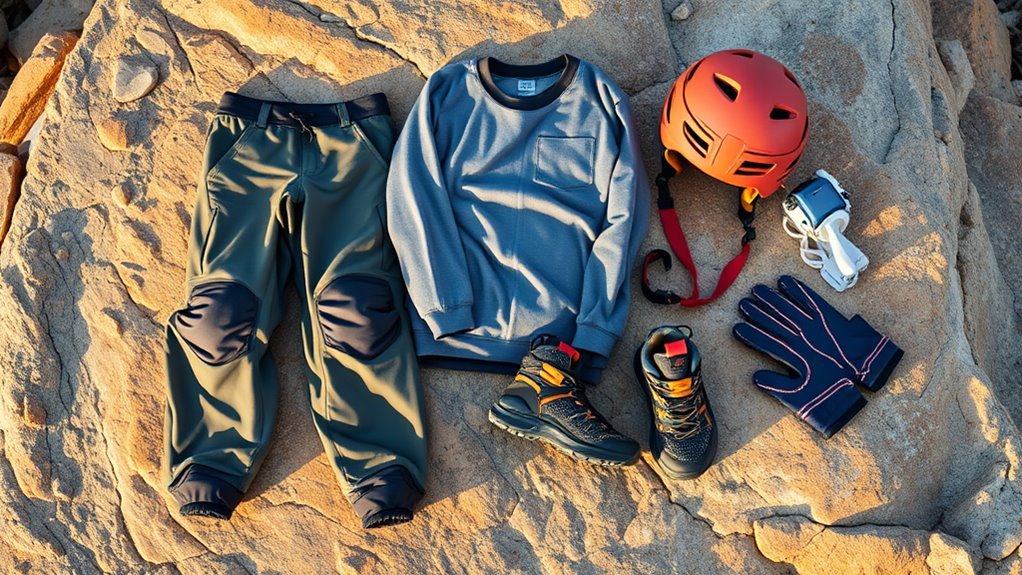
When you gear up for climbing, choosing the right accessories can make all the difference in comfort and safety. Alongside your climbing outfit and comfortable clothing, these climbing accessories are essential:
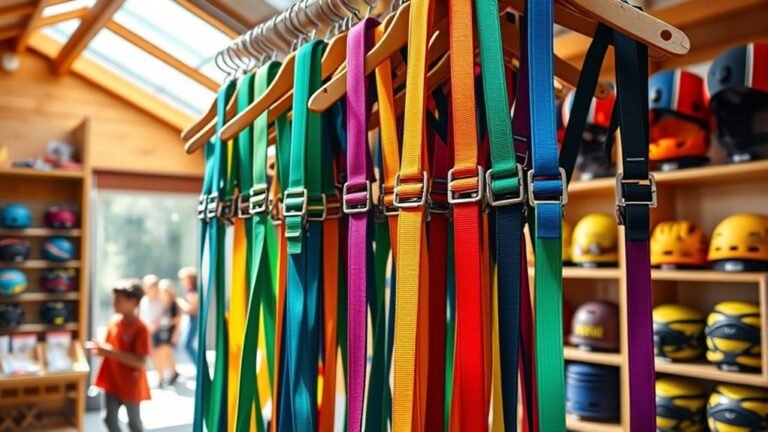
- Climbing harness – A well-fitted harness ensures secure attachment points for ropes and belay devices. This keeps you safe and comfortable during your climb.
- Climbing helmet – Protect your head from falling debris and impacts. This is especially important on outdoor routes or challenging overhangs.
- Climbing chalk – Use a chalk bag filled with climbing chalk to reduce sweat and improve grip. This really helps enhance your hold on the rock or wall.
Don’t forget your climbing shoes, as they provide precision and stability. Together, these accessories ensure a safer, more enjoyable climbing experience.
Frequently Asked Questions
What Clothing Is Needed for Climbing?
You need flexible, moisture-wicking tops and slim-fitting pants to move freely and stay comfortable. Layer breathable clothes for temperature changes, avoid loose accessories, and for outdoors, pick quick-drying, weather-appropriate gear with sun protection.
Is Rock Climbing Good for Osteoporosis?
Absolutely, rock climbing boosts bone strength by building balance and bone density. You’ll benefit from controlled, consistent climbing movements that stimulate skeletal growth. Just be cautious, consult your doctor, and climb carefully to avoid injury risks.
Can Climbing Cause Plantar Fasciitis?
Yes, climbing can cause plantar fasciitis if you don’t wear proper footwear or stretch adequately. You should use supportive insoles, warm up properly, and avoid overdoing it to protect your heel and arch from strain.
Is It Okay to Rock Climb in Jeans?
You shouldn’t rock climb in jeans because they’re stiff and restrict your movement. Instead, choose stretchy, breathable pants designed for climbing to stay comfortable and safe, helping you perform better without unnecessary discomfort or injury risk.
Conclusion
So, you want to conquer the climbing wall without looking like a confused fashion victim? Perfect! Just slap on those moisture-wicking tops, stretchy bottoms, and shoes that actually fit your feet—not your neighbor’s.
Don’t forget your layers unless you enjoy shivering like a snowman or sweating like a sauna enthusiast. And yes, accessories aren’t just for show—they keep you safe and comfy.
Follow these tips, or prepare to become the next viral climbing blooper! Wearing the right climbing clothes is essential for comfort and safety. Moisture-wicking fabrics help you stay dry, stretchy bottoms allow freedom of movement, and properly fitting shoes improve your grip. Layering is key to adapting to changing temperatures, while accessories like helmets and gloves protect you during your climb. So, gear up smartly and climb confidently!