What Is Alpine Style Climbing and How Do You Start?
Alpine style climbing is all about carrying all your gear from the start and moving light, fast, and independently. It means climbing without fixed ropes or established camps, relying on your skills and judgment to navigate the mountain.
This approach demands a strong foundation in traditional climbing techniques, solid physical endurance, and a good understanding of mountain conditions.
To get started, begin on easier routes where you can practice managing lightweight gear and learn to assess risks effectively.
Focus on building self-sufficiency and always respect the environment as you gain confidence.
Keep exploring these principles, and over time, you’ll uncover deeper insights into mastering alpine climbing. It’s a rewarding way to connect with the mountains and challenge yourself.
Understanding Alpine Style Climbing
Although alpine style climbing demands carrying all your gear from the start and avoiding fixed ropes or established camps, it rewards you with speed, self-sufficiency, and a minimal environmental footprint.
Alpine style climbing means carrying all gear from the start for speed, independence, and minimal impact.
When you choose this approach, you commit to moving light and fast, relying on minimal gear tailored to technical climbing and the mountain environment.
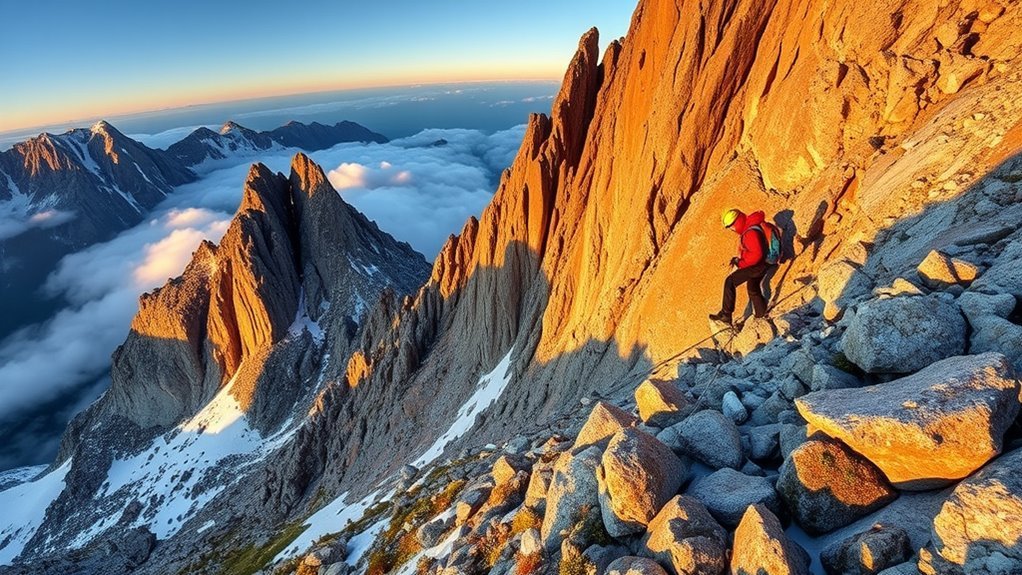
You’ll tackle challenging mountain routes that test your climbing techniques and mental resilience at high altitude.
This style requires careful planning and mastery of your climbing gear since you won’t have support teams or fixed camps to fall back on.
Embracing alpine style climbing means you value independence and efficiency, pushing yourself to ascend with agility while preserving the pristine nature of the mountains you explore.
Essential Steps to Begin Alpine Climbing
Before you immerse yourself in alpine climbing, you need to build a strong foundation in traditional climbing, multi-pitch techniques, and self-reliant skills on easier routes. Start gaining experience in trad climbing and self-sufficient climbing on less complex alpine routes to develop mountain techniques essential for alpine style.
Focus on lightweight gear management to keep your load minimal and mobility high in the alpine environment. Gradually increase your endurance by tackling longer, more technical climbs.
Study route conditions, weather patterns, and avalanche risks to sharpen your decision-making skills. Seeking mentorship from experienced climbers can accelerate your learning of fast, efficient ascents without fixed ropes or supplemental oxygen.
This careful progression ensures you’re prepared for the challenges alpine style demands while staying safe and self-reliant. It’s all about pacing yourself and building the right skills step by step.
Conclusion
Alpine style climbing is like dancing with the mountain—light, swift, and in harmony with nature’s rhythm. To start, lace up your boots, trust your skills, and embrace the unpredictable. Every step you take carves your path through the clouds, turning challenges into your canvas.
Remember, the mountain rewards those who move with respect and agility. So, pack light, climb smart, and let the alpine adventure ignite your spirit like a sunrise bursting over the peaks.
Starting alpine style climbing means committing to a minimalist approach—carrying only what you need and moving fast. This style demands strong skills, good judgment, and a deep connection with the mountain environment. If you’re ready to embrace the challenge, alpine style climbing offers an exhilarating way to explore high-altitude terrain with freedom and respect.