How to Master the Gaston Climbing Technique
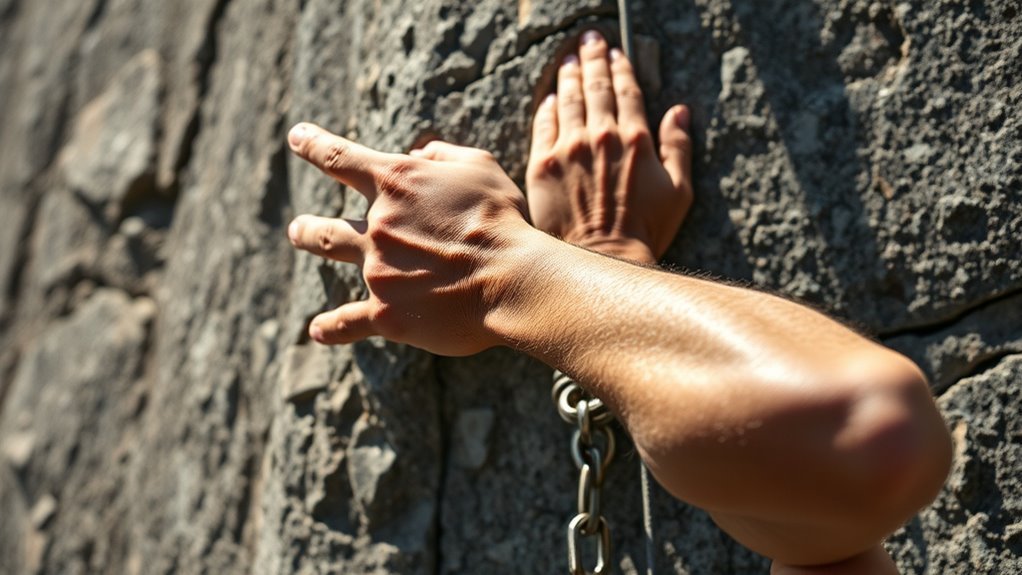
To master the gaston climbing technique, start by positioning your palms facing outward with your thumbs pointing down. Bend your elbows sharply outward to maximize leverage on the hold. This setup is crucial for generating the right amount of force without wasting energy.
Push smartly against the hold while engaging your core and shoulders. This helps you maintain control and stability as you climb.
Align your hips and feet to support a balanced stance and prevent any unwanted swinging.
To build the strength and endurance needed for effective gastons, incorporate fingerboard hangs, shoulder drills, and lock-offs into your training routine.
Keep these fundamentals in mind as you explore advanced tips for perfecting gaston moves. With practice and focus, you’ll find yourself climbing more efficiently and confidently every time.
Proper Hand and Arm Positioning for Gastons
When executing a gaston, you’ll want to keep your palms facing outward with your thumbs pointing down to create a stable push against the hold. This hand positioning maximizes your arm muscles’ leverage, allowing you to push perpendicular to the surface rather than pulling.
Sharply bend your elbows outward to engage proper body mechanics, which enhances control during this climbing move. Maintaining strong body tension through your core and shoulders supports the outward force, preventing you from swinging off balance.
Bend elbows outward and engage core tension to maintain control and prevent imbalance during gaston moves.
Align your hips and feet—especially if you’re using climbing shoes or heel hooks—to stabilize your stance and optimize body positioning. Avoid relying solely on a pulling motion; instead, focus on actively pushing with your palms facing away.
Sync your arm muscles and body tension for smooth, efficient gastons. It all comes down to pushing smart, staying balanced, and keeping your body engaged throughout the move.
Strength Training and Drills to Improve Gaston Technique
Mastering the hand and arm positioning sets a solid foundation, but building the strength to sustain and control gaston moves takes focused training. Use the fingerboard to strengthen finger and tendon strength with open-hand and half-crimp positions tailored for gaston holds.
Incorporate shoulder stabilization and rotation drills to improve control. Towel pull-ups with sideways grips boost grip strength and shoulder engagement, while lock-offs build endurance for maintaining body tension.
Traversing drills on a climbing wall help you practice outward pushes and reinforce proper hand positioning.
| Drill Type | Emotional Impact |
|---|---|
| Fingerboard hangs | Empowerment |
| Shoulder drills | Confidence |
| Towel pull-ups | Determination |
| Lock-offs | Resilience |
| Traversing drills | Mastery |
Conclusion
Mastering the Gaston technique is like becoming the steady branch that supports a climber’s weight against the wall. By positioning your hands and arms precisely, you create a strong, reliable anchor.
Strength training and targeted drills are the growth rings, building resilience and power over time. Keep practicing, and you’ll transform into that unshakable limb—balanced, strong, and ready to hold firm no matter how steep the climb.
To truly master the Gaston climbing technique, focus on developing both your form and strength consistently. This method not only improves your grip but also enhances your overall climbing stability. With dedication and regular practice, you’ll find yourself more confident tackling challenging routes using the Gaston technique.