5 Tips to Get Better at Climbing Fast
To get better at climbing fast, make sure you climb at least twice a week. This helps you build both strength and technique consistently, which is key for quick improvement.
Focus on precise footwork and keep your body close to the wall to move more efficiently.
Practice smooth, controlled movements to save energy and climb smarter.
Adding climbing-specific exercises like pull-ups and core workouts can really boost your power and endurance, making those tough routes feel easier.
Don’t skip a proper warm-up—dynamic stretches and easy climbs get your muscles ready and help prevent injuries.
And remember, rest and recovery are just as important as training. Taking breaks lets your body heal and improves your overall performance.
Keep practicing regularly, listen to your body, and soon you’ll find yourself climbing stronger and smarter every time you hit the wall.
Prioritize Consistent Climbing Sessions
Although it might be tempting to climb sporadically, you’ll make the most progress by prioritizing consistent climbing sessions at least twice a week. Regular visits to the climbing gym help you build power steadily while reinforcing essential technique.
These consistent sessions let you practice body positioning and footwork frequently, which speeds up your skill acquisition. By climbing often, you strengthen muscle memory, making movements smoother and more efficient.
This steady approach prevents plateaus and reduces setbacks caused by irregular training or long breaks. Plus, regular climbing sharpens your mental focus and boosts confidence, both vital for advancing quickly.
Stick to a schedule, and you’ll see your climbing improve faster than if you rely on occasional, unpredictable sessions. It really pays off to keep at it regularly!
Focus on Technique and Movement Efficiency
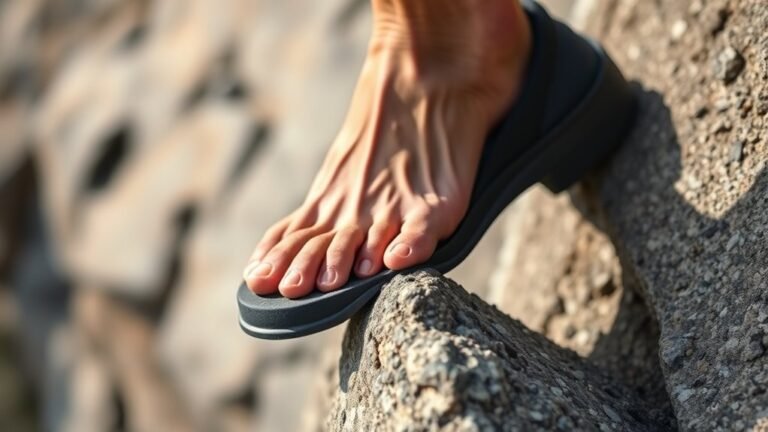
When you focus on refining your technique and movement efficiency, you’ll climb more smoothly and conserve energy. Prioritize footwork by placing your entire foot on holds and using precise parts of your shoes for better contact and stability.
Maintain good body positioning by twisting your hips into the wall. Keep your body close to the wall to maximize leg strength and reduce arm fatigue.
Break down routes into sections, rehearsing each move repeatedly to build muscle memory and execute moves effortlessly. Try incorporating movement drills during warm-ups to enhance neuromuscular coordination and overall movement economy.
Practice dynamic yet controlled techniques like drop knees and hip twists to increase movement efficiency. By honing your technique and movement efficiency, you’ll climb smarter, not just harder.
Incorporate Targeted Strength and Endurance Training
To climb harder and longer, you need to incorporate targeted strength and endurance training into your routine. Focus on climbing-specific exercises like lock-offs, pull-ups, and fingerboard training to build foundational strength, especially in your core muscles.
For endurance, try circuit bouldering or multiple repeats on the wall to boost muscle stamina and prevent fatigue during longer sessions. Use interval training by alternating intense climbing bursts with short rests to improve power and endurance simultaneously.
Gradually increase the volume and difficulty of your endurance workouts, aiming for several sustained climbs or boulder problems per session. Don’t forget antagonist exercises like push-ups to maintain muscle balance and reduce injury risk.
Consistent training with this approach will accelerate your progress and get you climbing stronger and more efficiently. Just keep at it, and you’ll see the gains!
Use Effective Warm-Up and Practice Strategies
Building strength and endurance sets a solid foundation, but warming up effectively and practicing smart strategies release your climbing potential. Start your warm-up with 5-10 minutes of easy, movement-focused climbing to boost neuromuscular coordination and prioritize safety.
Incorporate dynamic stretches and mobility exercises to prepare your joints and muscles for more intense climbs. Use specific drills like traversing varied footholds and practicing precise foot placements to sharpen footwork and technique.
Break routes into sections, practicing each repeatedly to build muscle memory and refine movement efficiency. Including movement-based warm-up exercises such as toe hooks, heel hooks, and drop knees will develop your technical skills before tackling harder problems.
This structured approach ensures steady progress while minimizing injury risks. It’s all about working smarter, not just harder!
Balance Training With Rest and Injury Prevention
Although pushing your limits is key to improvement, balancing training with rest is crucial to keep your body strong and injury-free. Incorporate rest days—ideally 48 hours between intense sessions—to promote muscle recovery and prevent overuse injuries.
Prioritize proper warm-up and cool-down routines to prepare your muscles and reduce strain risk. Listen to your body: reduce intensity or stop if you feel pain or fatigue.
To optimize injury prevention and recovery, follow these steps:
- Use active recovery techniques like stretching and foam rolling to enhance flexibility and muscle healing.
- Guarantee adequate sleep and nutrition to support tissue repair.
- Maintain consistency with rest days and avoid ignoring pain signals to prevent long-term injuries.
Balancing training with rest keeps you climbing stronger and longer.
Conclusion
If you’re wondering whether climbing faster is all about brute strength, think again. It’s really about consistency, smart technique, and balancing training with rest.
By prioritizing regular sessions, refining your movements, and warming up properly, you’ll see progress quicker than you expect. Remember, pushing too hard without recovery won’t get you far.
Stick with these tips, and you’ll not only climb faster but also climb smarter and safer. Getting better at climbing fast means focusing on technique and recovery as much as strength.
So, if you want to improve your climbing speed and skill, keep training regularly, rest well, and pay attention to your form. Ready to give it a try?